

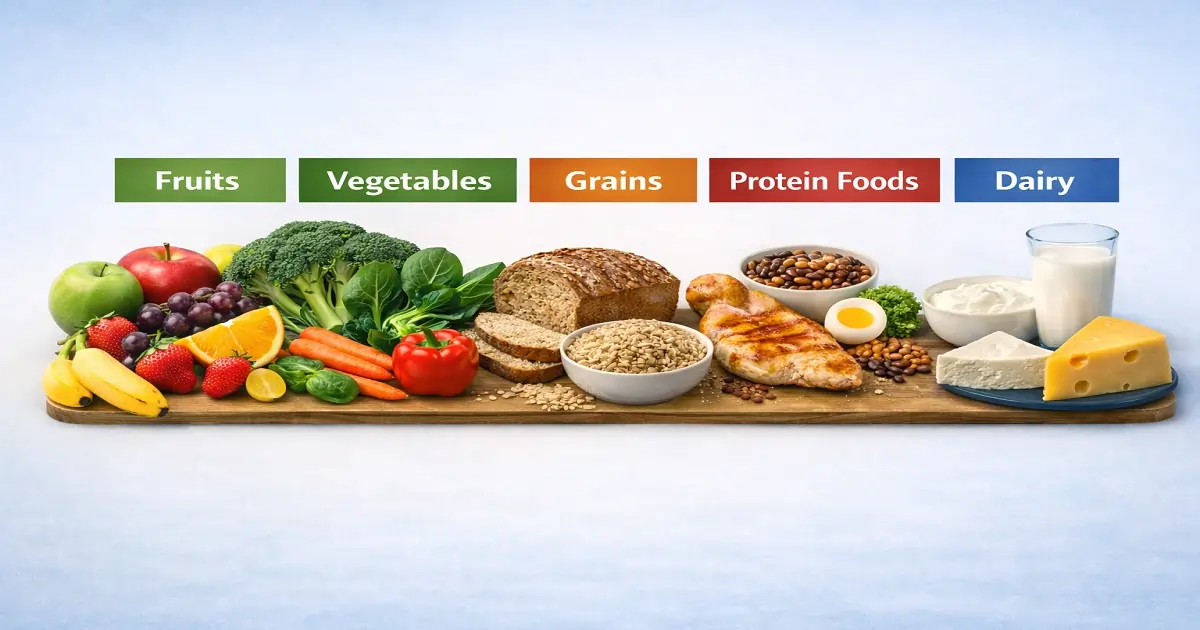
Good nutrition starts with understanding the five main food groups and their nutrients. These groups include fruits, vegetables, grains, protein foods, and dairy. Each group is defined by the nutrients it provides and the role it plays in the body.
Fruits and vegetables are associated with vitamins, fiber, and protective compounds. Grains provide carbohydrates that help maintain energy levels. Protein foods supply protein, iron, and other nutrients that support growth and repair. Dairy contributes calcium, protein, and vitamin D, which are important for normal function.
No single group can meet all nutritional needs. Therefore, combining these groups is part of a balanced diet and helps maintain overall health.
What Are the Five Main Food Groups?
Foods are grouped based on the nutrients they provide and how they support the body. This grouping helps maintain clarity when selecting foods for daily meals. The idea of grouping foods based on their role is part of a broader food classification approach.
The five main food groups include fruits, vegetables, grains, protein foods, and dairy. These groups are widely recognized in nutrition guidance and reflect widely used five food group classifications. Each group is associated with specific nutrients and plays a role in normal function. Together, they form part of a balanced diet.
Common fruits like apples, bananas, and oranges provide vitamins and fiber that help maintain daily functions. These nutrients are important for normal function and support overall balance.
Vegetables such as spinach, carrots, and broccoli are rich in vitamins, minerals, and fiber. These nutrients play a role in body regulation and contribute to normal processes.
Grains such as rice, wheat, and oats provide carbohydrates that support energy needs. They also contribute fiber, especially in less processed forms. Protein foods, including lentils, eggs, and beans, supply protein and minerals that are important for normal function.
Dairy products like milk, curd, and cheese contribute calcium, protein, and vitamin D. These nutrients help maintain structural functions and support overall nutritional balance.
Key Nutrients in the Five Main Food Groups
Each of the five main food groups provides a distinct set of nutrients that supports normal body function. These nutrients work together and help maintain balance in daily nutrition. Therefore, including a variety of foods from each group is part of a balanced diet.
Different groups contribute in different ways. Some are associated with energy, while others support growth and regulation. This variation shows how nutrient roles across groups are connected, as explained in nutrient roles across food groups.
Fruits
Fruits are associated with vitamin C, fiber, and antioxidants. These nutrients support normal function and help maintain daily processes. Vitamin C plays a role in body maintenance, while fiber contributes to digestion. Antioxidants are associated with protection at the cellular level.
Fruits also contain water, which supports hydration and helps maintain balance in the body. Common fruits like apples, bananas, and oranges are widely consumed. Including fruits regularly contributes to nutrient intake and supports overall dietary balance.
Vegetables
Vegetables are associated with vitamins such as A, K, and folate, along with important minerals. These nutrients play a role in daily processes and support normal function and help maintain body systems. Vitamin A plays a role in vision, while vitamin K is important for normal processes. Folate contributes to cell-related functions.
Vegetables also provide fiber, which supports digestion and helps maintain internal balance. Foods like spinach, carrots, and broccoli are commonly included in meals. Their nutrient content plays a role in regulation and contributes to overall dietary quality.
Grains
Grains are mainly associated with carbohydrates, which support energy needs throughout the day. These nutrients help maintain activity levels and contribute to daily function. Whole grains also provide fiber, which supports digestion and helps maintain balance.
In addition, grains contain B vitamins that play a role in energy-related processes. Foods like rice, wheat, and oats are commonly used. Including grains as part of a balanced diet contributes to steady energy and supports normal function.
Protein Foods
Protein foods are associated with protein, iron, zinc, and vitamin B12. These nutrients support growth and help maintain body structure. Protein plays a role in repair, while iron contributes to oxygen-related functions. Zinc supports normal processes, and vitamin B12 is important for body function.
Foods such as lentils, eggs, and beans are commonly included in this group. Including protein foods regularly contributes to nutrient balance and supports overall body maintenance.
Dairy
Dairy foods are associated with calcium, protein, and vitamin D. These nutrients are important for normal function and help maintain structural strength. Calcium plays a role in bone health, while protein supports body maintenance. Vitamin D contributes to the use of calcium in the body.
Common dairy foods include milk, curd, and cheese. These foods are part of a balanced diet and contribute to overall nutrient intake. Including dairy supports body structure and helps maintain long-term balance.
Examples of Foods in Each Food Group
Simple examples can help identify foods within each group in daily meals that are easy to recognize and use in meals. Including a variety from each group helps maintain balance and supports normal function.
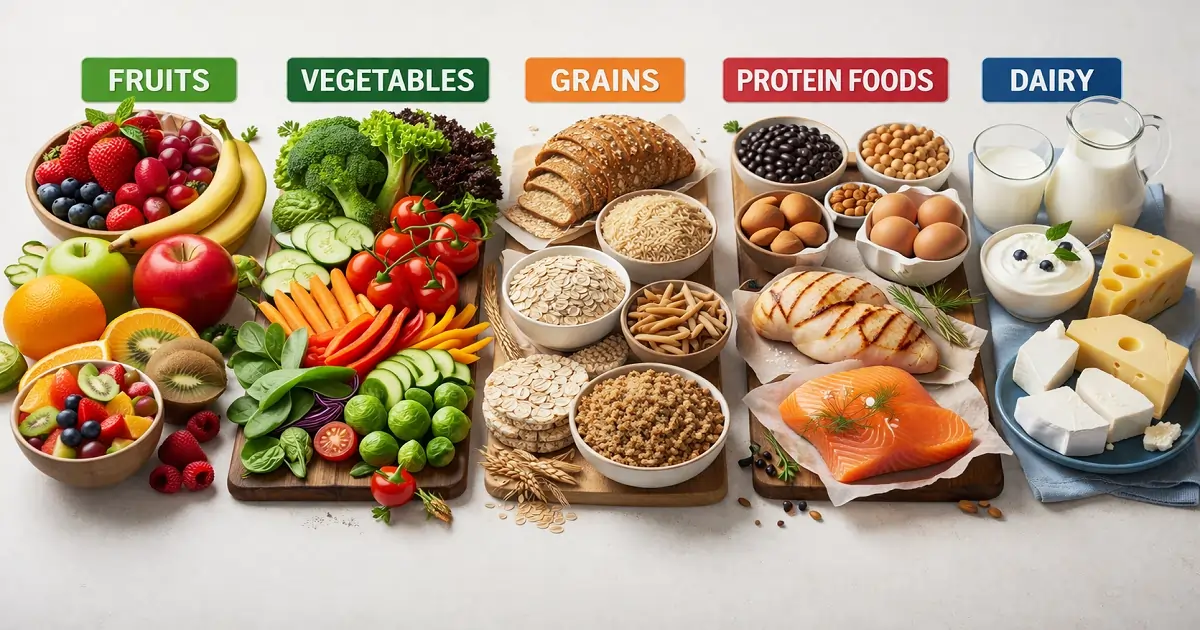
Fruits such as apples, bananas, and mangoes are commonly eaten fresh. These foods are associated with vitamins and fiber and are part of a balanced diet.
Vegetables like spinach, carrots, and broccoli are often used in daily cooking. They contribute vitamins, minerals, and fiber that support body processes and help maintain balance.
Grains include foods such as rice, wheat, and oats. These are staple foods in many diets and provide carbohydrates that help maintain energy levels.
Protein foods include lentils, eggs, and beans. These foods are associated with protein and minerals that play a role in growth and repair.
Dairy foods such as milk, curd, and cheese contribute calcium and protein. These nutrients are important for normal function and support overall dietary balance.
Are There More Than Five Food Groups?
Food groups are sometimes organized in different ways depending on purpose and context. Some models include three or four groups for basic understanding. Others may expand to six or seven groups to show more detail.
However, the five-group model is the most widely used in general nutrition. It provides a clear and simple way to understand how foods contribute to daily needs.
Different models group foods differently, yet the goal remains similar. Each system helps maintain balance by showing how foods are associated with nutrients. Therefore, the five main food groups remain a common and practical approach in everyday diets.
Frequently Asked Questions (FAQs)
The following questions address common doubts about food groups and their nutrients. These answers help maintain clarity and support a better understanding of balanced nutrition.
What are the 5 food groups and their nutrients?
The five food groups include fruits, vegetables, grains, protein foods, and dairy. Each group is associated with specific nutrients. Fruits and vegetables provide vitamins and fiber. Grains contribute carbohydrates for energy. Protein foods supply protein and minerals. Dairy provides calcium and protein. Together, they support normal function and are part of a balanced diet.
What nutrients are found in each food group?
Each food group provides different nutrients. Fruits and vegetables are associated with vitamins, minerals, and fiber. Grains contribute carbohydrates and B vitamins. Protein foods supply protein, iron, and zinc. Dairy provides calcium, protein, and vitamin D. These nutrients support normal function and help maintain balance.
Which food group provides the most nutrients?
No single food group provides all nutrients. Each group contributes differently and plays a role in overall nutrition. Fruits and vegetables are rich in vitamins, while grains provide energy. Protein foods and dairy support structure and maintenance. Therefore, combining all groups is part of a balanced diet.
What are the main nutrients and their functions?
Main nutrients include carbohydrates, protein, fats, vitamins, and minerals. Carbohydrates help maintain energy levels. Protein supports growth and repair. Fats play a role in energy storage. Vitamins and minerals are important for normal function and help maintain body processes. Together, they contribute to overall balance.
Are there more than five food groups?
Yes, some models include more or fewer food groups. For example, basic systems may use three or four groups, while others expand to six or seven. However, the five-group model is widely used because it is simple and practical. It helps maintain clarity and supports a balanced diet.
Final Thoughts
Each food group provides a different set of nutrients that supports normal body function. Fruits and vegetables are associated with vitamins and fiber, while grains help maintain energy. Protein foods and dairy contribute to growth, repair, and structural support.
However, no single group can meet all nutritional needs on its own. Therefore, combining foods from all groups is part of a balanced diet. This approach helps maintain overall balance and supports daily body processes.
Over time, including variety across these groups contributes to better nutrition. Small, consistent choices in daily meals play a role in maintaining long-term balance and supporting normal function.
Disclaimer:
This article is for informational purposes only. It discusses general food-related topics and does not provide medical advice. Nutritional needs vary between individuals, and food choices should be part of a varied and balanced diet. For personal health concerns, consult a qualified professional.