
The digestive system is the group of organs that breaks down food into nutrients the body can use. The human digestive system helps convert food into energy and supports growth, repair, and normal body function. It also plays a role in nutrient absorption, which allows vitamins, minerals, proteins, fats, and carbohydrates to enter the bloodstream.
The digestion process begins in the mouth and continues through several digestive organs, including the stomach and intestines. Each organ has a specific role in food breakdown and waste removal. Without proper digestion, nutrients cannot move through the body properly.
Understanding how the digestive system works also helps explain how the body uses food for energy, growth, and daily activities.
What Is the Digestive System and Why Is It Important?
The digestive system is a network of organs that breaks down food into smaller nutrients the body can use. This system includes the mouth, stomach, intestines, liver, pancreas, and several other digestive organs. Together, they help move food through the digestive tract and support nutrient processing.
The gastrointestinal system also plays a role in removing waste from the body. Without proper digestion, nutrients cannot enter the bloodstream efficiently. As a result, the body may not receive enough energy and essential nutrients for daily activities and growth.
What the Digestive System Does
The digestive system performs several important digestive functions each day. First, it breaks food into smaller particles through chewing and digestive fluids. Next, nutrients move through the intestinal lining into the bloodstream.
The digestive tract also helps maintain water balance and supports waste removal. Furthermore, different organs work together to move food smoothly through the body systems involved in digestion.
Why Digestion Is Essential for the Body
Digestion is important because the body cannot use whole food directly. Instead, food must be broken into nutrients such as proteins, fats, carbohydrates, vitamins, and minerals. These nutrients support growth, energy production, and tissue repair.
The digestive system also contributes to normal body function by helping cells receive nutrients. Besides that, healthy digestion is associated with better nutrient absorption and overall wellness.
Main Organs of the Digestive System and Their Functions
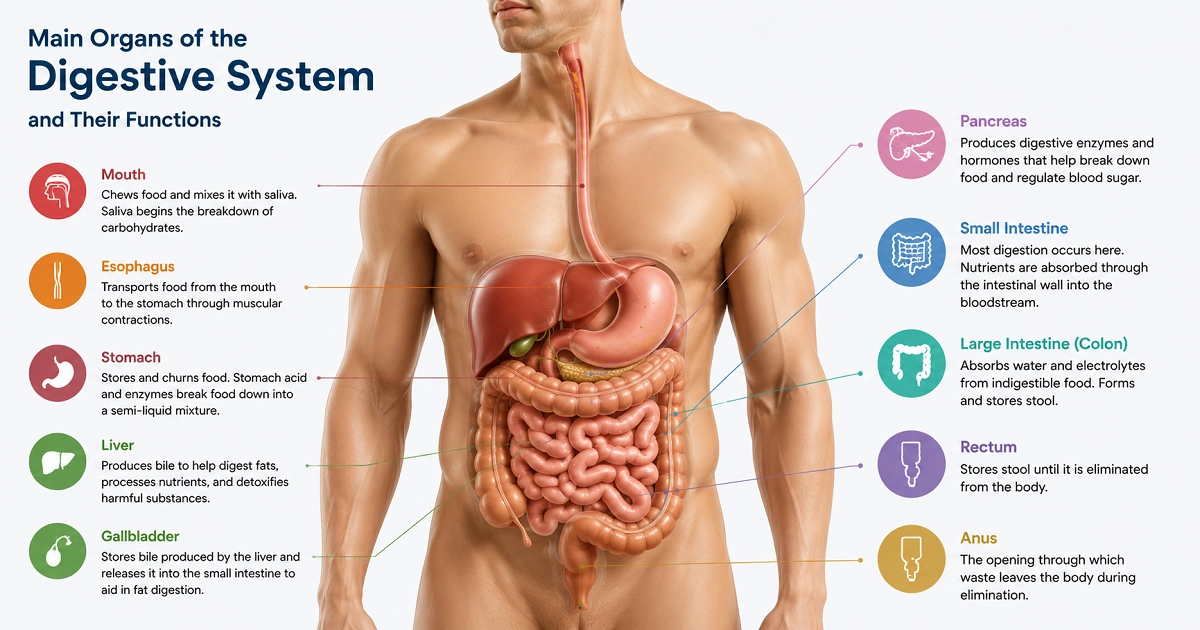
The digestive system consists of several organs that work together during digestion. Each organ has a different task, yet all contribute to food breakdown and nutrient absorption. Food travels through the digestive tract in a specific order, beginning in the mouth and ending with waste elimination.
Some organs move food forward, while others release digestive fluids. Together, these organs help maintain efficient digestion and support normal body processes.
Mouth and Salivary Glands
Digestion begins in the mouth. Teeth break food into smaller pieces through chewing, which supports easier swallowing. At the same time, salivary glands release saliva that moistens food and begins food breakdown.
Saliva also contains enzymes that help process carbohydrates. After chewing, the tongue pushes food toward the throat for swallowing into the digestive tract.
Esophagus
The esophagus is a muscular tube that connects the mouth to the stomach. After swallowing, food moves downward through wave-like muscle movements called peristalsis.
Peristalsis helps maintain smooth food movement through the digestive tract. This process continues automatically and supports efficient digestion.
Stomach
The stomach stores food temporarily and mixes it with digestive fluids. Strong stomach acid and gastric juices help break food into a semi-liquid mixture. These digestive fluids also play a role in protein digestion.
Muscular stomach walls continue mixing food during digestion. Furthermore, the stomach helps destroy some harmful microbes that may enter with food.
Small Intestine
The small intestine is the longest part of the digestive system. Most digestion completion and nutrient absorption happen in this organ. Nutrients pass through the intestinal lining and enter the bloodstream for transport around the body.
Tiny finger-like structures called villi increase the surface area for absorption. This larger surface helps maintain efficient nutrient processing. The small intestine also receives digestive fluids from nearby organs. The process of nutrient absorption mainly takes place through the intestinal lining inside this organ.
Liver, Gallbladder, and Pancreas
The liver, gallbladder, and pancreas support digestion even though food does not pass through them directly. The liver produces bile, which helps break down fats into smaller droplets. The gallbladder stores bile and releases it into the small intestine when needed.
The pancreas produces important digestive fluids and enzymes. These substances contribute to the breakdown of carbohydrates, proteins, and fats. Furthermore, the pancreas plays a role in fat digestion and nutrient processing. Different types of digestive enzymes help break food into smaller nutrients the body can absorb more easily.
Large Intestine, Rectum, and Anus
The large intestine absorbs remaining water and minerals from undigested food. This process supports water balance and helps form solid waste. The colon also contains helpful bacteria associated with digestion.
Afterward, waste moves into the rectum for temporary storage. Finally, the anus removes waste from the body through waste elimination. This final stage helps maintain digestive system balance and cleanliness.
How Digestion Works Step by Step
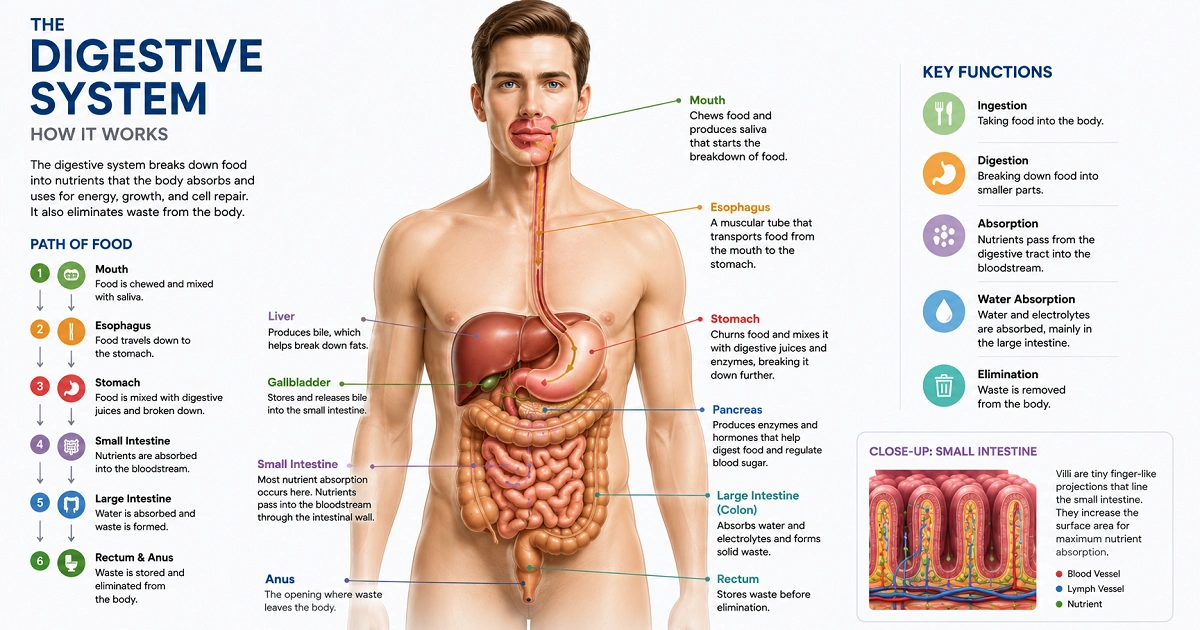
The digestive process follows a clear pathway from the mouth to the intestines. During these stages of digestion, food is broken into smaller nutrients the body can absorb and use. Each organ supports a different step, yet all work together to help maintain efficient digestion.
The movement of food through the digestive tract happens automatically. Muscles, digestive fluids, and organs all contribute to this process. Understanding how digestion works also helps explain how the body receives energy and nutrients from food.
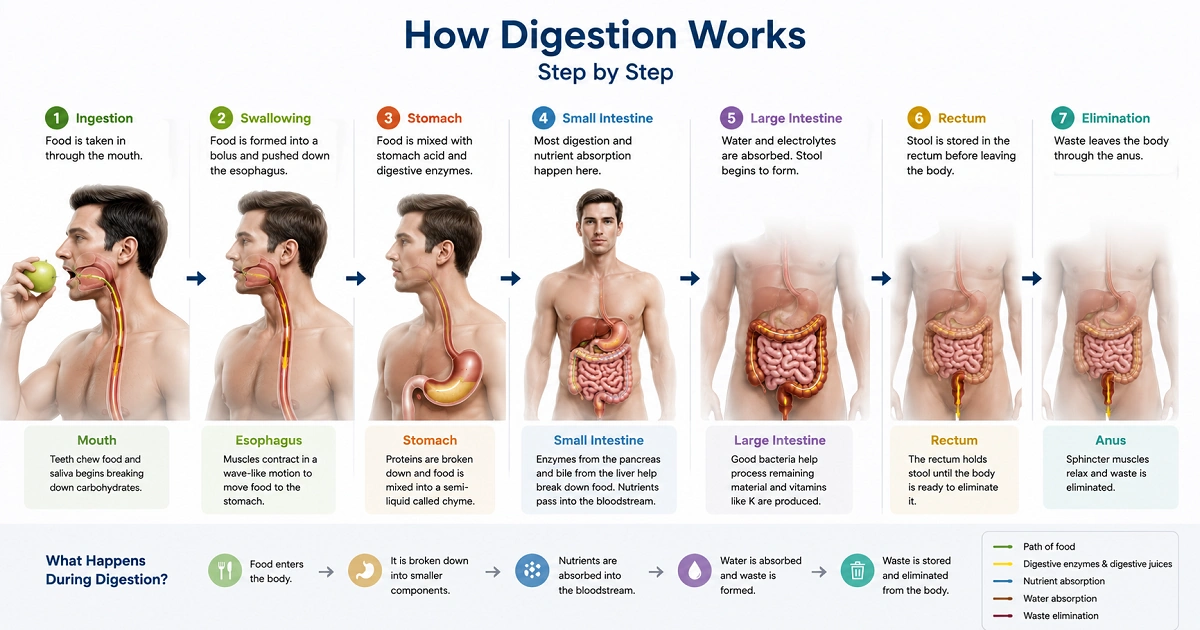
Food Enters the Mouth
Digestion begins when food enters the mouth. Teeth break food into smaller pieces through chewing, which supports easier swallowing and digestion. At the same time, saliva mixes with food and begins breaking down carbohydrates.
The tongue then pushes food toward the throat. After swallowing, food enters the esophagus and continues along the digestive pathway. This first stage helps prepare food for further digestion.
Food Travels Through the Digestive Tract
Food moves from the esophagus (Food Pipe) into the stomach through muscle contractions called peristalsis. These movements support steady food movement through the digestive tract. Inside the stomach, food mixes with stomach acid and digestive fluids.
The stomach gradually changes food into a semi-liquid mixture. Afterward, this mixture enters the small intestine, where most digestion steps continue. Different organs also release digestive fluids that support food breakdown.
Nutrients Are Absorbed in the Small Intestine
Most nutrient absorption takes place in the small intestine. Tiny villi inside the intestinal lining help nutrients move into the bloodstream. These absorbed nutrients then travel to cells throughout the body.
The digestive system helps maintain nutrient transport for energy, growth, and normal body function. Furthermore, the small intestine contributes to digestion completion by absorbing vitamins, minerals, fats, proteins, and carbohydrates.
Waste Leaves the Body
Undigested material moves from the small intestine into the large intestine. Here, the body absorbs remaining water and minerals. This process helps maintain fluid balance and supports waste formation.
Finally, waste enters the rectum before leaving the body through the anus. This last stage completes the digestive process step by step and helps maintain digestive system balance.
How the Digestive System Helps the Body Get Energy and Nutrients
The digestive system breaks food into smaller nutrients through different stages of digestion and absorption. These nutrients then enter the bloodstream through the small intestine and travel throughout the body. The body uses these nutrients for energy, growth, and cell repair.
This process is part of how the body uses food to support normal body function.
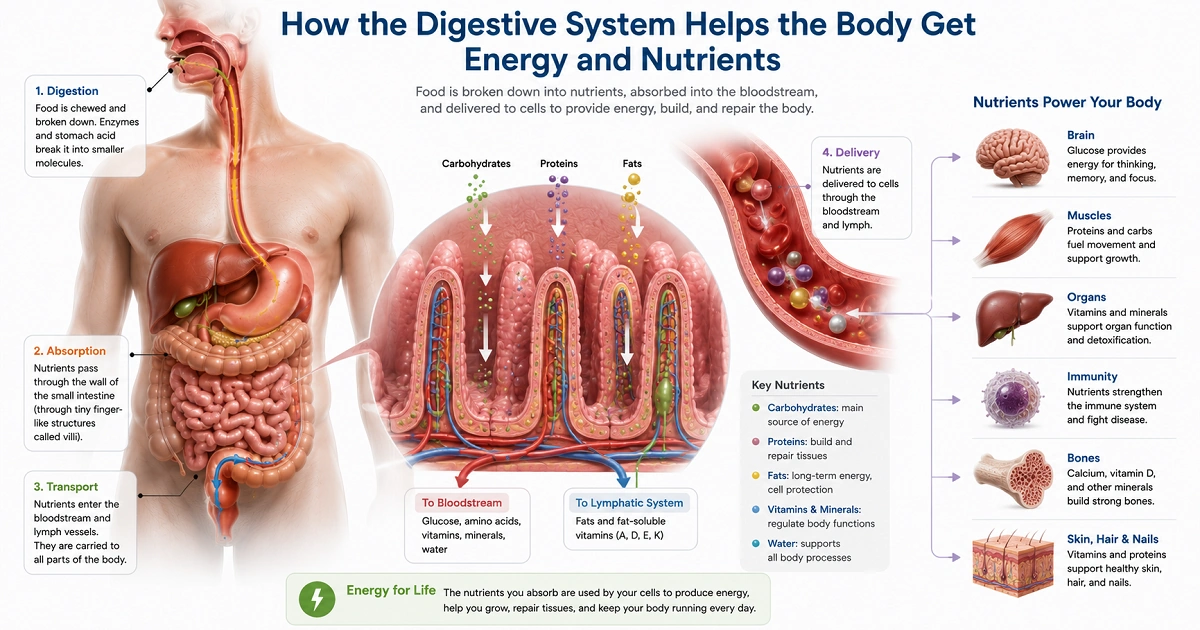
The body uses nutrients in several important ways. Carbohydrates support energy production, while proteins contribute to growth and tissue repair. Fats also contribute to energy storage and cell support.
Vitamins and minerals are important for many body systems. They support processes such as bone growth, muscle movement, and immune function. Furthermore, water helps transport nutrients and supports many daily functions.
The digestive system also contributes to steady nutrient transport between organs and cells. Without proper digestion, the body cannot use food efficiently. Therefore, digestion is closely associated with energy from food and overall wellness. The body gradually changes nutrients into usable energy through several internal processes involved in food becomes energy.
Common Factors That Support Healthy Digestion
Several daily habits support digestive health and help maintain efficient digestion. The digestive system works best when the body receives enough fiber, water, and regular physical activity. Healthy routines also contribute to better nutrient processing and waste removal.
Good digestion is often associated with balanced eating habits and proper hydration. Besides that, regular meals and active lifestyles help maintain smooth digestive function.

Fiber and Hydration
Fiber-rich foods support normal digestion by helping food move through the intestines more easily. Fruits, vegetables, whole grains, and legumes are often part of a balanced diet that supports digestive wellness.
Hydration is also important for digestion. Water helps soften waste and supports nutrient movement through the digestive tract. Furthermore, proper hydration helps maintain regular bowel movements. Fiber-rich foods and proper hydration are often part of a balanced diet that supports digestive health and nutrient balance.
Physical Activity and Eating Habits
Regular physical activity supports digestive movement and helps maintain overall body function. Simple activities such as walking may contribute to smoother digestion after meals.
Eating habits also play a role in digestive comfort. Eating slowly and chewing food properly supports easier food breakdown. Besides that, regular meal times help support regular digestion and digestive balance
Signs That the Digestive System Is Not Working Properly
The digestive system usually works without noticeable problems. However, some signs may suggest unhealthy digestion or digestive discomfort. These symptoms can appear occasionally and are often associated with eating habits, hydration, or lifestyle factors.
Common digestive problems include bloating, constipation, diarrhoea, and indigestion, which may develop from changes in digestion, eating habits, hydration, or lifestyle factors.
Bloating may cause a feeling of fullness or tightness in the abdomen. Constipation can make bowel movements difficult, while diarrhoea causes loose or watery stools.
Indigestion may lead to discomfort after eating, including burning sensations or stomach pressure. Furthermore, stomach issues sometimes develop when the digestive system struggles to process food efficiently.
Mild digestive discomfort can happen from time to time. However, frequent or long-lasting symptoms may affect normal digestion and overall comfort. Healthy eating habits, hydration, and regular activity often support digestive balance and help maintain digestive wellness.
Frequently Asked Questions About the Digestive System
The digestive system is one of the body systems responsible for breaking down food and absorbing nutrients. Many people search for simple answers about digestion, digestive organs, and nutrient absorption. These common questions help explain how digestion works in everyday life.
What Is the Main Function of the Digestive System?
The main function of the digestive system is to break down food into nutrients the body can absorb and use. These nutrients support energy production, growth, tissue repair, and normal body function. The digestive system also helps remove waste from the body.
Where Does Digestion Begin?
Digestion begins in the mouth. Chewing breaks food into smaller pieces, while saliva starts breaking down carbohydrates. After swallowing, food moves through the digestive tract for further digestion and nutrient absorption.
Which Organ Absorbs Most Nutrients?
The small intestine absorbs most nutrients from digested food. Tiny villi inside the intestinal lining increase the surface area for absorption. These structures help nutrients move into the bloodstream efficiently.
How Long Does Digestion Take?
The digestion process usually takes several hours, although timing varies between individuals and food types. Some foods move faster through the digestive tract than others. Hydration, physical activity, and meal size may also influence digestion speed.
Why Is the Small Intestine Important?
The small intestine is important because most digestion completion and nutrient absorption occur there. It also receives digestive fluids from nearby organs. Furthermore, the small intestine helps maintain efficient nutrient transport throughout the body.
Conclusion
The digestive system plays an important role in breaking down food and supplying nutrients to the body. Different digestive organs work together to support food movement, nutrient absorption, and waste removal. Each step contributes to energy production, growth, and normal body function.
The digestive process also helps maintain balance within many body systems. Nutrients absorbed through the intestines support tissues, muscles, and organs throughout the body. Furthermore, healthy digestion is associated with overall wellness and daily comfort.
Understanding how digestion works can help people make informed choices about eating habits and digestive health. Simple habits such as hydration, balanced meals, and regular activity support normal digestive function and nutrient processing.
Disclaimer:
This article is for informational purposes only. It discusses general food-related topics and does not provide medical advice. Nutritional needs vary between individuals, and food choices should be part of a varied and balanced diet. For personal health concerns, consult a qualified professional.