


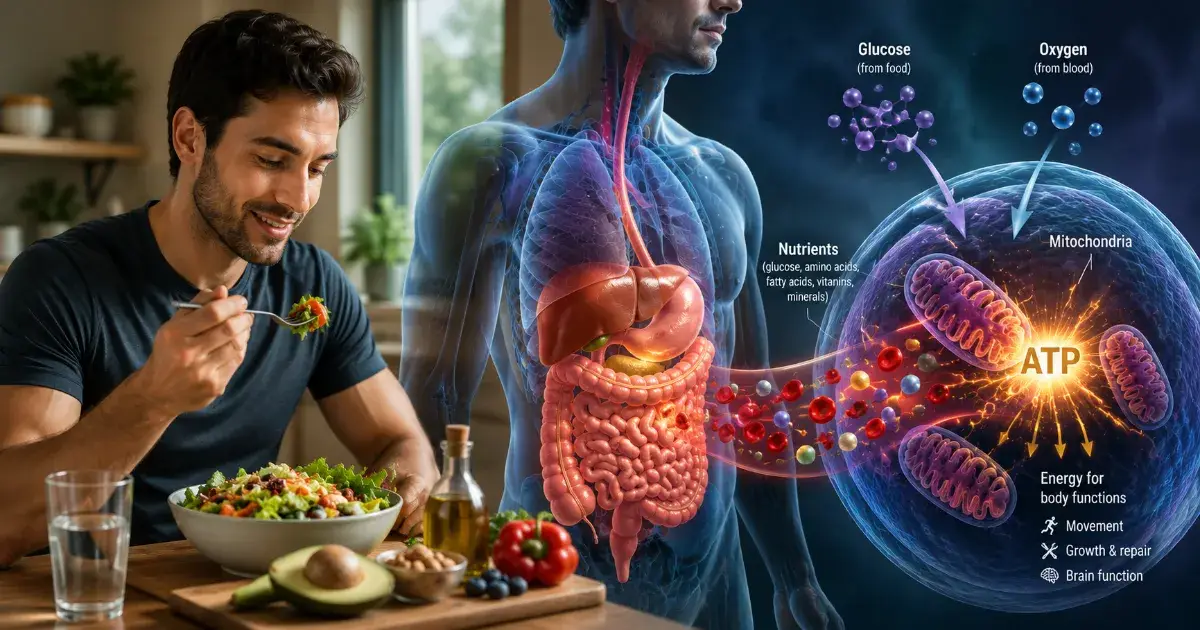
Food contains stored chemical energy that supports daily activities and helps maintain normal body function. After eating, the body converts food into usable energy through digestion, nutrient absorption, and cellular processes. Nutrients from food enter the bloodstream and move to cells, where energy production begins.
This energy supports breathing, circulation, movement, growth, and repair throughout the body. Cells constantly need fuel to perform important activities during the day. Therefore, the body continuously breaks down nutrients to meet changing energy demands.
Carbohydrates, fats, and proteins all contribute to energy production. However, glucose remains the body’s preferred energy source. Understanding how food becomes energy also explains why balanced nutrition is important for overall health.
How Food Becomes Energy in the Human Body
The body converts food into energy through several connected processes. After eating, digestion breaks food into smaller nutrients that the body can absorb and use. The process of how the body uses food also involves nutrient absorption, bloodstream transport, and cellular energy production.
Glucose from carbohydrates plays a major role in energy production. Cells combine glucose with oxygen to release usable energy. This process supports movement, growth, repair, breathing, circulation, and many other body functions. Furthermore, cells constantly need energy to maintain normal function throughout the day.
Inside cells, tiny structures called mitochondria help produce ATP. ATP is the main energy source used by cells for daily activities. Therefore, the body continuously changes nutrients from food into usable energy to support normal body processes.
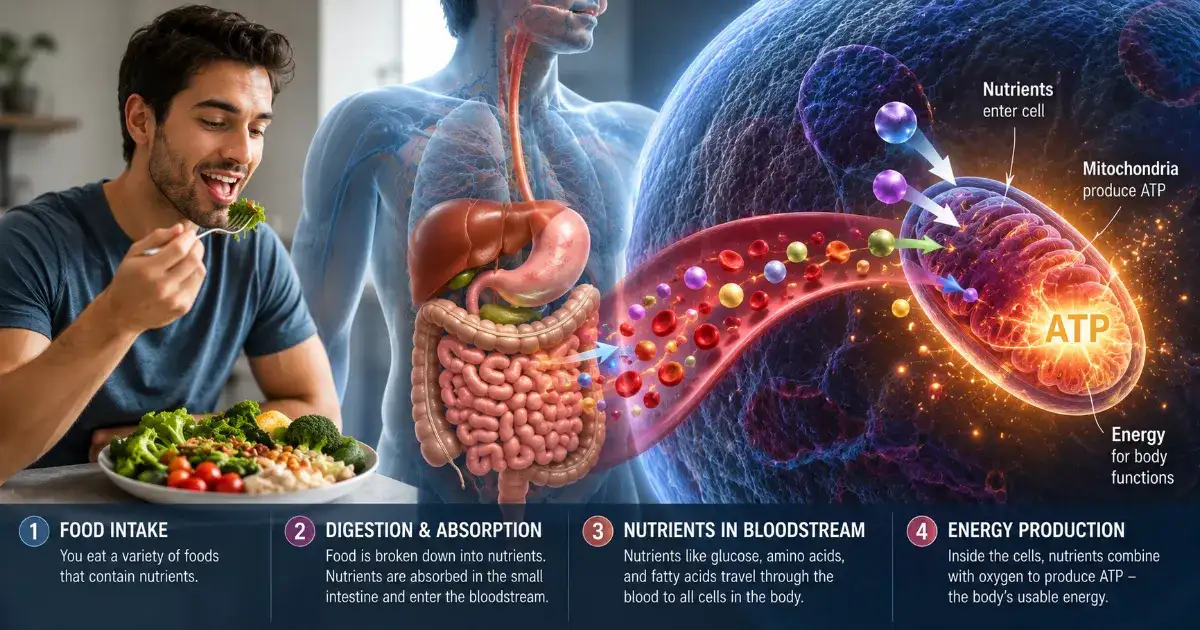
The energy production process also depends on proper digestion and nutrient absorption. Without these steps, cells cannot receive the nutrients needed for energy generation. Besides supporting physical activity, energy from food also plays a role in brain function, temperature regulation, and muscle movement.
Steps in the Food-to-Energy Process
- Food enters the digestive system and begins breaking down into smaller
particles. - Digestion changes carbohydrates, proteins, and fats into usable nutrients.
- The small intestine absorbs nutrients into the bloodstream.
- Blood transports nutrients and oxygen to body cells.
- Cells convert glucose into usable energy through cellular respiration.
- Mitochondria produce ATP, which supports normal cell activities.
How Digestion Helps Release Energy From Food
Digestion plays a central role in helping the body get energy from food. Before cells can use nutrients, food must first break down into smaller substances. This process helps release nutrients that contribute to energy production and normal body function.
Mechanical digestion begins when chewing breaks food into smaller pieces. Stomach movements also help mix and crush food during digestion. Smaller food particles are easier for digestive juices and enzymes to process. Therefore, mechanical digestion supports faster nutrient breakdown.
Chemical digestion works alongside mechanical digestion. Digestive juices and enzymes break carbohydrates into glucose, proteins into amino acids, and fats into fatty acids. These smaller nutrients can then move through the intestinal wall and enter the bloodstream.
The digestive system also helps maintain a steady nutrient supply for cells. Without proper digestion, nutrients cannot reach cells efficiently for energy production. Furthermore, digestion supports nutrient absorption, which is important for normal growth, repair, and daily body activities.
The digestive system helps break down food into nutrients that cells later use for energy production.
Mechanical and Chemical Digestion
Mechanical digestion physically breaks food into smaller pieces through chewing and stomach movements. This process increases the surface area of food and helps digestive juices work more effectively.
Chemical digestion uses enzymes and digestive acids to break nutrients into simpler forms. Carbohydrates change into glucose, proteins into amino acids, and fats into fatty acids. These nutrients later contribute to energy production inside body cells.
How Enzymes Break Food Into Nutrients
Digestive enzymes are special proteins that help speed up nutrient breakdown. Different enzymes work on different nutrients during digestion. For example, some enzymes break carbohydrates into glucose, while others act on proteins and fats.
This nutrient breakdown process helps the body absorb usable nutrients more efficiently. Glucose later supports cellular energy production, while amino acids and fatty acids also contribute to normal body functions. Besides energy production, these nutrients help maintain growth, repair, and other important processes.
Enzymes therefore play a major role in converting food into forms the body can absorb and use effectively.
How Nutrients Are Absorbed Into the Bloodstream
After digestion breaks food into smaller nutrients, the body begins nutrient absorption in the small intestine. This process helps move usable nutrients into the bloodstream for energy production and normal body function. The inner lining of the small intestine contains tiny finger-like structures called villi and microvilli.
These structures increase the surface area for absorption. Therefore, the body can absorb more nutrients efficiently in a shorter time. Glucose, amino acids, fatty acids, vitamins, and minerals pass through the intestinal wall and enter the blood.
The bloodstream then transports absorbed nutrients to different cells across the body. Cells use these nutrients for growth, repair, movement, and energy production. Furthermore, oxygen also travels through the blood and supports cellular energy processes.
The small intestine therefore plays a major role in helping nutrients reach body cells. Without proper absorption, cells would not receive the nutrients needed to maintain normal function and daily activities.
Why the Small Intestine Is Important for Energy Production
The small intestine is the main site of nutrient absorption in the digestive process. Its villi and microvilli help absorb nutrients quickly and efficiently. After absorption, nutrients enter the bloodstream and travel to cells throughout the body.
Glucose from carbohydrates plays a major role in cellular energy production. Amino acids and fatty acids also contribute to normal body functions. Therefore, the small intestine supports the body’s ability to convert food into usable energy.
How Cells Convert Nutrients Into Usable Energy
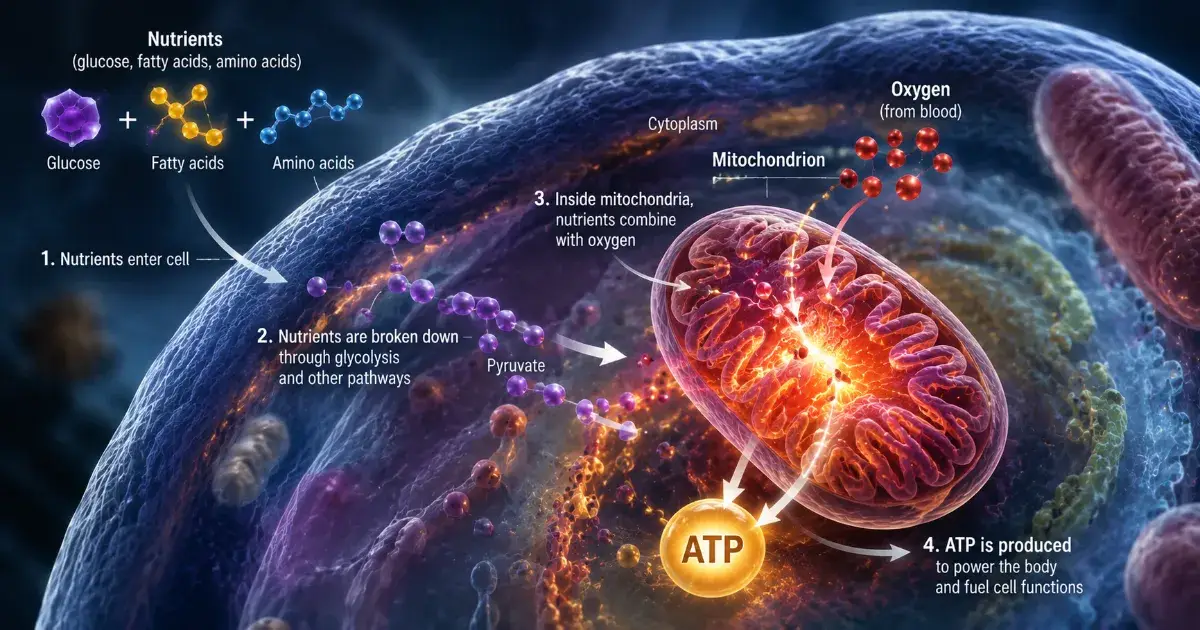
Cells convert nutrients into usable energy through a process called cellular respiration. After nutrients enter the bloodstream, glucose moves into body cells with the help of hormones such as insulin. Oxygen also enters cells through the blood and supports energy production inside the cell.
Inside cells, glucose reacts with oxygen to release chemical energy. This process mainly takes place in mitochondria, which are tiny structures often called the cell’s power centers. The released energy helps cells support movement, repair, circulation, and other important activities.
The body continuously produces energy because cells constantly need fuel for movement, growth, repair, breathing, circulation, and temperature control. Furthermore, the brain, muscles, and heart require large amounts of energy throughout the day.
The cellular energy process therefore connects digestion, nutrient absorption, oxygen transport, and ATP production. Each step plays a role in helping the body convert food into usable energy efficiently.
What Is Cellular Respiration?
Cellular respiration is the process cells use to release energy from glucose. During this process, cells combine glucose with oxygen to produce usable energy. This process also produces carbon dioxide and water as natural byproducts.
This process mainly occurs inside mitochondria. It helps maintain normal cell activities and supports body functions such as movement, circulation, breathing, and muscle activity. Furthermore, cellular respiration contributes to continuous energy production throughout the day.
Without oxygen and glucose, cells cannot release enough usable energy efficiently. Therefore, both nutrients and oxygen are important for normal energy production inside the human body.
What Is ATP and Why Does the Body Need It?
ATP stands for adenosine triphosphate. It is the main form of usable energy inside body cells. Cells produce ATP during cellular respiration and use it to support many important activities.
ATP helps maintain muscle movement, nerve signaling, circulation, growth, repair, and temperature regulation. Furthermore, every cell needs a steady ATP supply for normal function. Even simple actions such as walking, blinking, and breathing depend on this energy source.
The body stores only small amounts of ATP at one time. Therefore, cells continuously produce more ATP from nutrients obtained through food. This constant energy production supports daily activities and helps maintain normal body function.
Role of Mitochondria in Energy Production
Mitochondria are small structures found inside most body cells. They play a major role in cellular energy production by helping convert glucose and oxygen into ATP.
Cells with high energy demands often contain more mitochondria. For example, muscle and heart cells require large amounts of energy for continuous activity. Therefore, mitochondria are especially important for normal movement, circulation, and other energy-dependent body functions.
What Nutrients Provide Energy to the Body
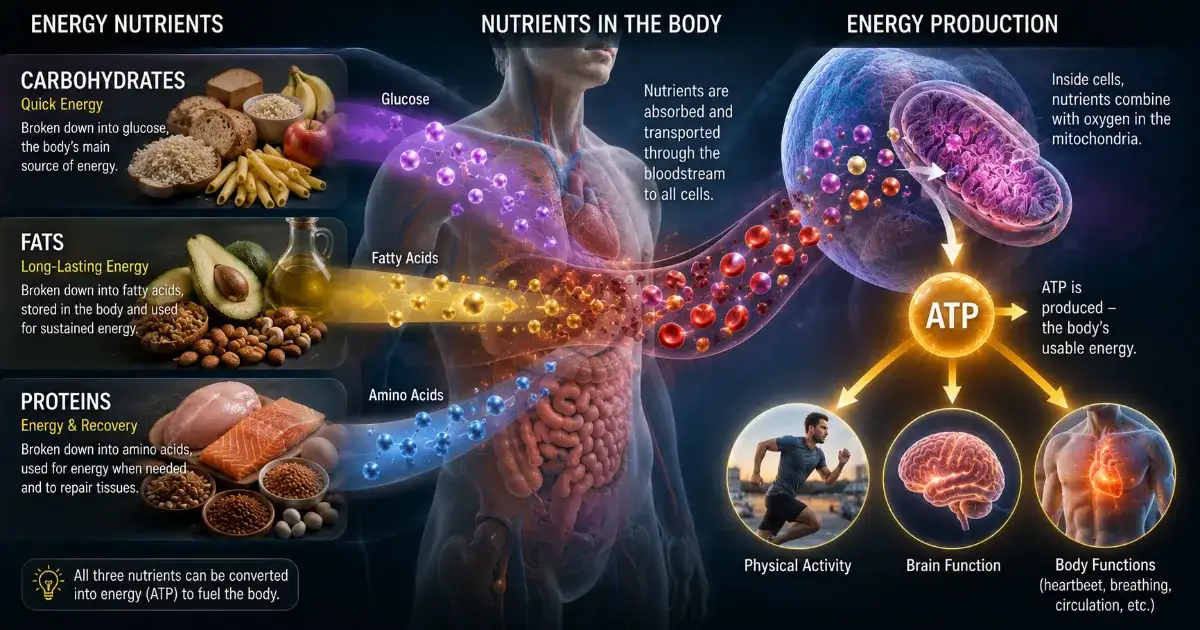
The body mainly gets energy from carbohydrates, fats, and proteins. These nutrients contribute to energy production and support normal body function. However, the body does not use all nutrients in the same way or at the same speed.
Carbohydrates are usually the body’s preferred energy source because they break down into glucose quickly. Glucose then enters cells and supports ATP production. Fats also provide energy, especially during long periods of activity or when the body stores extra energy for later use.
Proteins mainly support growth and repair, but they can also contribute to energy production when needed. Together, these nutrients help maintain body processes and provide energy for daily activities.
The three main energy nutrients are part of a balanced diet and play different roles in the body. The macronutrients also support growth, tissue repair, and overall health besides energy production.
Why Carbohydrates Are the Body’s Preferred Energy Source
Carbohydrates break down into glucose during digestion. Glucose moves into the bloodstream and enters cells for energy production. Therefore, carbohydrates provide quick and efficient energy for daily activities.
The brain and muscles especially depend on glucose for normal function. Furthermore, the body can easily convert many carbohydrate-rich foods into usable energy. Foods such as grains, fruits, vegetables, and legumes therefore contribute to steady energy supply throughout the day.
Carbohydrates are also important as part of a balanced diet because they support physical activity and many essential body functions.
How Fats and Proteins Support Energy Needs
Fats provide concentrated and long-lasting energy for the body. The body often stores extra fat as an energy reserve for future needs. During longer activities or reduced food intake, stored fats contribute to energy production.
Proteins mainly help maintain growth, tissue repair, and muscle structure. However, the body can also use proteins for energy when carbohydrate supplies become low. Amino acids from proteins therefore sometimes contribute to the cellular energy process.
Fats and proteins both play a role in supporting normal body function and maintaining overall energy balance.
How the Body Stores Energy for Later Use
The body does not use all energy from food immediately. Instead, it stores extra energy for future needs. These energy reserves help support body functions between meals, during physical activity, and while sleeping.
One major form of stored energy is glycogen. The body stores glycogen mainly in the liver and muscles. When energy levels drop, the body breaks glycogen into glucose and releases it into the bloodstream. This process helps maintain a steady energy supply for cells.
The body also stores excess energy as fat in adipose tissue. Fat storage provides long-lasting energy because fats store more energy per gram than carbohydrates. During longer periods without food, the body can use stored fat for energy production.
Stored energy therefore plays an important role in helping maintain normal body function throughout the day. Energy reserves also support movement, temperature regulation, muscle activity, and many other cellular processes.
Glycogen and Fat Storage in the Human Body
Glycogen is the body’s short-term energy reserve. The liver stores glycogen to help maintain blood glucose levels, while muscles store glycogen for physical activity. These glycogen stores provide quick energy when the body needs it.
Fat acts as a long-term energy reserve. The body stores extra calories as fat for future energy needs. Furthermore, fat storage contributes to insulation and helps support normal body functions during lower energy intake.
Factors That Affect How the Body Produces Energy
Several factors influence how efficiently the body produces and uses energy. A balanced diet provides nutrients that support ATP production and normal cellular activity. Without enough nutrients, cells may not receive the fuel needed for steady energy levels.
Hydration also plays a role in nutrient transport and cellular processes. Water helps move nutrients and oxygen through the bloodstream to body cells. Furthermore, oxygen is important for normal cellular respiration and energy production.
Sleep and physical activity also affect metabolism and energy balance. During sleep, the body restores many processes associated with metabolism and energy balance. Regular physical activity supports circulation, muscle function, and efficient energy use.
The body’s metabolism additionally influences how quickly nutrients convert into usable energy. Therefore, healthy daily habits contribute to stable energy production and normal body function.
Why Healthy Habits Support Better Energy Production
Healthy habits help maintain efficient energy production throughout the body. Balanced nutrition provides glucose, amino acids, fatty acids, vitamins, and minerals that contribute to normal cellular processes.
Regular physical activity supports circulation and oxygen delivery to cells. Proper sleep also helps maintain metabolism and energy balance. Besides supporting ATP production, these habits contribute to overall health and normal body function as part of a balanced lifestyle.
Frequently Asked Questions
Many people want to understand how the body converts food into usable energy. These common questions explain important parts of the body energy process in a simple way.
How does the body turn food into energy?
The body turns food into energy through digestion, nutrient absorption, and cellular respiration. Digestion breaks food into nutrients, which enter the bloodstream and move to body cells. Cells then use glucose and oxygen to produce ATP, which supports normal body functions.
What is the main source of energy for the body?
Carbohydrates are the body’s main energy source. During digestion, carbohydrates break down into glucose, which cells use for energy production. Glucose especially supports brain activity, muscle movement, and many other important functions.
Which process helps the body get energy from food?
Cellular respiration is the main process that releases usable energy from nutrients. During this process, cells combine glucose with oxygen to produce ATP energy. Digestion and nutrient absorption also contribute to this energy production process.
What organ produces energy in the body?
No single organ produces all body energy. Instead, cells throughout the body produce energy inside mitochondria. However, organs such as the digestive system, liver, lungs, and heart all play roles associated with nutrient transport and energy production.
What is ATP in the human body?
ATP stands for adenosine triphosphate. It is the main form of usable energy inside body cells. ATP supports movement, circulation, breathing, repair, and many other normal body functions.
What stores energy for the body?
The body stores energy mainly as glycogen and fat. The liver and muscles store glycogen for short-term energy needs. Fat tissue stores extra calories for long-term energy reserves and helps maintain energy balance.
Conclusion
The body converts food into usable energy through several connected processes. Digestion breaks food into nutrients, while the small intestine absorbs these nutrients into the bloodstream. Blood then transports nutrients and oxygen to body cells.
Inside cells, cellular respiration converts glucose into ATP, which supports normal body functions and daily activities. Carbohydrates, fats, and proteins all contribute to energy production in different ways. Furthermore, stored glycogen and fat help maintain energy supply between meals and during physical activity.
This continuous energy process supports movement, growth, repair, circulation, breathing, and many other activities important for overall health.
Disclaimer
Disclaimer:
This article is for informational purposes only. It discusses general food-related topics and does not provide medical advice. Nutritional needs vary between individuals, and food choices should be part of a varied and balanced diet. For personal health concerns, consult a qualified professional.