


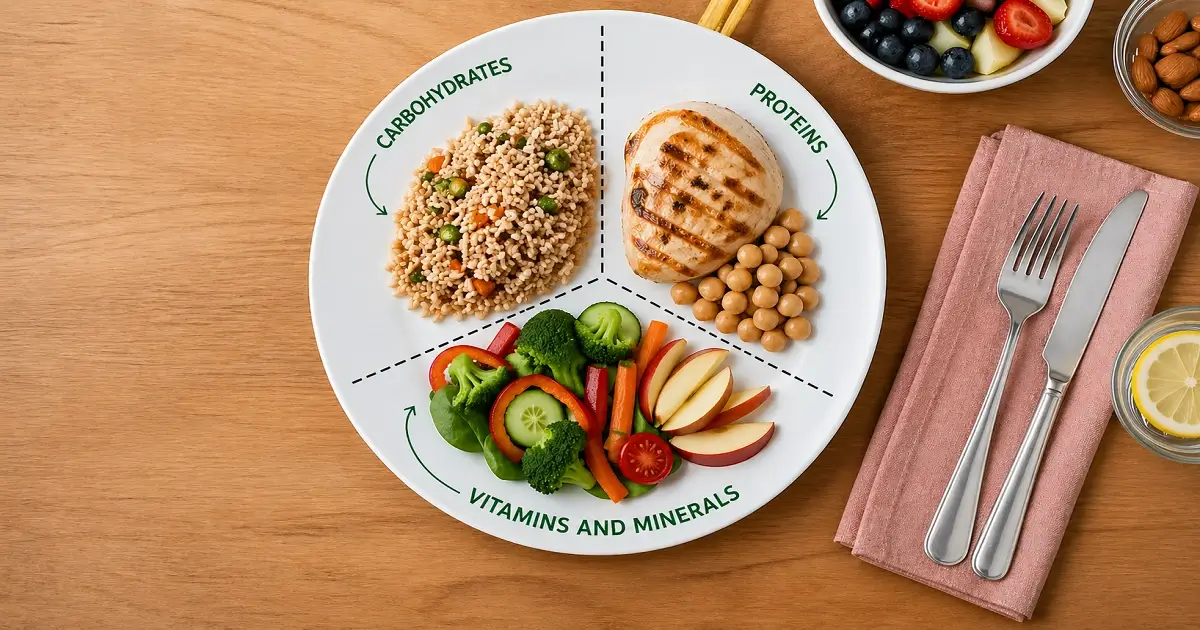
Balanced meals combine different food groups in the right proportions. They provide energy, support body functions, and help maintain overall health. In simple terms, instead of eating one type of food, a mix of foods works together as part of a balanced diet.
Understanding how to build balanced meals makes every day eating more effective. For example, adding grains, protein, and vegetables in one meal creates better balance than eating them alone. Such combinations help maintain steady energy and contribute to normal body function.
Simple food group combinations with everyday meal examples make this approach clear. The focus stays on practical choices that fit daily eating habits and support consistency.
What Does It Mean to Build a Balanced Meal?
Building a balanced meal means combining different food groups in one plate in the right proportions. It is not about eating more food, but about choosing foods that work together. Such meals support energy, help maintain body functions, and contribute to overall health. Basic healthy diet guidance also highlights the importance of including a variety of foods for overall balance.
A balanced meal also focuses on how foods interact. For example, grains provide energy, proteins support repair, and vegetables contribute protective nutrients. When combined, they play a role in maintaining steady energy and normal function.
This idea is closely linked to the food groups framework. It explains how different foods fit together as part of a balanced diet. Therefore, meal composition becomes more practical when foods are combined rather than eaten separately.
Balanced Meals as a Combination of Food Groups
Balanced meals are built by combining food groups, not by relying on a single type of food. Each group plays a different role. Some provide energy, while others support growth and protection.
For example, grains supply carbohydrates that support daily activity. Proteins help maintain body tissues. Vegetables and fruits contribute vitamins and minerals that are important for normal function. When these are combined, they create complete meal nutrition.
Therefore, combining food groups helps maintain balance in every meal. It also supports better nutrient use in the body. This approach makes meals more effective and suitable for daily eating.
Why Single-Food Meals Are Not Nutritionally Complete
Meals that include only one type of food are often incomplete. For example, eating only rice provides energy but lacks enough protein and protective nutrients. Similarly, eating only fruit does not supply sufficient protein or fats.
Such meals may fill the stomach but do not support full nutritional needs. They lack balance and do not contribute to proper meal composition. Over time, this can affect how the body functions.
In contrast, combining food groups creates more complete meals. It helps maintain energy levels and supports normal body processes. Therefore, balanced meals are associated with better overall nutrition.
The Balanced Plate Approach to Building Meals
The balanced plate approach provides a simple way to combine food groups in daily meals. Instead of focusing on complex plans, it uses visual proportions. This makes it easier to understand and apply in everyday eating.
This approach helps maintain variety and improves daily meal balance without strict rules. It also supports consistent meal patterns. Therefore, it plays a role in making balanced meals practical and sustainable.
Widely used balanced meal plate guidance supports this method, similar to the balanced plate concept.
Basic Plate Structure
A balanced meal plate is usually divided into simple portions. Half of the plate includes vegetables and fruits. These foods contribute fiber, vitamins, and minerals that support normal function.
One quarter of the plate includes protein foods such as pulses, eggs, or dairy. Protein supports body repair and growth. It is also important for maintaining strength.
The remaining quarter includes grains like rice, wheat, or other cereals. These foods provide carbohydrates that help maintain energy levels. In addition, small amounts of healthy fats can be included. Fats support nutrient absorption and play a role in overall balance.
This balanced meal plate helps maintain proper proportions. It also ensures that different food groups are included as part of a balanced diet.
How Portion Balance Improves Meal Quality
Portion balance plays an important role in improving meal quality. When one food group is too large, it can reduce overall balance. For example, too many grains with little protein may not support complete nutrition.
Balanced portions help maintain steady energy throughout the day. They also support better digestion and nutrient use. Therefore, focusing on meal proportions improves how the body responds to food.
This approach is simple and practical. It does not require strict measurement but encourages awareness. Over time, balanced portions contribute to better eating habits and consistent nutrition.
Step-by-Step Method to Combine Food Groups
To understand how to build balanced meals, it helps to follow simple meal building steps. This method shows how to build balanced meals using simple food combinations. This method focuses on combining food groups in a structured way.
It contributes to daily nutrition and helps maintain consistency in eating habits. Each step adds a specific role to the meal, therefore improving overall balance. This approach also makes daily meal structure easier to manage.
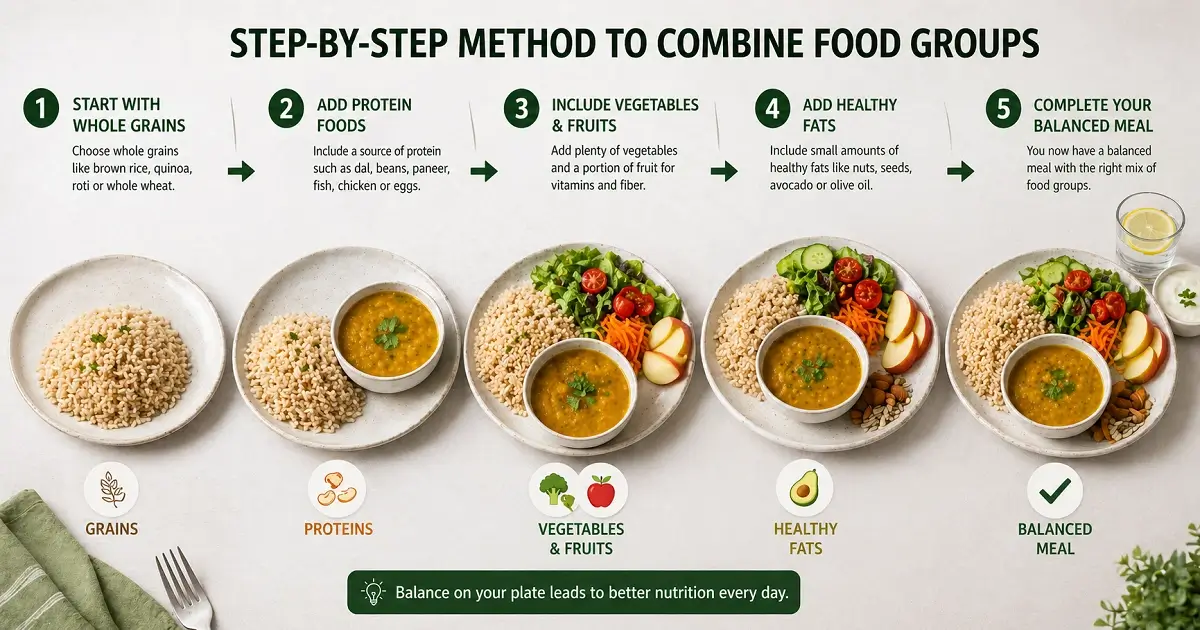
Step 1: Start with a Base Food (grains or staples)
A balanced meal often begins with a base food such as rice, wheat, or other staples. These foods provide energy and support daily activity. They are an important part of a balanced diet because they help maintain steady fuel for the body.
You can choose from different grain-based foods depending on your preference. This step creates a foundation for combining other food groups effectively.
Step 2: Add a Protein Source
After choosing a base, adding a protein source helps improve meal quality. Protein supports body repair and plays a role in maintaining strength. It is also important for normal function.
Including different protein sources such as pulses, dairy, or eggs contributes to balanced meal composition. This step helps maintain fullness and supports daily nutrition.
Step 3: Include Vegetables or Fruits
Vegetables and fruits add color, variety, and important nutrients to meals. They contribute vitamins, minerals, and fiber, which support normal body function. Including them helps maintain better balance in meals.
Adding vegetables in daily meals and fruits in diet improves meal quality. Therefore, this step plays a key role in combining food groups effectively.
Step 4: Add Healthy Fats for Balance
Healthy fats are often added in small amounts to complete a meal. They support nutrient absorption and contribute to overall balance. Fats also play a role in maintaining energy levels.
Including healthy fats in moderation helps maintain proper meal structure. This step supports balanced eating without excess.
Step 5: Optional Additions (Dairy, Nuts, Seeds)
Optional foods like dairy, nuts, and seeds can further improve meal composition. They contribute additional nutrients and support variety in meals. These foods are associated with balanced eating when used in suitable amounts.
Adding dairy foods or nuts and seeds can enhance daily meal composition. Therefore, they help maintain diversity in meals.
Examples of Balanced Meals in Daily Diet
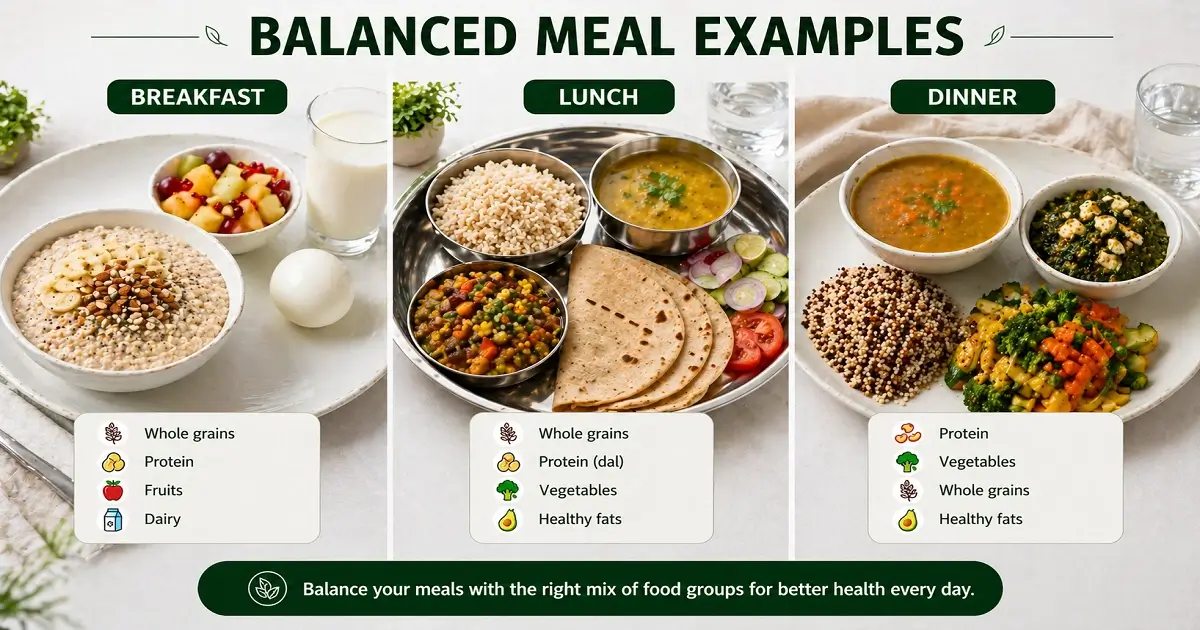
Balanced meal examples help connect theory with real-life eating. They show how to combine food groups in simple ways. These examples support daily meal ideas and make balanced eating easier to follow. They also contribute to better consistency in food choices.
Simple Indian Meal Examples
A common Indian meal often includes dal, roti, sabzi, and salad. This combination provides energy, protein, and protective nutrients. Each food group plays a role in supporting balanced nutrition.
Another example is rice with curry and vegetables. Rice provides energy, while curry adds protein and vegetables contribute important nutrients. Together, they form a simple balanced meal.
These meal combinations are practical and part of daily eating habits. These combinations show how to build balanced meals using familiar foods. They help maintain balance without complex planning. Therefore, they are associated with consistent and structured meal patterns.
Quick Balanced Meals for Busy Days
Busy schedules often require simple balanced meals that are quick to prepare. Bowl meals are a good example. They combine grains, protein, and vegetables in one dish.
For instance, a bowl with rice, beans, and vegetables creates a balanced combination. Such meals support daily nutrition and help maintain energy levels.
Simple combinations like sandwiches with vegetables and protein also contribute to balanced eating. These options make it easier to maintain structured meal planning even on busy days.
Balanced Breakfast, Lunch, and Dinner Ideas
Balanced meals can be created for every part of the day. For breakfast, options like eggs with toast and fruit provide a mix of nutrients. This combination supports energy and helps maintain focus.
Lunch may include rice or roti with protein and vegetables. This supports daily activity and contributes to steady energy levels. Dinner can follow a similar pattern with lighter portions.
These daily meal ideas show how balanced meals can fit into regular routines. They support consistency and help maintain proper meal composition throughout the day.
Popular Food Combining Rules Explained
Food combining rules are often used as simple guides to build balanced meals. These rules suggest ways to arrange food groups in daily eating. They are easy to remember and help maintain structure in meals. Broader balanced diet guidance also emphasizes including a variety of foods rather than following fixed patterns.
However, they are simplified diet rules and may not cover full nutritional needs. Therefore, they should be seen as supportive ideas, not strict methods. When used wisely, they can contribute to better meal composition and consistency.
What Is the 3-3-3 Rule in Meals?
The 3-3-3 rule is a simple way to divide meals into three parts. It usually includes three main food groups such as carbohydrates, proteins, and fruits or vegetables. Each part contributes to overall balance and plays a role in normal body function.
This rule helps maintain variety in meals without complex planning. For example, a plate with grains, protein, and vegetables follows this structure. It supports energy, repair, and protection in one meal.
However, this rule is a general guideline. It does not define exact portions or specific foods. Therefore, it should be used along with basic meal balance principles as part of a balanced diet.
What Is the 5-4-3-2-1 Eating Rule?
The 5-4-3-2-1 eating rule focuses on including different types of foods throughout the day. It often suggests eating a set number of servings from various food groups. This creates a structured eating pattern and helps maintain variety.
For example, it may include fruits, vegetables, grains, proteins, and other food items in planned amounts. This approach supports daily nutrition and contributes to balanced meal composition.
However, this rule can vary in meaning depending on its use. It is associated with structured eating methods but may not suit every lifestyle. Therefore, it works best when adapted to individual needs and combined with practical meal planning.
How to Adjust Balanced Meals for Different Goals
Balanced meals can be adjusted based on personal needs and daily goals. While the basic structure remains the same, small changes in portions and food choices can make a difference. This approach supports flexibility and helps maintain consistency in eating habits.
Goal-based meal planning allows meals to match different lifestyles. It also helps maintain balance while focusing on specific needs. Therefore, balanced meals can be adapted without changing their core structure.
Balanced Meals for Weight Management
Balanced meals for weight management focus on portion control and food selection. Including more vegetables and moderate portions of grains helps maintain balance. Protein plays a role in supporting fullness and helps maintain steady eating patterns.
Such meals contribute to controlled energy intake while still supporting normal body function. They are associated with better meal structure and consistency. Therefore, adjusting portions helps maintain balance without removing food groups.
Balanced Meals for Daily Energy and Health
Balanced meals for daily energy focus on steady and consistent food combinations. Including grains, protein, and vegetables supports energy levels throughout the day. These combinations help maintain activity and contribute to normal function.
Regular meal patterns also play a role in maintaining balance. Eating at consistent times helps support energy and daily performance. Therefore, balanced meals are important for overall health and everyday nutrition.
Common Mistakes When Combining Food Groups
Knowing how to build balanced meals also means avoiding common meal planning mistakes. Small errors in food combinations can lead to unbalanced meals and nutrition gaps. These issues may affect how well a meal supports daily needs.
Many people focus on one type of food and ignore others. However, balanced meals require a mix of food groups. Therefore, paying attention to meal composition helps maintain better nutrition. It also contributes to more consistent eating habits.
Overloading One Food Group
One common mistake is filling most of the plate with a single food group. For example, large portions of rice or bread with very little protein or vegetables can create imbalance.
Such meals provide energy but lack other important nutrients. This can lead to poor food combinations over time. Therefore, balancing portions helps maintain better meal structure and supports overall nutrition.
Ignoring Protein or Healthy Fats
Another mistake is leaving out protein or healthy fats. Meals that include only grains and vegetables may feel light but are often incomplete. Protein supports body repair, while fats play a role in nutrient absorption.
Without these components, meals may not support fullness or steady energy. Including them as part of a balanced diet helps maintain proper meal composition. Therefore, both protein and fats are important for normal function.
Low Variety in Meals
Eating the same foods every day can reduce variety in meals. Even if the meal looks balanced, limited food choices may lead to nutrition gaps. Different foods contribute different nutrients.
Adding variety helps maintain better balance and supports overall health. For example, rotating vegetables, grains, and protein sources improves meal quality. Therefore, variety is associated with more complete and balanced eating.
Final Thoughts
Building balanced meals does not require complex rules or strict planning. Simple food combinations and mindful portions can support daily nutrition. This approach helps maintain consistency and makes meals easier to manage.
Flexibility also plays a role in balanced eating. Food choices may vary based on availability and preference. However, combining food groups in the right way helps maintain structure in meals.
Over time, these habits contribute to better eating patterns. Balanced meals support normal body function and are an important part of a balanced diet.
Disclaimer:
This article is for informational purposes only. It discusses general food-related topics and does not provide medical advice. Nutritional needs vary between individuals, and food choices should be part of a varied and balanced diet. For personal health concerns, consult a qualified professional.