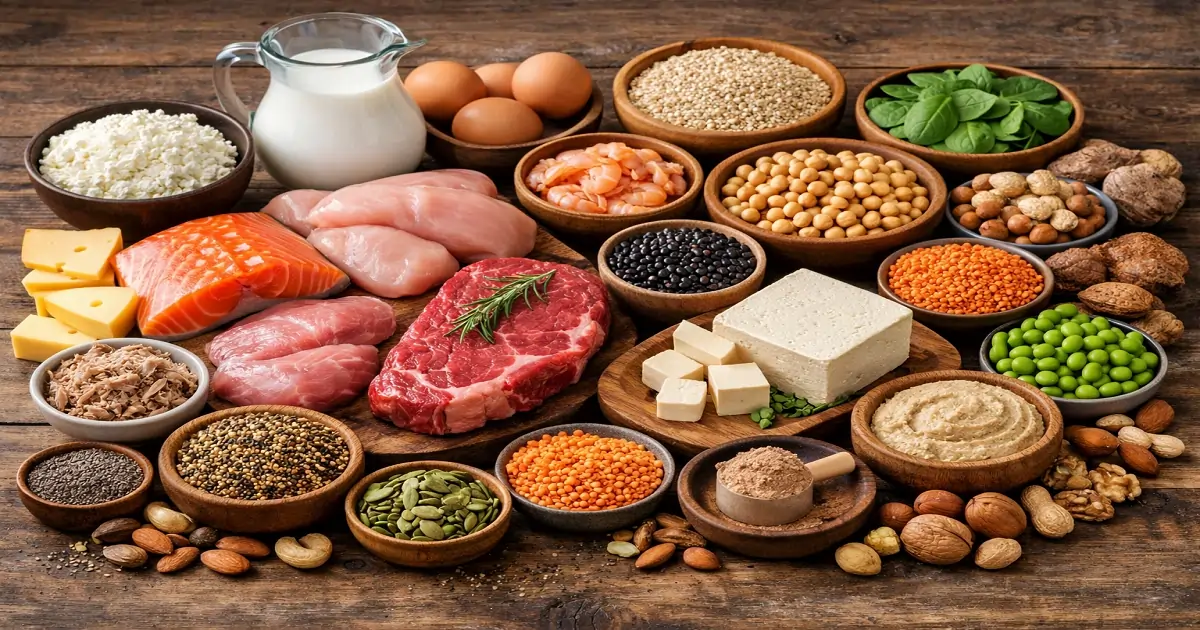
Protein-rich foods play an important role in daily eating and overall nutrition. They are part of many common meals and food choices. From simple home-cooked dishes to quick snacks, these foods are widely included in everyday diets.
These foods come from both plant and animal sources. For example, lentils, beans, eggs, and milk are familiar options. Therefore, people can choose from a wide range of protein sources based on their preferences and habits.
These foods support body functions and help maintain normal growth and repair. They are also important for balanced eating patterns. Including a mix of different sources can make meals more complete and satisfying.
Understanding these foods makes it easier to choose better options in daily life.
What Are Protein Foods?
Protein foods are those that provide protein as a key nutrient, an important nutrient needed for normal body function. They are commonly included in everyday meals and snacks. For example, items like lentils, eggs, and milk are common protein foods found in many diets.
It is useful to understand the difference between foods and nutrients. Protein is the nutrient, while protein foods are the sources that provide it. Therefore, instead of focusing only on nutrients, people often choose foods that naturally contain them.
These foods generally come from two main categories: plant sources and animal sources. Both types contribute to a balanced diet and offer variety in food choices.
These foods also fit within the broader idea of food classification. For example, they are part of the overall food group system. This helps in understanding how different foods contribute to daily eating patterns.
Including a mix of protein foods supports balanced meals and helps maintain overall dietary variety.
Types of Protein Foods
Protein foods can be grouped into two main types based on their source. These include plant protein foods and animal protein foods. Each type offers different food options and fits into various eating patterns.
Understanding these types helps in making better food choices. It also allows flexibility when planning meals based on availability, preference, or lifestyle. The differences between plant and animal protein foods also show how these sources vary in composition and usage within everyday diets.
Plant Protein Foods
Plant protein foods come from plant-based sources such as legumes, nuts, seeds, and certain grains. They are widely used in everyday cooking and are part of many traditional diets.
Legumes like lentils, chickpeas, and beans are some of the most common plant protein foods. They are easy to prepare and can be used in a variety of dishes. Besides, they are often combined with other foods to create balanced meals.
Nuts and seeds, such as almonds, peanuts, and sunflower seeds, also contribute to protein intake. They are often eaten as snacks or added to meals for extra texture and taste.
Soy-based foods, including tofu and soybeans, serve as another important source. They are commonly used as alternatives to animal-based foods.
Some grains also contain small amounts of protein. However, they are usually combined with other foods for better balance.
Plant protein foods play a role in supporting diverse eating patterns and are associated with flexible meal options.
Animal Protein Foods
Animal protein foods come from animal sources such as eggs, dairy products, meat, poultry, and fish. They are commonly included in many diets around the world.
Eggs are one of the most widely used animal protein foods. They are simple to cook and can be included in different meals throughout the day.
Dairy products like milk and yogurt also contribute to protein intake. These foods are often consumed daily and are part of many traditional diets.
Meat and poultry, such as chicken, are commonly used in main meals. They are often prepared in different ways depending on cultural preferences.
Fish is another important option and is included in many coastal and regional diets.
Animal protein foods contribute to meal variety and are part of balanced eating patterns when used along with other food types.
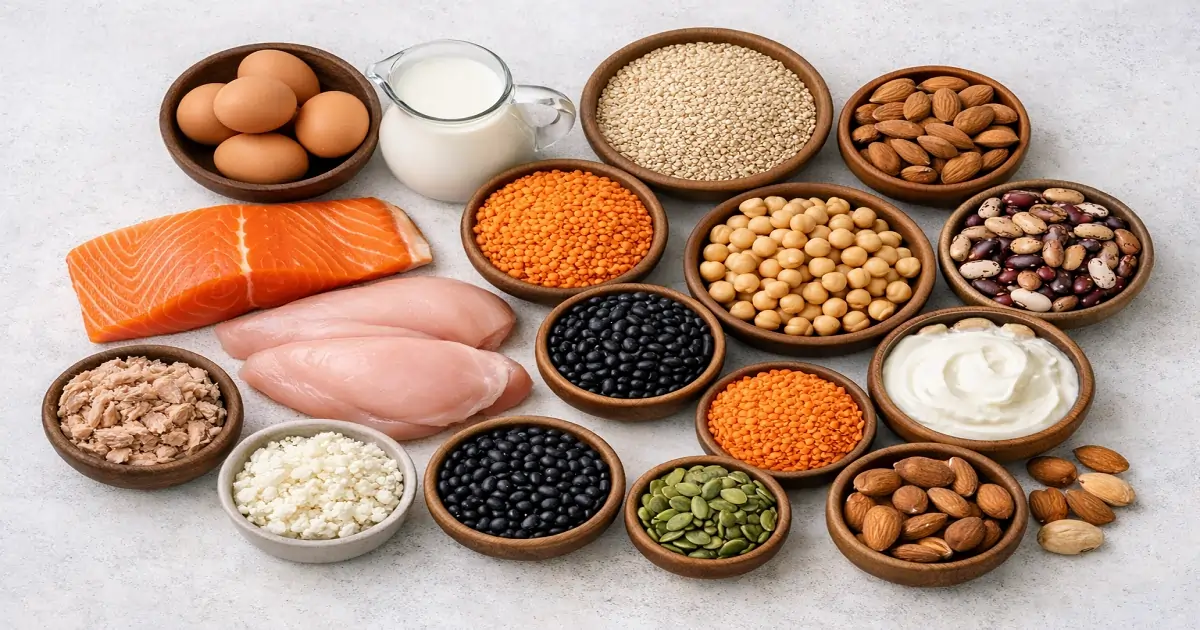
Examples of Protein Foods
Looking at common examples makes the concept easier to understand. These examples show how such foods appear in everyday meals and snacks.
Both plant and animal sources provide many options. Therefore, people can choose foods based on their taste, availability, and eating habits.
Looking at common examples also helps in building balanced meals. It makes food selection more practical and easier to follow in daily life.
Common Plant-Based Examples
Lentils are one of the most common plant-based protein foods. They are widely used in soups, curries, and simple home meals.
Chickpeas are another popular choice. They are used in dishes like salads and cooked meals, making them easy to include in daily eating.
Soybeans are also important among plant protein foods. They are often used to prepare items like tofu or added to meals for variety.
Almonds are commonly eaten as snacks. They are easy to carry and can be added to breakfast or evening meals.
These examples of protein foods show how plant sources can be part of regular eating habits. They contribute to dietary variety and support balanced food choices.
Common Animal-Based Examples
Eggs are one of the simplest examples of protein foods. They can be boiled, cooked, or added to different dishes.
Chicken is widely used in many cuisines. It is often included in lunch or dinner meals and prepared in various styles.
Fish is another common option. It is especially popular in regions where seafood is part of daily eating patterns.
Milk and yogurt are also important animal-based examples. They are often consumed as part of breakfast or snacks.
These examples of protein foods highlight how animal sources fit into everyday diets. They help maintain meal variety and contribute to balanced eating patterns.
List of High Protein Foods
A simple list makes these foods easier to understand. Many everyday foods provide protein and can be included in regular meals. Therefore, having a quick list helps in making more practical food choices.
This list includes both plant and animal sources. It shows how protein-rich foods are part of daily eating habits. Besides, these foods are easy to find and prepare in different ways.
Including a variety of these foods supports balanced eating. It also helps maintain meal diversity and keeps food choices interesting.
Top 10 Protein Foods
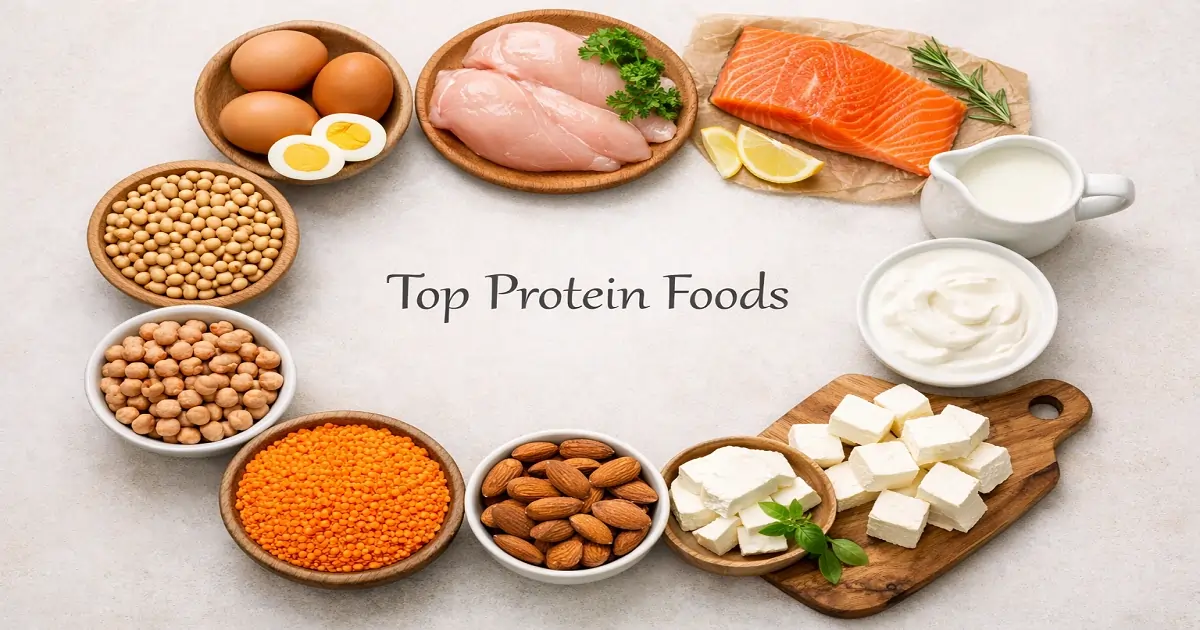
- Eggs: A simple and widely used food that supports quick and easy meal preparation.
- Chicken: Commonly used in main meals and contributes to a satisfying diet.
- Fish: Often included in regional diets and associated with diverse meal options.
- Lentils: A staple in many homes and important for everyday plant-based meals.
- Chickpeas: Used in various dishes and supports flexible cooking styles.
- Soybeans: An important plant-based option that contributes to different food
preparations. - Milk: A daily food that helps maintain regular intake of protein-rich foods.
- Yogurt: Often eaten as a snack or side dish and supports meal balance.
- Almonds: A convenient snack that contributes to daily protein intake.
- Paneer: Common in many meals and associated with rich and satisfying dishes.
How to Include More Protein Foods in Your Diet
Including protein foods in daily meals does not have to be complicated. Small changes in food choices can help increase intake. Therefore, simple habits can make a big difference over time.
One easy way is to include both plant and animal sources in meals. For example, combining lentils with dairy or adding nuts to snacks can support variety. Besides, mixing different sources helps support regular meal planning.
Adding protein foods to regular meals is also helpful. Eggs at breakfast, lentils at lunch, or yogurt as a snack are simple options. Furthermore, these foods fit easily into everyday routines without major changes. These small additions align with ways to get more protein into your daily diet.
Snacking smartly can also contribute to better intake. Choosing almonds, roasted chickpeas, or yogurt instead of low-protein snacks supports better food quality.
It is also useful to think about overall eating patterns. Including protein foods regularly throughout the day helps maintain consistency. In this context, following structured eating habits can be beneficial, such as healthy daily eating patterns.
Making gradual changes and choosing a mix of foods helps maintain balance. Over time, these habits support better food choices and contribute to a well-rounded diet.
Choosing a Variety of Protein Foods
Choosing a variety of protein foods is important for balanced eating. Different foods provide different benefits and contribute to overall meal quality. Therefore, including a mix supports consistent food choices over time.
Both plant and animal sources play a role in daily diets. For example, combining lentils with dairy or including eggs with grains can improve variety. In addition, this approach keeps meals more interesting and satisfying.
Plant-based options such as beans, nuts, and seeds are widely used in many meals. Including these foods regularly supports diverse eating patterns. In the same way, adding vegetables can further improve variety, as seen in plant-based food choices.
Animal-based foods like milk, eggs, and fish also contribute to balanced meals. They are often included in traditional diets and support regular intake.
A varied approach to protein foods supports consistent eating habits. It also contributes to a more flexible and balanced diet.
Common Questions About Protein Foods
Protein foods are often discussed in simple, practical ways. Many people look for clear answers to everyday questions. Therefore, addressing these common questions can help make food choices easier.
What are 10 Foods High in Protein?
Some common protein foods include eggs, chicken, fish, lentils, chickpeas, soybeans, milk, yogurt, almonds, and paneer. These foods are part of many daily meals and snacks.
Which Food Has the Highest Protein?
Foods like eggs, soybeans, and chicken are often associated with higher protein content. However, the choice depends on diet preferences and eating habits.
What are Examples of Protein Foods?
Examples of protein foods include both plant and animal sources. Lentils, chickpeas, and almonds are plant-based options. Eggs, milk, and fish are common animal-based choices.
How Can I Eat More Protein Daily?
You can include protein foods in each meal. For example, add eggs to breakfast or lentils to lunch. Besides, choosing snacks like yogurt or nuts helps maintain regular intake.
Conclusion
Protein-rich foods play an important role in everyday eating patterns. They are part of many meals and contribute to balanced food choices. Including both plant and animal sources helps maintain variety and supports overall diet quality.
Simple changes, such as adding protein-rich foods to meals or snacks, can make a noticeable difference. Also, choosing a mix of different foods helps keep meals interesting and practical.
These foods are also associated with regular eating habits that support daily needs. When included as part of a balanced diet, they contribute to consistency and better food selection.
Focusing on variety and balance makes it easier to include these foods in daily life. Over time, these habits help maintain a steady and well-rounded approach to eating.
Disclaimer:
This article is for informational purposes only. It discusses general food-related topics and does not provide medical advice. Nutritional needs vary between individuals, and food choices should be part of a varied and balanced diet. For personal health concerns, consult a qualified professional.