

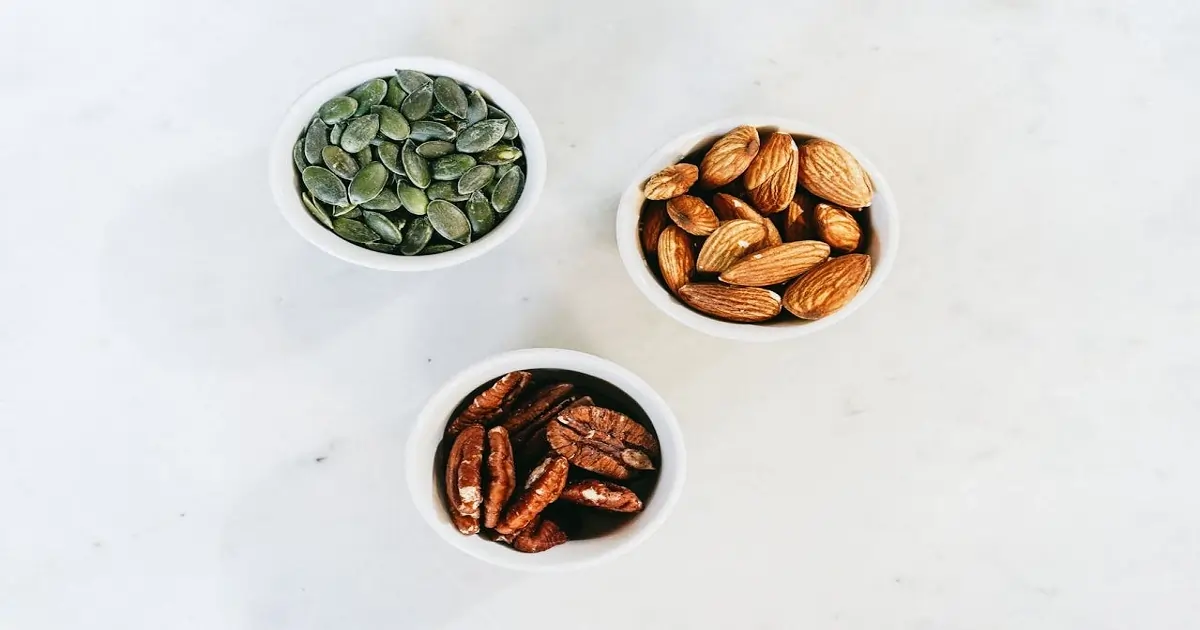
Nuts and seeds are small plant-based foods that are rich in nutrients and easy to add to daily meals. They include almonds, walnuts, chia seeds, and more. Many people choose healthy nuts and seeds because they offer both taste and nutrition in simple forms.
They provide essential nutrients in small portions and fit easily into daily meals. A small portion can provide healthy fats, protein, and fiber. Because of this, they play a role in balanced eating and help maintain steady energy levels throughout the day.
Besides, nuts and seeds are easy to carry and use in meals or snacks. They contribute to better food variety and support normal body function. Therefore, adding them to a daily routine is a practical and simple choice for long-term eating habits.
What Are Nuts and Seeds?
Nuts and seeds are small, dry foods that come from plants. They are often eaten whole or added to meals. These edible seeds and nuts are known for their rich texture and natural taste.
They are plant-derived foods that contain concentrated nutrients in small amounts. Most nuts have a hard outer shell, while seeds are usually found inside fruits or plants. However, both are commonly grouped together in everyday eating.
People often enjoy them as natural snack foods because they are easy to carry and use. Almonds, walnuts, sunflower seeds, and flaxseeds are common examples. Besides, they can be eaten raw, roasted, or mixed into dishes.
Because of their simple use and nutrient content, nuts and seeds play a role in regular eating habits. They support variety and help maintain balance in daily food choices.
Difference Between Nuts and Seeds
The nuts vs seeds difference can be understood in simple terms. Nuts are usually single-seeded fruits with a hard outer shell. Seeds, however, are parts of plants that can grow into new plants.
From a culinary view, both are often used in similar ways. However, their structure and origin differ. For example, almonds and cashews are commonly called nuts, while chia and sunflower are edible seed types.
In terms of texture, nuts are often firm and crunchy. Seeds can be softer or slightly chewy. Besides, seeds are usually smaller and lighter compared to most nuts.
The difference between nuts and seeds may seem confusing at times. Still, in everyday eating, this difference is less important. What matters more is how they fit into meals and snacks.
Both nuts and seeds contribute to a balanced diet. Therefore, understanding their difference helps with better food choices without making things complex.
Nutritional Role of Nuts and Seeds
Nuts and seeds play a role in providing key nutrients needed for everyday nutrition. Their nutrient composition includes healthy fats, protein, fiber, and important micronutrients. These nutrients support normal body function in simple ways.
Healthy fats are one of their main features. These fats help maintain energy levels and support overall wellness. Besides, they are associated with better dietary balance when eaten in moderate amounts.
They also contain plant-based protein, which contributes to body maintenance and repair. While not the only protein source, they are a useful addition to meals. This makes them part of a balanced diet, especially in plant-based eating patterns.
Fiber is another important component. It helps maintain digestion and supports regular eating habits. Foods rich in healthy fats, protein, and fiber support balanced eating patterns in everyday meals.
Nuts and seeds also provide micronutrients such as vitamin E, magnesium, and zinc. These are important for normal function and everyday body processes. These nutrients are part of essential nutrients that the body needs daily.
Overall, the mix of micronutrients in nuts and seeds supports balanced eating. Therefore, including them in meals contributes to better food quality without adding complexity.
Health Benefits of Nuts and Seeds
The benefits of nuts and seeds are often linked to simple, everyday eating habits. These plant-based foods support many body functions when included regularly. They are also part of healthy diet basics that help maintain balance in daily meals.
Because they contain healthy fats, fiber, and micronutrients, they contribute to overall wellness. Besides, they are easy to include in snacks and meals. Therefore, they play a role in supporting different aspects of health without making diets complex.
Heart Health Support
Nuts and seeds are often associated with heart-friendly foods. Their healthy fats help maintain normal cholesterol balance when eaten in moderate amounts. This supports better circulation and overall heart function.
They also contain nutrients like magnesium and fiber, which contribute to normal body processes. Besides, regular intake of these foods supports long-term dietary balance. Therefore, adding them to meals can be part of a balanced diet that supports heart health.
Weight Management and Satiety
Nuts and seeds are useful foods for weight management because they contain healthy fats and fiber. These nutrients help maintain fullness after eating. As a result, they can reduce the need for frequent snacking.
Besides, their nutrient density means small portions are often enough. This supports portion control and balanced eating habits. Therefore, including them in meals contributes to better appetite management without adding complexity.
Blood Sugar Balance
Nuts and seeds play a role in supporting steady energy levels. Their fiber and healthy fats slow down digestion. This helps maintain a gradual release of energy throughout the day.
Because of this, they are associated with stable eating patterns. Besides, combining them with meals can support balanced food intake. Therefore, they contribute to better daily energy management.
Brain and Overall Wellness
Nuts and seeds are associated with nutrients that support brain and body function. They contain healthy fats and micronutrients that are important for normal function. These nutrients help maintain overall wellness.
Besides, regular intake contributes to balanced nutrition over time. They also support everyday energy and focus. Therefore, including them in meals plays a role in maintaining general well-being.
Healthy Nuts and Seeds List
Nuts and seeds are also valued as protein-rich foods, especially in plant-based diets. Many options are part of protein-rich foods that support daily nutrition. Including a mix of everyday nuts and seeds helps maintain variety and balance in meals.
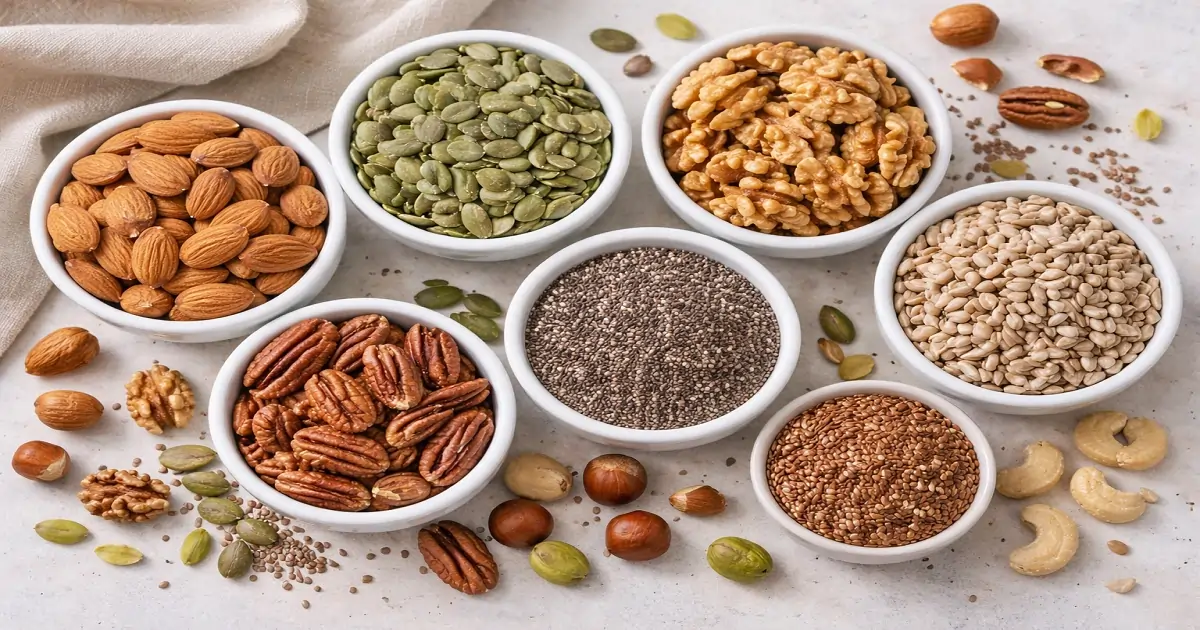
This healthy nuts list and healthy seeds list includes common options that are easy to use. Each one contributes to a balanced diet in simple ways.
Common Nuts
Almonds: Mild in taste with a crunchy texture. They support daily eating and fit well in snacks.
Walnuts: Slightly bitter with a soft texture. They are associated with plant-based nutrition benefits and meal variety.
Cashews: Creamy and slightly sweet. They are used in snacks and cooked dishes, contributing to balanced meals.
Hazelnuts: Mildly sweet with a firm texture. They are often used in snacks and contribute to meal variety.
Pistachios: Small and flavorful. Their shells help maintain portion control during snacking.
Common Seeds
Chia seeds: Tiny and quick to absorb water. They are often added to drinks or meals for texture.
Flaxseeds: Light nutty taste and commonly used in ground form. They support everyday diet inclusion.
Pumpkin seeds: Firm texture and easy to snack on. They contribute to balanced eating habits.
Sunflower seeds: Mild in taste and simple to use. They are often eaten as natural snack foods.
Sesame seeds: Small and slightly nutty in taste. They are commonly added to meals and support everyday diet inclusion.
How Much Nuts and Seeds to Eat Daily
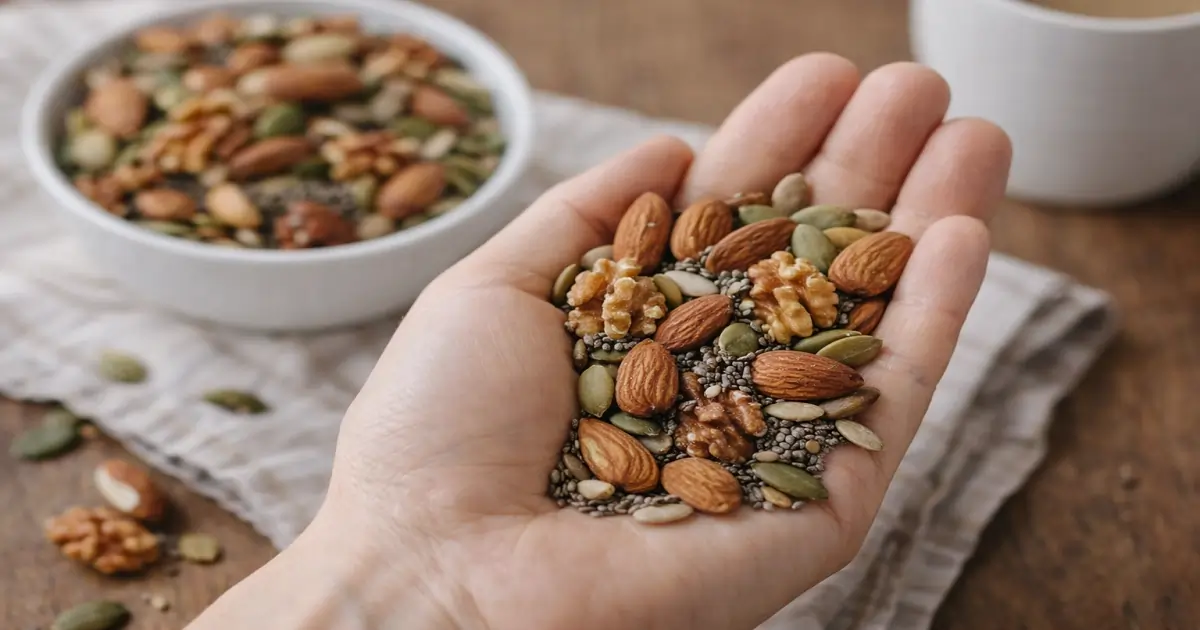
The daily intake of nuts and seeds does not require exact measurements. A small handful is often enough for most people. This portion size helps maintain balance without adding excess calories.
Because these foods are nutrient-dense, even a small amount contributes to daily nutrition. They support energy and help maintain steady eating habits. Therefore, focusing on moderation is more useful than counting exact amounts.
It is also important to consider overall eating patterns. Nuts and seeds should be part of a balanced diet, not the main focus of every meal. This approach supports better food variety and helps maintain long-term habits.
For example, adding a small portion to meals or snacks works well. This fits naturally within balanced eating basics and supports everyday food choices.
Side Effects of Eating Too Many Nuts and Seeds
Eating nuts and seeds in large amounts can lead to imbalance. These foods are high in energy, so overconsumption may affect daily calorie intake. Therefore, portion control is important.
Some people may also experience digestive discomfort if they eat too many at once. This is often linked to their fiber and fat content. However, moderate intake usually helps maintain comfort.
In addition, certain individuals may have allergies to specific nuts or seeds. Being aware of personal tolerance is important for normal function and safe eating habits.
Overall, the side effects of nuts and seeds are mostly related to excess intake. Keeping portions moderate supports better balance and helps maintain healthy eating patterns.
How to Include Nuts and Seeds in Your Diet
Adding nuts and seeds to meals is simple and flexible. They can be eaten as quick snacks between meals. This supports steady energy and helps maintain daily eating routines.
They can also be added to common dishes. For example, sprinkling seeds on salads or mixing nuts into breakfast meals works well. These small additions contribute to variety without changing the meal structure.
Besides, they can be combined with other foods for better balance. Mixing them with fruits or grains supports more complete meals. This approach plays a role in improving everyday diet quality.
Planning meals ahead can make this easier. Including them in simple routines fits well within meal planning basics and supports consistent eating habits.
Nuts and Seeds in the Context of Food Groups
Nuts and seeds are often included as part of plant-based food groups in everyday eating. They do not form a separate group, but they fit within broader food group classification systems. This helps maintain a balanced diet structure without adding complexity.
They are commonly placed alongside protein-rich plant foods because they contribute protein, healthy fats, and fiber. Besides, they support variety and help maintain balance across meals. This makes them a practical addition to daily eating patterns.
Within the food groups system, nuts and seeds are considered supportive foods. They play a role in complementing other groups rather than replacing them. Therefore, including them in moderation helps maintain a well-rounded and balanced approach to everyday nutrition.
Final Thoughts
Nuts and seeds are simple, nutrient-rich foods that fit easily into daily eating habits. They support balanced nutrition by providing healthy fats, protein, and fiber in small portions. For this reason, they fit well into a balanced diet and help maintain steady energy throughout the day.
Including them does not require major changes. Small additions to meals or snacks can contribute to better food variety. Besides, they are easy to carry and use, which makes them practical for regular use.
However, balance remains important. Eating them in moderate amounts supports better overall eating patterns. Therefore, using nuts and seeds wisely helps maintain long-term, sustainable food habits without making diets complicated.
Disclaimer:
This article is for informational purposes only. It discusses general food-related topics and does not provide medical advice. Nutritional needs vary between individuals, and food choices should be part of a varied and balanced diet. For personal health concerns, consult a qualified professional.