
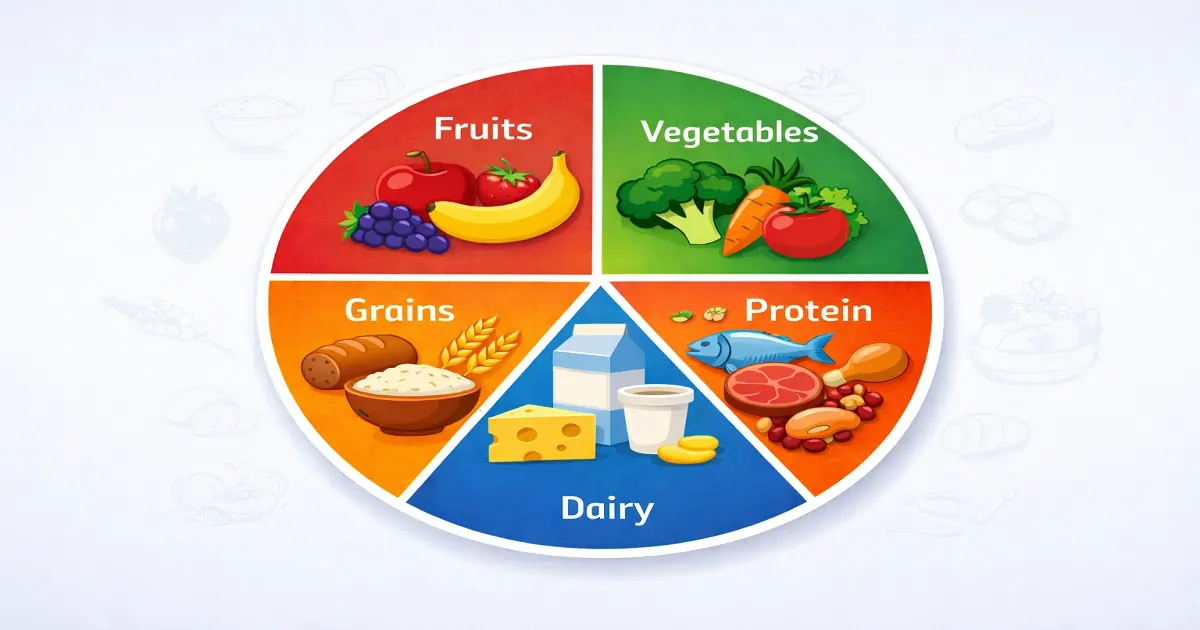
Food is often grouped to make nutrition easier to understand. These groups are known as food groups in nutrition and help organize foods into meaningful categories. They bring together foods that share similar nutrients and functions in the body.
For example, fruits and vegetables are often linked because they provide vitamins and minerals. Grains, on the other hand, are associated with energy. This way, food groups help organize a wide variety of foods into simple categories.
However, there is not just one way to classify foods. Different systems exist, such as 3, 4, 5, 6, or even 7 food groups. Each system reflects a different way of understanding nutrition.
This article focuses on what food groups mean, how they are classified, and why they play a role in understanding overall nutrition.
What Is a Food Group in Nutrition?
Food groups are a basic way to organize foods in nutrition. They help simplify how we understand what we eat. Instead of looking at each food separately, similar foods are placed into one group. This makes it easier to see patterns and connections.
Foods are grouped based on shared nutrients and common roles in the body. For example, some foods are associated with energy, while others support growth or protection. Therefore, grouping helps explain how different foods contribute to overall nutrition.
In addition, food groups create a clear structure for studying diets. In simple terms, food groups turn complex nutrition into something easier to understand and use.
What is a Food Group
A food group is a category of foods that share similar nutritional properties. These foods are grouped because they provide similar types of nutrients. For example, fruits are associated with vitamins, while grains are linked with energy.
This grouping helps show how foods contribute to the body in different ways. Each group plays a role in supporting normal body functions. Therefore, food groups are important for understanding how nutrition works as a whole.
Also, the idea of food groups helps maintain a simple framework. It allows people to see how different foods are part of a balanced diet. Instead of focusing on one food, it highlights the role of groups.
Key Characteristics That Define Food Groups
Food groups are defined by a few key characteristics. The first is nutrient profile. Foods in the same group usually provide similar nutrients. For example, dairy foods are associated with calcium.
Another factor is biological role. Some groups support energy, while others contribute to growth or protection. These roles help explain why foods are grouped together.
Besides this, classification also depends on common features. These include origin, composition, and function. Together these factors help maintain a clear and organized way to study food groups in nutrition.
Why Food Groups Are Used in Nutrition
Food groups are used to make nutrition easier to understand and apply. They provide a simple way to organize a wide range of foods. Instead of dealing with many individual items, foods are grouped into clear categories.
This approach helps people see how different foods are connected. It also supports a structured way of studying nutrition. Therefore, food groups play a role in building a clear understanding of dietary patterns.
Moreover, grouping foods helps maintain consistency across different nutrition systems. It allows comparisons between diets from different regions. In this way, food groups contribute to a broader understanding of nutrition.
The Purpose of Grouping Foods
The main purpose of grouping foods is to simplify complex information. Nutrition can be difficult to understand when viewed in detail. However, food groups make it easier by organizing foods into basic categories.
This system helps people recognize patterns in what they eat. It also supports learning by breaking information into smaller parts. Therefore, food groups contribute to better understanding of nutrition concepts.
In addition, grouping foods helps maintain a clear structure. It shows how different types of foods are part of a balanced diet. This makes nutrition easier to study and explain.
How Food Groups Support Nutritional Structure
Food groups support a structured way of understanding diets. They act as a framework that organizes different types of foods. This framework helps maintain clarity when studying nutrition.
Each group plays a role in showing how foods contribute to overall intake. Together, they form a system that supports a balanced dietary structure.
Furthermore, this structure helps compare different eating patterns. It allows a clear view of how food categories relate to each other. As a result, food groups contribute to a more organized understanding of nutrition.
Classification of Food Groups in Nutrition
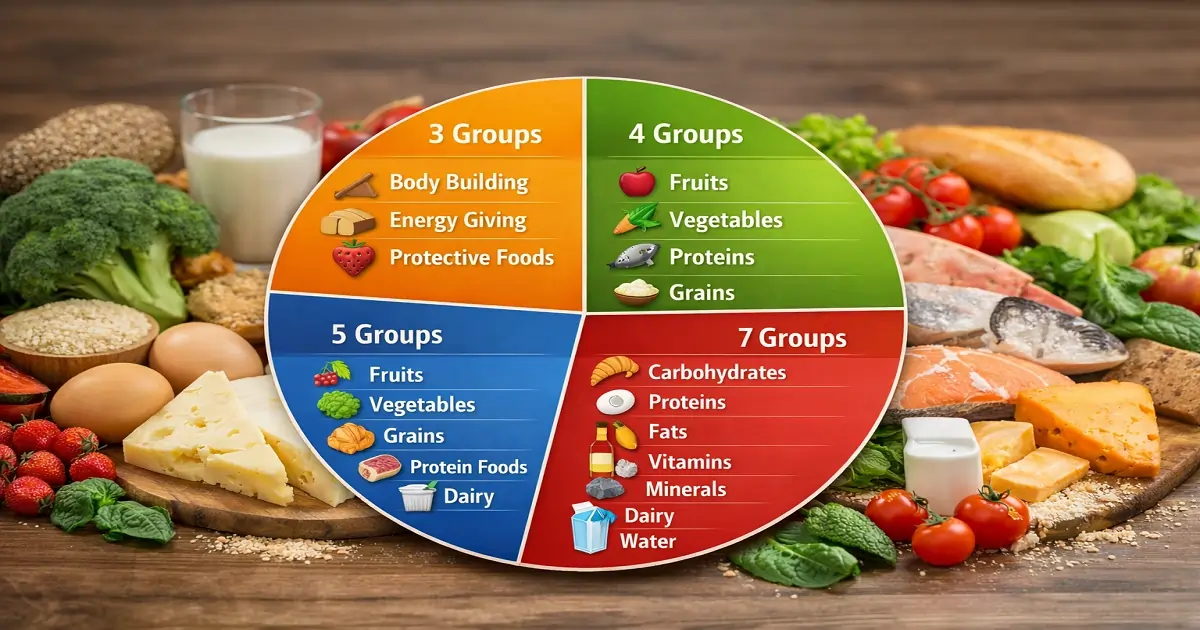
Food groups can be classified in different ways. These systems help organize foods based on their function and characteristics. However, no single system is universal. Each one reflects a different way of viewing nutrition.
Some classifications focus on function, while others focus on food type. Therefore, you may see 3, 4, 5, 6, or 7 food group systems. These systems represent different types of food groups used in nutrition, and all of them aim to simplify how foods are grouped.
These systems also help compare diets across cultures. Also, they simplify complex information by organizing it into structured categories. As a result, classification plays a role in explaining food groups in nutrition.
The 3 Food Groups
The 3 food groups and examples are based on function. Foods are grouped by how they contribute to the body. This is one of the simplest classification systems.
The first group is energy-giving foods. These include grains, rice, and oils. They are associated with providing energy for daily activities.
The second group is body-building foods. Examples include pulses, eggs, and dairy. These foods support growth and help maintain body tissues.
The third group is protective foods. Fruits and vegetables fall into this group. They are associated with vitamins and minerals that support normal function.
This system helps maintain a basic understanding of nutrition. It is often used for teaching simple concepts.
The 4 Food Groups
The 4 food groups system is also known as the basic 4 food groups. It was widely used in earlier nutrition models. This system groups foods into four main categories.
These include milk, meat, grains, and fruits and vegetables. Each group represents a type of food with shared characteristics.
Milk is associated with dairy foods. Meat includes protein-rich foods like eggs and fish. Grains cover cereals and staple foods. Fruits and vegetables are grouped together.
This model helps organize foods into clear sections. However, it is less detailed than newer systems. Still, it plays a role in the history of food classification.
The 5 Main Food Groups
The 5 main food groups form the modern standard classification. This system is widely used in nutrition education today. It provides a more detailed way to group foods.
The five main groups include fruits, vegetables, grains, protein foods, and dairy. Each group contains foods with similar roles and characteristics.
Fruits and vegetables are often grouped separately in this system. Grains include staple foods like rice and wheat. Protein foods cover items such as pulses, eggs, and meat. Dairy includes milk and related products.
This system keeps structure consistent compared to older models. It also supports how foods are part of a balanced diet. The concept of the five main food groups provides a clearer view of how these categories are organized.
In many national guidelines, the five food groups model is used to organize foods into these categories.
The 6 And 7 Food Group Systems
Some classifications expand beyond five groups. The 6 food groups and 7 food groups systems include additional categories. These often separate fats, oils, and sugars into their own groups.
In the 6 food group system, fats or sugars may be added as a separate category. In the 7 food groups and examples system, foods are divided further. This creates more detailed classifications.
These systems help highlight foods that are often consumed differently. They also show how certain foods are associated with specific roles.
Therefore, these expanded systems provide more clarity in some contexts. However, they may also add complexity for general understanding.
Why Different Classification Systems Exist
Different classification systems exist for several reasons. One major reason is cultural variation. Foods differ across regions, so grouping methods also change.
Another reason is scientific development. As knowledge grows, classification systems evolve. New systems reflect updated understanding of nutrition.
In addition, some systems are designed for education. Simpler models help maintain clarity for beginners. More detailed systems support deeper learning.
Therefore, no single system is correct for all situations. Each one contributes to understanding food groups in a different way.
Food Groups and Nutrients
This section focuses on general relationships between food groups and nutrients, without going into detailed nutrient analysis.
Food groups and nutrients are closely connected. Each group is associated with certain types of nutrients. This relationship helps explain how foods contribute to overall nutrition.
Instead of focusing on individual foods, grouping shows broader patterns. For example, some groups are linked with energy, while others support growth. Therefore, food groups support a structured view of nutrients.
Also, this concept simplifies complex information. It shows how different foods play a role in nutrition without going into too much detail.
How Different Food Groups Provide Different Nutrients
Different food groups provide different types of nutrients. For example, grains are associated with energy, while dairy is linked with calcium. Fruits and vegetables are often associated with vitamins and minerals.
Each group contributes to the body in its own way. Some support energy, while others help maintain normal function. The relationship between food groups and nutrients is part of the nutrient roles across food groups.
This approach also helps maintain a balanced understanding of nutrition. It shows how foods work together rather than in isolation.
Why No Single Food Group Is Sufficient
No single food group can provide all nutrients needed by the body. Each group contributes something different. Therefore, relying on only one group is not enough.
Food groups and nutrients are designed to work together. This combination helps maintain overall nutritional balance. Each group plays a role in supporting normal body functions.
This idea is also linked to the nutrient composition of foods, which explains how different foods contribute in different ways.
Therefore, understanding multiple food groups is important for a complete view of nutrition.
How Food Groups Contribute To Dietary Structure
Food groups help organize how foods are understood in daily intake. They provide a clear framework that shows how different types of foods relate to each other. Instead of focusing on single items, this approach highlights broader categories.
This structure supports a better view of how foods contribute to overall intake. It also helps maintain consistency when studying dietary patterns. Therefore, food groups play a role in building a clear nutritional structure.
The Role of Different Food Groups in Overall Intake
Each food group contributes in a different way to overall intake. Some groups are associated with energy, while others support growth or normal function. This division helps explain how foods work together.
For example, grains are linked with energy, while fruits and vegetables contribute to vitamins. Protein foods support body functions, and dairy is associated with calcium. Each group plays a role in maintaining balance.
Together, these groups form a system that supports understanding of nutrient balance in the diet.
Concept of Balance Across Food Groups
Balance across food groups means including a variety of categories in overall intake. No single group is enough on its own. Therefore, combining different groups helps maintain a complete structure.
This concept shows how food groups are part of a balanced diet. Each group contributes in its own way, and together they support normal function.
Besides this, balance helps maintain diversity in food choices. It also supports a clearer understanding of how different foods are connected.
Food Groups Chart
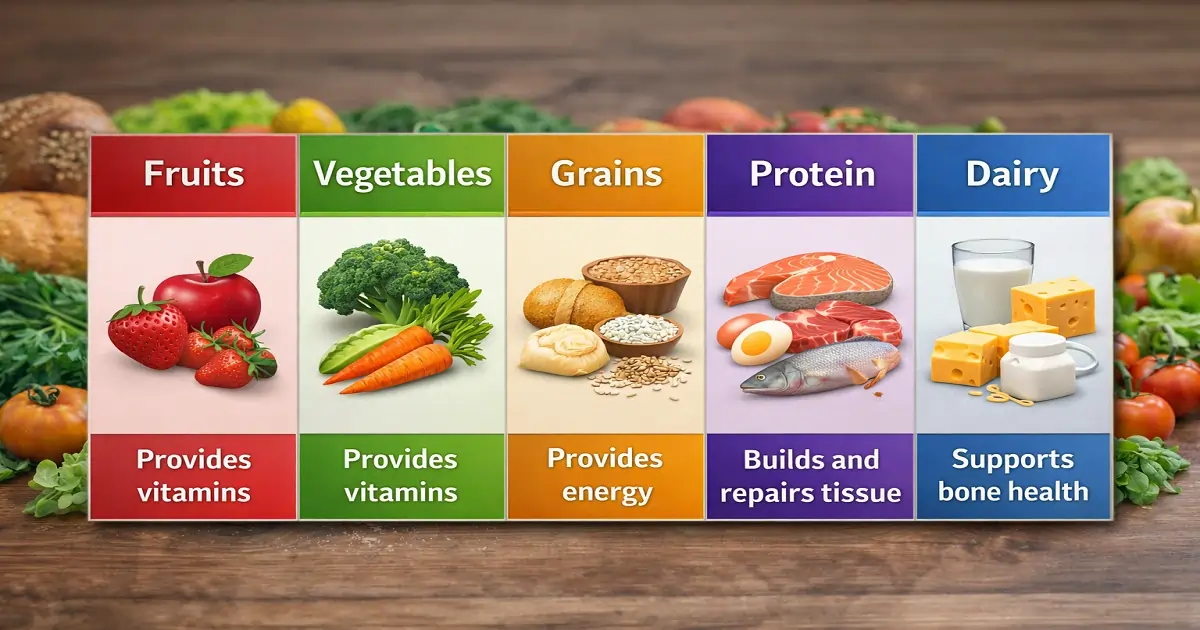
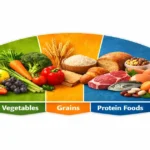
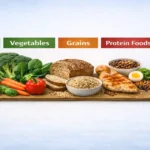
A food groups chart presents different food categories in a simple visual form. It often shows how foods are grouped based on shared characteristics. This makes it easier to understand the structure at a glance.
Most charts include common groups such as fruits, vegetables, grains, protein foods, and dairy. Some versions may also include fats or sugars as separate categories.
This type of chart improves organization by showing how foods are organized. It also supports quick understanding, especially for beginners learning about food groups.
Frequently Asked Questions About Food Groups
Food groups often raise simple but important questions. These questions help clarify how foods are classified and why they are grouped. The answers below provide clear explanations based on common queries.
What Is A Food Group In Nutrition?
A food group in nutrition is a category of foods that share similar nutrients and functions. These foods are grouped together because they contribute in similar ways. This system helps maintain a clear structure. It also supports understanding of how different foods are part of a balanced diet.
What Are The 3 Main Food Groups?
The 3 main food groups include energy-giving, body-building, and protective foods. Energy-giving foods are associated with grains and fats. Body-building foods include protein-rich items like pulses and dairy. Protective foods mainly include fruits and vegetables. This system helps maintain a basic understanding of nutrition.
What Are The 4 Main Food Groups?
The 4 main food groups are milk, meat, grains, and fruits and vegetables. This model is also known as the basic 4 food groups. It was used in earlier nutrition systems. Each group represents foods with similar characteristics and roles in the body.
What Are The 5 Main Food Groups?
The 5 main food groups, also known as the five main food groups in nutrition, include fruits, vegetables, grains, protein foods, and dairy. This is the most widely used classification today. Each group contributes to different functions in the body.
Together, they are part of a balanced diet and help maintain overall nutritional structure.
What Are The 7 Food Groups And Examples?
The 7 food groups system includes grains, fruits, vegetables, protein foods, dairy, fats, and sugars. For example, rice belongs to grains, while oils fall under fats. This system provides more detailed classification. It helps maintain a clearer understanding of how different foods are grouped.
What Nutrients Are In The Five Food Groups?
The five food groups provide a range of nutrients. Fruits and vegetables are associated with vitamins and minerals. Grains are linked with carbohydrates. Protein foods contribute to growth, while dairy is associated with calcium. Together, these groups support normal function and help maintain nutritional balance.
Which Is The Largest Food Group?
The largest food group can vary depending on the classification system. In many models, grains are considered the largest group. This is because they are widely consumed and associated with energy. However, the size of a group often depends on how the system is designed.
What Is The 4-4-9 Rule In Nutrition?
The 4-4-9 rule explains how macronutrients provide energy. Carbohydrates provide 4 calories per gram, and proteins also provide 4. Fats provide 9 calories per gram. This rule helps maintain a basic understanding of energy contribution. It is associated with how food groups contribute to overall intake.
Conclusion
Food groups provide a structured way to understand how foods are organized. They bring together items with similar characteristics and roles. This approach helps maintain clarity when studying nutrition as a whole.
Different classification systems, such as 3, 4, 5, or 7 food groups, show that there is no single method. Each system reflects a different way of grouping foods. However, all of them aim to simplify complex information.
These systems also highlight how foods are part of a balanced diet. Each group contributes in its own way and supports normal function. Together, they form a clear framework that helps maintain a better understanding of nutrition.
Disclaimer:
This article is for informational purposes only. It discusses general food-related topics and does not provide medical advice. Nutritional needs vary between individuals, and food choices should be part of a varied and balanced diet. For personal health concerns, consult a qualified professional.