
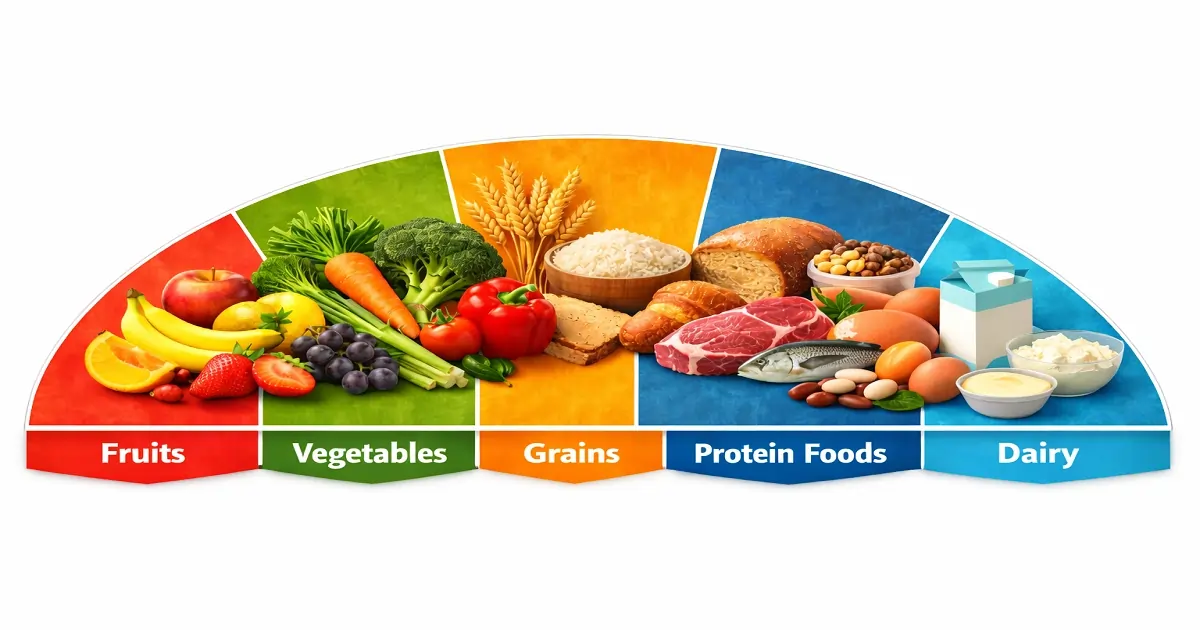
Food groups are simple ways to classify foods based on what they contain. In nutrition, this system helps organize foods by their nutrient composition and basic function. For example, fruits, vegetables, grains, and protein foods are grouped because they share similar nutritional traits.
Each food group provides a different mix of nutrients. Some are rich in carbohydrates, while others supply protein, fats, vitamins, or minerals. Because of this, no single group can meet all nutritional needs on its own. Therefore, understanding food groups helps explain how nutrients are distributed across foods.
When foods from different groups are included together, they contribute to overall nutritional balance. This approach supports variety and helps maintain normal body function through a combination of nutrients.
What Are Food Groups in Nutrition?
Food groups in nutrition are categories of foods based on the nutrients they contain. These groups help organize foods in a simple and structured way. In daily life, foods may look different, but many share similar nutrient patterns. This idea forms the basis of food group meaning and classification.
Food groups are created using a scientific approach. They are based on nutrient composition and the function those nutrients perform. For example, some foods are associated with carbohydrates, while others are linked with protein or fats.
In addition, many foods contribute vitamins and minerals that support normal body function. Therefore, grouping helps show how nutrients are distributed across foods.
This classification helps connect foods with their nutrient roles in a structured way. Instead of focusing on individual nutrients, it becomes simpler to view foods as part of broader categories. Each group contributes differently and supports balance in daily intake.
Food groups are part of a balanced diet because they work together rather than alone. This system helps maintain clarity and supports better understanding of how foods contribute to overall nutrition.
Why Foods Are Divided into Groups
Foods are divided into groups to make nutrition easier to understand. In daily life, people often classify foods by taste or cooking style. For example, spicy, sweet, or baked foods are common categories in cooking. However, nutrition uses a different approach based on what nutrients foods contain.
This nutritional classification focuses on macronutrients and micronutrients. Some foods are rich in carbohydrates, while others provide protein or fats. In addition, many foods supply vitamins and minerals that support normal body function. Because of this, grouping foods helps show how nutrients are distributed across different categories.
Food groups also simplify how people understand balanced food intake. Instead of looking at individual nutrients, it becomes easier to see which group contributes what.
Therefore, this system helps maintain clarity without going into complex nutrient details. It plays a role in explaining how different foods contribute to overall nutrition in a structured way.
The Main Types of Food Groups in Nutrition
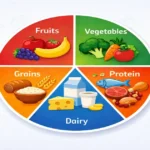
Different systems are used to classify food groups in nutrition. These systems define the types of food groups based on nutrient composition. The most common model includes five main food groups, which are widely used in dietary guidance and represented in tools like the healthy eating plate model.
In some cases, simpler models divide foods into four basic groups. These usually combine similar categories for easier understanding. On the other hand, more detailed systems may include seven food groups. These add categories like fats, oils, nuts, or seeds as separate groups.
Although these models vary, the core idea remains the same. Food groups are often explained through their nutrient roles across categories such as fruits, grains, and protein foods. This link between food groups and nutrients is part of main food groups and their nutrients.
The Five Main Food Groups and Their Nutrient Roles
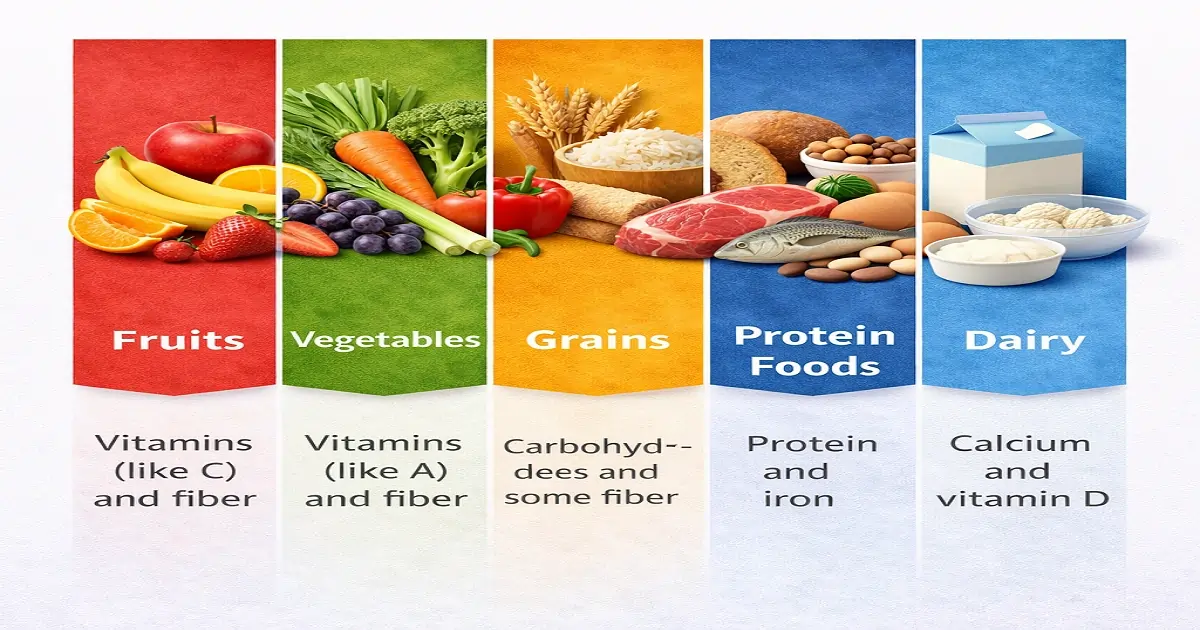
Food groups in nutrition are often organized into 5 main categories. These groups include fruits, vegetables, grains, protein foods, and dairy. Each group is defined by the nutrients it provides and the role it plays in overall nutrition.
No single group can supply all nutrients needed by the body. Therefore, each group contributes differently and supports specific functions. Together, these groups form a basic structure that helps maintain nutritional balance. The following sections explain how each group contributes through its key nutrients.
Fruits
Fruits form an important food group because they supply key nutrients that support normal body function. They are associated with vitamin C, fiber, and natural antioxidants. These nutrients help maintain everyday processes and contribute to overall nutritional balance.

Fruits are commonly grouped based on their form and type. Fresh fruits like apples and bananas are widely used. Dried fruits such as raisins are more concentrated in nutrients. Citrus fruits, including oranges and lemons, are known for their vitamin content.
Each type contributes differently, yet all are part of a balanced diet. Their natural composition plays a role in providing essential nutrients. The role of fruits within food groups is covered in fruit nutrients and dietary role.
Vegetables
Vegetables are another major food group that contributes a wide range of nutrients. They are associated with vitamins, minerals, and dietary fiber. These nutrients help maintain normal function and support daily nutritional needs.

Vegetables are often divided into sub-groups based on their structure. Leafy vegetables like spinach are rich in micronutrients. Root vegetables such as carrots store energy in their tissues. Cruciferous vegetables like cabbage are known for their varied nutrient profile.
Each subgroup plays a role in nutrient distribution across the diet. Including different types contributes to variety within food groups. The nutrient role of vegetables is part of vegetable nutrients and importance.
Grains
Grains are a primary source of carbohydrates and play a key role in energy supply. They are associated with fiber, especially when consumed in less processed forms. These nutrients help maintain energy levels and support normal digestion.
Grains are broadly classified into whole and refined types. Whole grains retain more of their original structure. Refined grains undergo processing that removes certain parts. This difference affects their nutrient content but does not change their classification as a food group.
Grain foods contribute significantly to daily nutrient intake and are part of a balanced diet. Their classification is based on their carbohydrate content and structure. The types of grains are included in whole and refined grain.
Protein Foods
Protein foods form a distinct group because they supply essential building nutrients. They are associated with protein, iron, and certain B vitamins. These nutrients are important for normal function and contribute to body structure and repair.
This group includes both plant and animal sources. Plant sources include lentils, beans, and nuts. Animal sources include eggs, fish, and meat. Each source contributes differently, yet all play a role in nutrient balance.
Protein foods are part of a balanced diet and help maintain various body functions. Their classification depends on their nutrient composition rather than taste or form. The sources of protein foods are part of plant and animal protein sources.
Dairy Foods
Dairy foods are grouped together because they are rich in calcium and protein. These nutrients are important for normal function, especially for bones and muscles. Dairy products contribute to nutrient intake in a distinct way compared to other groups.
This group includes milk, yogurt, and cheese. In some cases, plant-based alternatives are also considered when they provide similar nutrients. However, the classification depends on nutrient content rather than origin alone.
Dairy foods are part of a balanced diet and play a role in maintaining structural functions in the body. Their nutrient profile makes them a unique food group. The role of dairy foods is part of dairy nutrients and dietary role.
Additional Food Categories Often Included in Nutrition
In some nutrition systems, additional categories are included beyond the five main food groups. These may include nuts, seeds, fats, and oils as separate groups. Their inclusion depends on how foods are classified based on nutrient composition.
These categories are associated with specific nutrients such as healthy fats and energy sources. Although they may not always appear in the basic five-group model, they still play a role in overall nutrition. This variation shows that food grouping systems can differ while following the same core idea of nutrient-based classification.
Nuts and Seeds
Nuts and seeds are often included as a separate food category in some nutrition systems. They are associated with healthy fats, protein, and essential micronutrients. These nutrients contribute to energy and help maintain normal body function.
Common examples include almonds, walnuts, sunflower seeds, and flaxseeds. Although small in size, they are nutrient-dense and play a role in food classification systems. Their composition differs from other groups, which is why they are sometimes listed separately.
They are part of a balanced diet and contribute to overall nutrient variety. Their role within food groups is included in nutrients in nuts and seeds.
Fats and Oils
Fats and oils are included in some food group systems due to their role as a major energy source. They are associated with fatty acids that are important for normal function. These nutrients contribute to energy storage and structural roles in the body.
This category includes oils like sunflower oil, olive oil, and butter. Different types of fats exist, but classification focuses on their energy content and composition. They are used in small amounts but still play a role in nutrition.
Fats and oils are part of a balanced diet when considered within overall intake. Their classification is based on their nutrient profile rather than quantity. Their role is included in dietary fats and oil types.
Why Some Systems Include More Than Five Groups
Different nutrition models sometimes include more than five food groups. For example, the 7 food group system separates categories like fats or nuts into distinct groups. In contrast, the 4 food group model combines similar categories for simplicity.
These differences exist because classification methods vary across regions and guidelines. However, the core idea remains the same. Foods are grouped based on their nutrient content and function.
The term “type 7 food” often comes from confusion around these systems. It does not represent a single type of food but refers to a classification model. Therefore, food grouping remains flexible while still supporting a consistent understanding of nutrition.
Nutrient Contribution of Different Food Groups
Each food group contributes a different set of nutrients that supports normal body function. These groups are formed based on what nutrients they contain. Therefore, knowing their contribution helps maintain a view of nutrition, as in healthy diet.
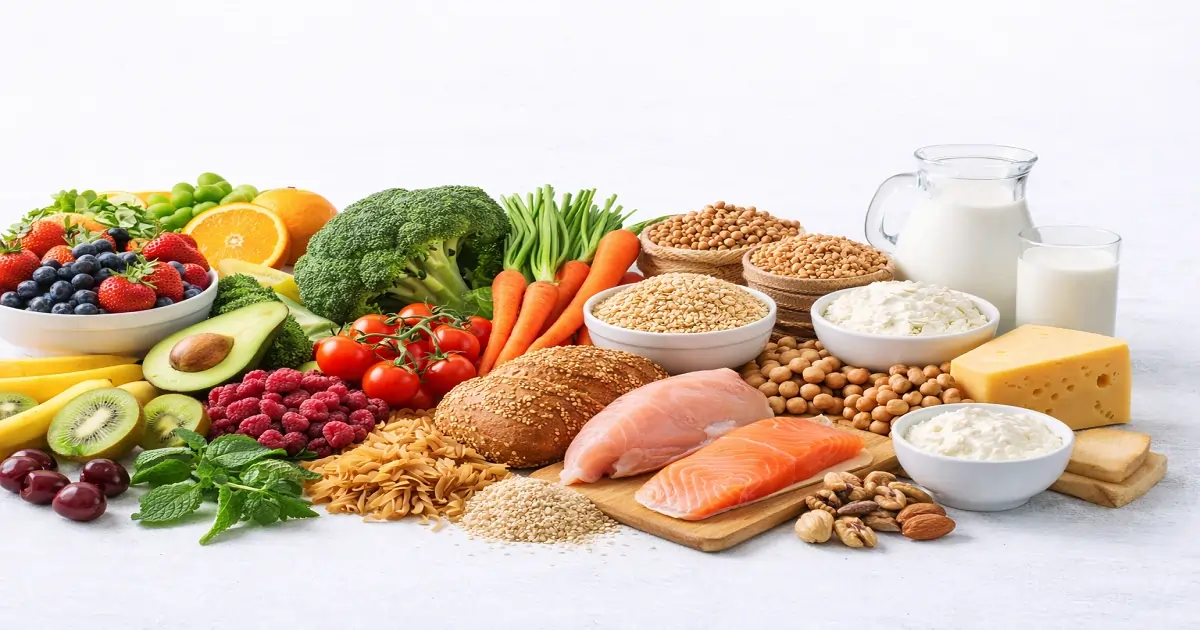
Fruits are associated with vitamins, especially vitamin C, along with dietary fiber. They also contain natural compounds that contribute to overall balance. Vegetables provide a wide range of minerals and antioxidants, which play a role in daily functions.
Grains are mainly linked with carbohydrates, which support energy needs. Whole forms also contribute fiber, which helps maintain digestion. Protein foods are associated with protein and iron. These nutrients are important for normal function and body structure.
Dairy foods contribute calcium and protein, which are important for bones and muscles. Each group provides specific nutrients, and no single group is enough on its own. Together, these groups form a system where nutrients are distributed across different food categories.
This classification helps maintain clarity in nutrition. It also shows how different foods contribute to a balanced diet without focusing on detailed nutrient science.
How Food Groups Support a Balanced Diet
Food groups support a balanced diet by contributing different nutrients that work together. Each group has a specific role based on its nutrient content. Therefore, including foods from multiple groups helps maintain overall nutritional balance.
For example, grains provide energy, while protein foods contribute to body structure. Fruits and vegetables supply vitamins and minerals, which are important for normal function. Dairy foods contribute calcium, which supports structural needs.
These roles are complementary rather than overlapping. When combined, they help maintain a steady supply of nutrients throughout the body. This approach is associated with better nutrient distribution across meals.
Food groups are part of a balanced diet because they work together rather than independently. Their combined role supports normal function and helps maintain nutritional stability. This connection between groups is part of combining food groups in meals.
Why Variety Across Food Groups Matters
Variety across food groups helps maintain a steady intake of different nutrients. Since each group contributes specific nutrients, relying on only one group limits overall nutrition. Therefore, including multiple groups supports better balance in daily eating patterns such as the balanced plate model.
Different foods within the same group also contribute slightly different nutrients. For example, one fruit may be rich in vitamin C, while another provides more fiber. This variation helps maintain a broader nutrient range.
Variety is associated with improved nutritional coverage without needing detailed planning. It plays a role in ensuring that different nutrients are included in everyday food choices. This makes food grouping more practical and flexible.
Food Group Examples and Simple Classification
Food groups can be understood easily through simple examples. These examples show how foods are classified based on their nutrient content rather than taste or cooking style. This approach helps maintain clarity in everyday understanding.
Fruits include foods like apples, bananas, and oranges. Vegetables include spinach, carrots, and cabbage. Grains include rice, wheat, and oats, which are associated with energy supply.
Protein foods include lentils, beans, eggs, and fish. Dairy foods include milk, yogurt, and cheese, which contribute calcium and protein. These examples show how foods are grouped based on their nutrients.
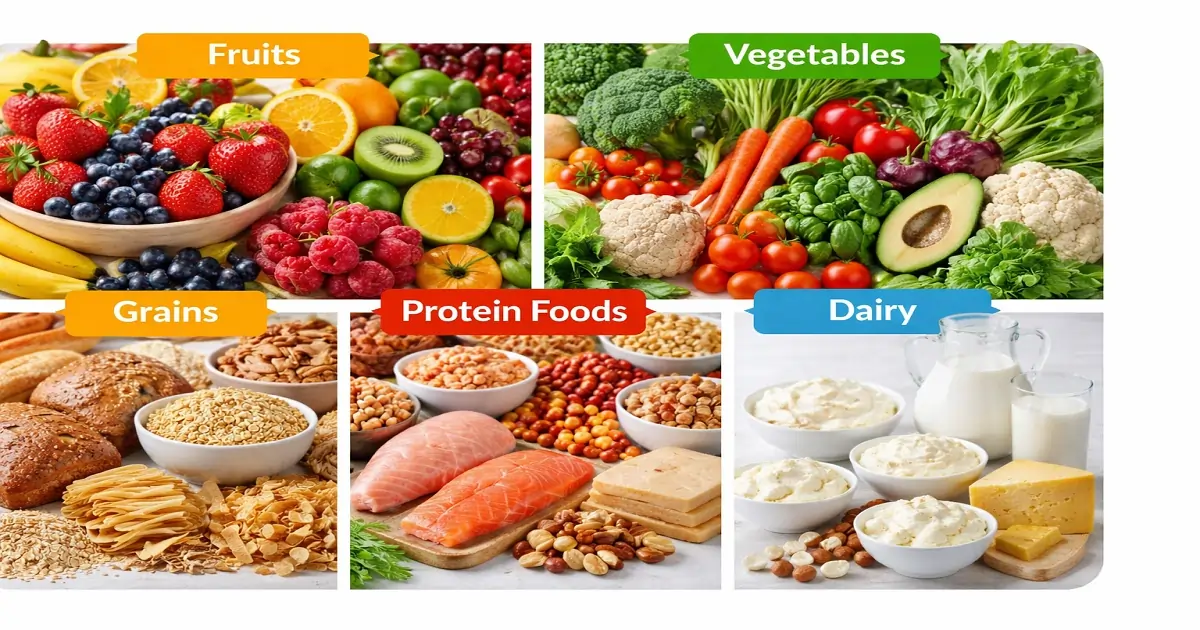
This simple classification helps maintain a clear connection between foods and their nutrient roles. It also supports a basic understanding of how food groups are part of a balanced diet. In many cases, this structure is presented as a food groups chart in nutrition.
Frequently Asked Questions About Food Groups
Food groups are often discussed in simple terms, yet many questions still come up. These questions usually relate to how foods are classified and how different systems are used.
What are the 5 main food groups?
The five main food groups include fruits, vegetables, grains, protein foods, and dairy. Each group is associated with specific nutrients. Together, they contribute to a balanced diet by providing a range of essential nutrients.
What are the 7 food groups?
The 7 food group model expands the basic system by adding categories such as fats, oils, nuts, or seeds. This approach separates certain foods based on their nutrient composition. It helps maintain a more detailed classification.
What are the 4 basic food groups?
The 4 food group system is a simpler model. It usually combines similar categories into broader groups. For example, fruits and vegetables may be grouped together. This system helps maintain easy understanding of food classification.
What is a food group?
A food group is a category of foods that share similar nutrients. Foods are grouped based on what they provide, such as carbohydrates, proteins, or vitamins. This classification helps maintain clarity in nutrition.
What is type 7 food?
The term “type 7 food” is often misunderstood. It does not refer to a specific food item. Instead, it relates to the 7 food group classification system used in some nutrition models.
What is the 5 4 3 2 1 food rule?
The 5 4 3 2 1 food rule is a general guideline used in some contexts to encourage variety. It focuses on including different food types in a day. However, it is not a formal nutrition classification system.
What is a Type 5 food diet?
The term “Type 5 food diet” is not a standard concept in nutrition science. It is sometimes used informally, but it does not represent an official classification. Food groups remain based on nutrient composition rather than numbered diet types.
Conclusion
Food groups provide a simple way to organize foods based on their nutrient content. This system helps keep nutrition easy to understand. Each group contributes different nutrients that support normal body function.
Fruits, vegetables, grains, protein foods, and dairy each play a role in overall nutrition. Some systems also include fats, nuts, or seeds as separate categories. However, the basic idea remains the same.
Together, these groups show how nutrients are distributed across foods. This structure supports variety and contributes to a balanced diet through different food categories.
Disclaimer:
This article is for informational purposes only. It discusses general food-related topics and does not provide medical advice. Nutritional needs vary between individuals, and food choices should be part of a varied and balanced diet. For personal health concerns, consult a qualified professional.