

Many foods contain similar calories, yet their nutritional value can differ greatly. A chocolate bar and a bowl of fruit may both show 200 calories. However, the nutrients they provide are not the same. This often creates confusion when reading labels.
Calories measure energy. Nutrients support normal body function. Both matter, yet they describe different qualities of food. Therefore, focusing on calories alone may not reflect overall food quality.
Understanding nutrient density vs calorie density helps you look deeper. It supports clearer food choices without strict rules. It also contributes to better label reading and balanced decisions. This comparison plays a role in how we evaluate everyday meals as part of a balanced diet.
What Is Nutrient Density?
Nutrient density refers to the concentration of essential nutrients relative to the calories a food provides. This understanding aligns with standard nutrient density definitions in nutrition science (EUFIC).
In simple terms, it measures how much nutritional value you get for each calorie consumed. Nutrient density meaning and food examples are reflected in nutrient density meaning and food examples.
Nutrients include vitamins, minerals, fiber, and beneficial plant compounds. These elements are important for normal function. They support immunity, bone health, digestion, and energy metabolism. Therefore, foods rich in nutrients but moderate in calories are often part of a balanced diet.
Leafy vegetables, legumes, fruits, and whole grains are commonly associated with high nutrient density. However, the key idea is not the food itself. It is the ratio of nutrients to calories. This ratio helps maintain overall dietary quality and contributes to long-term health patterns.
How Nutrient Density Is Evaluated
Nutrient density is evaluated by comparing nutrient content to energy content. In simple terms, it asks how many vitamins and minerals are present per calorie. Foods that provide more nutrients for fewer calories rank higher.
Food labels often display %NRV, which means Nutrient Reference Value. A product showing 100% NRV for vitamin C provides the full daily reference amount. However, a high NRV does not automatically mean the food is low in calories.
Therefore, nutrient density considers both nutrient amount and energy level. This balanced view helps maintain realistic expectations and supports informed food choices.
What Is Calorie Density?
Calorie density, also called energy density, refers to the number of calories per gram of food. It measures how concentrated the energy content is in a given weight. Foods high in fat tend to be more calorie-dense. In contrast, foods high in water or fiber are usually less calorie-dense.
On nutrition labels, calories are often written as kcal. In everyday language, 200 kcal is the same as 200 food calories. The term kilocalorie is simply the scientific unit. Therefore, when you see calories listed, they already represent kilocalories.
Water plays a major role in calorie density. Foods like fruits and vegetables contain more water, which lowers energy concentration. Fat, however, provides more energy per gram. As a result, foods rich in fat are associated with higher calorie density.
Understanding this difference helps maintain better awareness of portion size and energy intake.
The 4-4-9 Rule Explained
The 4-4-9 rule describes how many calories each macronutrient provides per gram. Carbohydrates provide 4 kcal per gram. Protein also provides 4 kcal per gram. Fat provides 9 kcal per gram. Alcohol provides 7 kcal per gram.
These values are widely used in nutrition science and form the basis of standard macronutrient energy values in food composition.
The rule supports clearer understanding of calorie density. Because fat provides more than double the energy of carbohydrates or protein, it increases energy concentration quickly. Therefore, foods higher in fat often have greater calorie density, even in small portions.
Nutrient Density vs Calorie Density: Core Differences
Nutrient density and calorie density measure different qualities of food. Nutrient density looks at nutrients per calorie. Calorie density looks at calories per gram. Although they sound similar, they answer different questions.
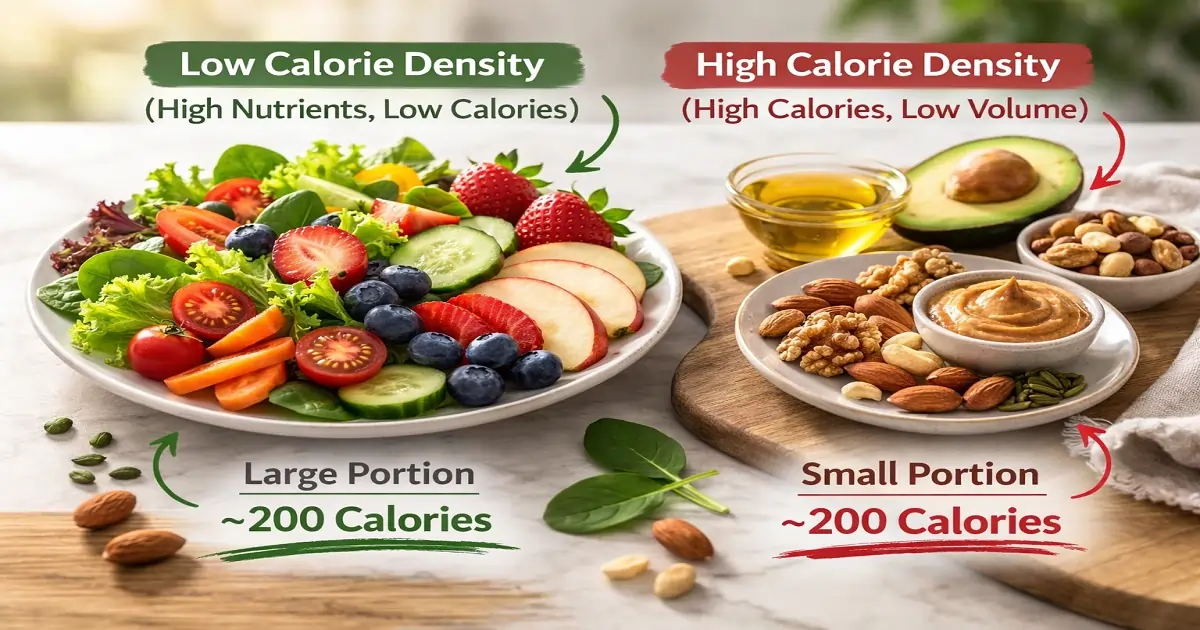
Nutrient density focuses on vitamins, minerals, fiber, and other beneficial compounds. These nutrients are important for normal function. They support growth, immunity, and cell repair. A food high in nutrient density provides more value for each calorie consumed.
Calorie density, however, focuses on energy concentration. Foods high in fat tend to contain more calories per gram. Foods rich in water or fiber usually contain fewer calories per gram. Therefore, calorie density helps estimate how much energy a portion delivers.
Micronutrient concentration also differs from energy concentration. A food may be high in calories but low in vitamins. On the other hand, a food can be lower in calories yet rich in essential nutrients. This contrast plays a role in how meals contribute to overall dietary balance.
Volume also matters. Low calorie-dense foods often contain more water and fiber. As a result, they take up more space on the plate. This larger volume helps maintain fullness while contributing fewer calories. In contrast, small portions of energy-dense foods can provide many calories quickly.
From a public health view, both measures are useful. Nutrient density supports better nutrient intake across populations. Calorie density helps maintain awareness of energy consumption. Together, they contribute to balanced dietary patterns and informed food choices.
Is 100 Calories of Chocolate the Same as 100 Calories of Fruit?
One hundred calories of chocolate and one hundred calories of fruit provide the same amount of energy. In that sense, the numbers match. However, the nutritional value differs.
Fruit usually contains fiber, vitamin C, and beneficial plant compounds. These nutrients are important for normal function and digestion. Chocolate, depending on type, may provide some minerals. Yet it often contains more added sugar and fat.
Therefore, while the calorie number is equal, the nutrient profile is not. Context also matters. Chocolate can still be part of a balanced diet in moderate amounts. However, fruit contributes more vitamins and fiber per calorie. This example shows how nutrient density and calorie density measure different aspects of food.
Why Equal Calories Do Not Mean Equal Value
Calories measure quantity of energy. Nutrients reflect quality of nourishment. Two foods with equal calories may not contribute equally to health patterns.
A calorie from refined sugar provides energy only. A calorie from lentils provides energy plus protein, fiber, and minerals. These additional nutrients support normal body processes.
Therefore, equal calories do not guarantee equal nutritional value. Nutrient density adds another layer of evaluation. It helps maintain focus on quality as well as quantity. This broader view plays a role in building balanced meals over time.
Should You Focus on Calories or Nutrients?
Calories are important because they provide energy. The body needs energy for movement, growth, and normal function. Therefore, tracking calorie intake helps maintain energy balance.
However, nutrients are equally important. Vitamins, minerals, and protein contribute to tissue repair and metabolic processes. They support immunity and help maintain organ function. A diet lacking essential nutrients may not contribute to long-term well-being.
Protein deserves special mention. It provides 4 calories per gram, like carbohydrates. Yet it also plays a role in muscle structure and enzyme production. Therefore, protein offers both energy and structural support.
The choice between calories and nutrients is not either-or. Both matter in different contexts. Calorie awareness supports energy balance. Nutrient awareness supports overall dietary quality. Together, they contribute to a balanced diet that helps maintain normal body function.
Examples That Clarify the Difference
Simple food comparisons make the difference clearer. Take nuts and leafy vegetables. Nuts are energy-dense because they contain healthy fats. However, leafy vegetables contain fewer calories per gram. They also provide vitamins, minerals, and fiber that are important for normal function.

Avocado and berries offer another contrast. Avocado contains more calories due to its fat content. Berries contain more water and fiber, so their calorie density is lower. Both can be part of a balanced diet. Yet their nutrient density and calorie density differ.
Whole grains and refined snacks show a similar pattern. Whole grains provide fiber, B vitamins, and minerals. These nutrients contribute to digestive health and energy metabolism. Refined snacks may provide similar calories, but they often contain fewer beneficial nutrients.
These examples show how foods vary in energy and nutrient concentration. A broader range of options appears in examples of highly nutrient-dense foods across food groups. Comparing foods this way supports clearer choices without strict rules.
Where the 3-3-3 Rule and Portion Frameworks Fit
The 3-3-3 rule for eating usually refers to dividing meals into three parts. Some use it to guide portion size. Others apply it to balance food groups on a plate. However, it is not a scientific formula for nutrient density or calorie density.
This rule acts as a simple portion-control guide. It helps maintain structure during meals. Yet it does not measure nutrients per calorie or calories per gram. Therefore, it should not replace density concepts.
Portion frameworks can still play a role in balanced eating. They contribute to consistency and awareness. However, nutrient density and calorie density remain measurement tools, not portion rules. Understanding this difference helps maintain clarity in food evaluation.
How This Comparison Improves Food Quality Decisions
Understanding nutrient density and calorie density changes how you read food labels. Instead of looking at calories alone, you begin to notice fiber, vitamins, and mineral content. This broader view supports smarter grocery decisions.
Packaged foods often highlight calorie numbers on the front. However, the ingredient list and nutrient panel reveal more detail. A product may be low in calories yet offer little nutritional value. Therefore, comparing nutrients per calorie helps maintain balance.
This approach also reduces a calorie-only mindset. Calories measure energy, but nutrients contribute to normal body function. When both are considered together, food quality becomes clearer. This perspective plays a role in choosing options that are part of a balanced diet.
These ideas connect with broader food quality principles for everyday choices. Applying both density concepts supports long-term awareness rather than short-term restriction.
Final Perspective: Why the Distinction Matters
Calorie density measures how concentrated energy is in food. Nutrient density measures how much nutritional value a food provides relative to that energy. Although related, they describe different aspects of food quality.
Foods high in calorie density may still be part of a balanced diet. Likewise, nutrient-dense foods support overall dietary patterns. Therefore, neither concept stands alone.
Understanding both improves dietary literacy. It helps maintain awareness of portion size and nutrient intake. Furthermore, it contributes to more informed choices without rigid rules. When you consider energy and nutrients together, meals become more balanced and purposeful.
Disclaimer:
This article is for informational purposes only. It discusses general food-related topics and does not provide medical advice. Nutritional needs vary between individuals, and food choices should be part of a varied and balanced diet. For personal health concerns, consult a qualified professional.