



Micronutrients are needed in small amounts, yet they support many processes essential to normal body function. Vitamins and minerals contribute to areas such as energy metabolism, growth, blood formation, immunity, and bone health.
Unlike carbohydrates, proteins, and fats, micronutrients do not provide calories. Instead, they help the body carry out processes that support normal cellular and physiological function.
Each vitamin and mineral has distinct roles and nutritional requirements. Therefore, a varied diet is important for supplying a broad range of these essential nutrients.
This article covers the main types of micronutrients, their functions, food sources, daily requirements, and the effects of inadequate or excessive intake.
What Are Micronutrients?
Micronutrients are essential nutrients the body needs in small amounts. They mainly include vitamins and minerals that support normal growth and development.
Although the required amounts are small, these nutrients support many processes needed for normal body function. Their roles include supporting growth, blood formation, immune function, bone health, and energy metabolism.
Meaning of Micronutrients
The term “micro” refers to the small quantity of these nutrients required by the body. It does not describe their importance or the size of their role.
Vitamins and minerals are the main groups of essential micronutrients. Unlike carbohydrates, proteins, and fats, they generally do not provide calories. Instead, they support and regulate biological processes throughout the body.
The amount required varies by nutrient and may also depend on factors such as age, sex, and life stage.
Micronutrients vs. Macronutrients
Macronutrients and micronutrients are both important nutrient groups. However, the body needs them in different amounts and they serve different roles.
| Macronutrients | Micronutrients |
| Needed in large amounts | Needed in smaller amounts |
| Carbohydrates, proteins and fats | Vitamins and minerals |
| Provide energy and/or building material | Support and regulate body functions |
MacronutrientsMicronutrients Needed in smaller amounts Carbohydrates, Fats and Proteins Vitamins and Minerals Provide energy and/or building material Support and regulate body functions
These nutrient groups work together within the body. Understanding how the body uses nutrients helps place micronutrients within the larger role of food and nutrition.
Why Are Vitamins and Minerals Called Micronutrients?
Vitamins and minerals are called micronutrients because the body requires them in relatively small quantities. Their required amounts are much smaller than those of carbohydrates, proteins, and fats.
However, the small quantity needed does not make these nutrients less important. Each vitamin and mineral has specific functions that contribute to normal body processes.
Small Amounts, Essential Functions
The amount required differs among vitamins and minerals. Some are needed in very small quantities, while others are required in somewhat larger amounts.
Each nutrient has specific functions that cannot simply be replaced by another nutrient. For example, iron contributes to oxygen transport, while vitamin B12 supports normal blood formation and nervous system function.
Other vitamins and minerals contribute to bone health, immune function, cell processes, and energy metabolism. Therefore, the term “micronutrient” describes the amount needed, not the importance of the nutrient.
Vitamins and Minerals: What’s the Difference?
Vitamins and minerals are essential micronutrients, but they are different types of substances. Vitamins are organic compounds, while minerals are inorganic elements.
The body needs both in relatively small amounts. However, they have different structures, classifications, and functions.
What Are Vitamins?
Vitamins are organic compounds that the body needs in small amounts for normal function. Each vitamin has specific roles in processes such as growth, metabolism, cell function, and tissue maintenance.
Vitamins are divided into two groups based on their solubility. Water soluble vitamins include the B vitamins and vitamin C.
Fat soluble vitamins include vitamins A, D, E, and K. This distinction relates to how these vitamins dissolve, are absorbed, and are stored in the body.
What Are Minerals?
Minerals are inorganic elements that the body requires for normal function. They occur naturally in foods and contribute to many important processes.
Minerals are generally classified as major minerals or trace minerals. Major minerals are needed in larger amounts, while trace minerals are required in smaller amounts.
Calcium, phosphorus, magnesium, sodium, potassium, and chloride are major minerals. Iron, zinc, iodine, selenium, and copper are examples of trace minerals.
Vitamins vs. Minerals at a Glance
Vitamins and minerals differ mainly in their chemical nature and the way they are classified.
| Vitamins | Minerals |
| Organic Compounds | In Organic elements |
| Including vitamins A, B, C, D, E and K | Include calcium, iron, zinc, potassium, and others |
| Classified partly by solubility | Classified partly by amount required |
What Are the 13 Essential Vitamins?
The body needs 13 essential vitamins for normal function. These include vitamins A, C, D, E, and K, plus eight different B vitamins.
Each vitamin contributes to specific biological processes. Vitamins and minerals have different functions and recommended amounts, so understanding their roles helps explain why a varied diet is important for providing a broad range of vitamins.
The 13 Essential Vitamins
The 13 essential vitamins have different functions and food sources. Their main roles can be summarized without treating any one vitamin as more important than the others.
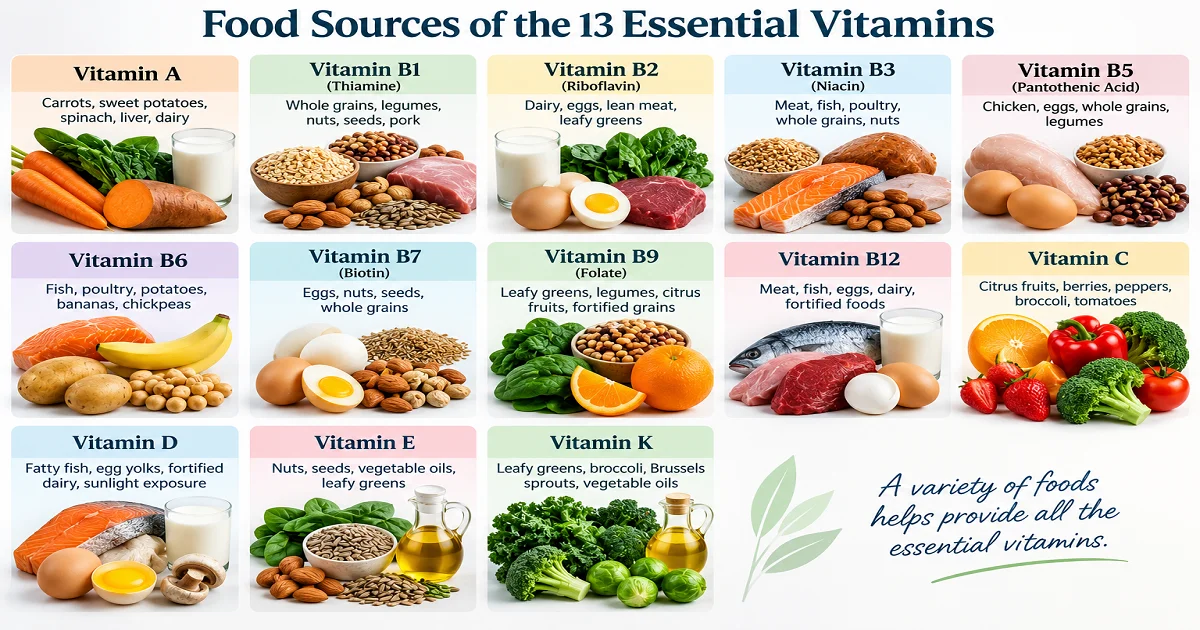
| Vitamin | Main Functions | Food Examples |
| Vitamin A | Supports normal vision, immune function, and cell growth |
Carrots, sweet potatoes, spinach, eggs |
| Vitamin B1 | Supports carbohydrate metabolism and normal nerve function |
Whole grains, pork, beans, seeds |
| Vitamin B2 | Supports energy metabolism and normal cell function |
Milk, eggs, lean meat, almonds |
| Vitamin B3 | Supports energy metabolism and normal skin and nervous system function |
Poultry, fish, peanuts, whole grains |
| Vitamin B5 | Helps the body produce and use energy and supports the formation of coenzyme A |
Meat, eggs, mushrooms, avocados |
| Vitamin B6 | Supports amino acid metabolism, red blood cell formation, and normal nervous system function |
Poultry, fish, potatoes, bananas |
| Vitamin B7 | Helps enzymes process carbohydrates, fats, and proteins and supports normal energy metabolism |
Eggs, nuts, seeds, legumes |
| Vitamin B9 | Supports DNA production, cell division, and normal blood formation |
Leafy greens, beans, citrus fruits |
| Vitamin B12 | Supports normal red blood cell formation, DNA production, and nervous system function |
Fish, meat, eggs, dairy foods |
| Vitamin C | Supports collagen formation, immune function, and antioxidant activity |
Citrus fruits, peppers, berries, tomatoes |
| Vitamin D | Helps the body absorb calcium and supports bone, muscle, and immune function |
Fatty fish, egg yolks, fortified foods |
| Vitamin E | Supports antioxidant activity and helps protect cells from oxidative damage |
Nuts, seeds, vegetable oils, spinach |
| Vitamin K | Supports normal blood clotting and contributes to bone health |
Leafy greens, broccoli, cabbage |
Vitamin B7, also known as biotin, acts as a cofactor for enzymes involved in processing carbohydrates, fats, and amino acids. It supports metabolic pathways that help cells use these nutrients and contributes to normal energy metabolism.
The eight B vitamins are distinct nutrients, even though they share the B vitamin group. Their functions vary, with roles in energy metabolism, DNA production, blood formation, and nervous system function.
The eight B vitamins are distinct nutrients, even though they share the B vitamin group. They include B1, B2, B3, B5, B6, B7, B9, and B12.
Their functions vary across the group. Some mainly support energy metabolism, while others contribute to DNA production, blood formation, or nervous system function.
Water Soluble and Fat-Soluble Vitamins
Water soluble vitamins include the B vitamins and vitamin C. They dissolve in water and are generally not stored in large amounts.
Fat soluble vitamins include A, D, E, and K. They dissolve in fat and can be stored in body tissues.
This difference affects how the body absorbs, stores, and handles these vitamins. Therefore, both groups are important parts of a balanced diet.
What Are Essential Minerals?
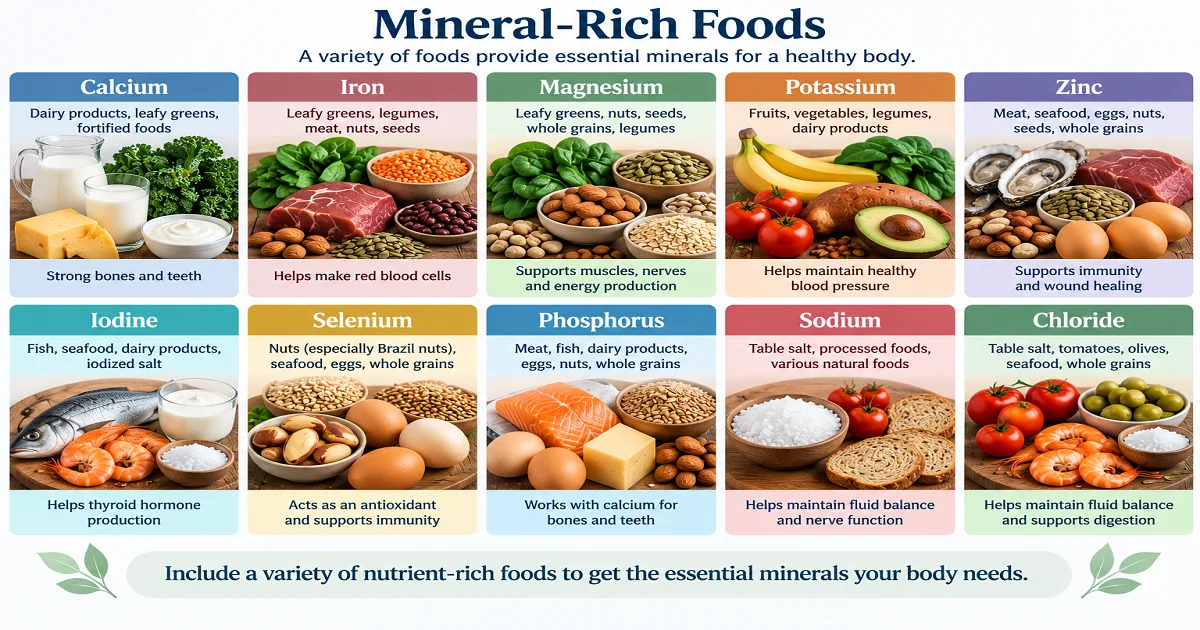
Essential minerals are inorganic elements that the body needs for normal function. They support processes such as fluid balance, bone health, nerve activity, muscle function, and oxygen transport.
Minerals are commonly grouped as major minerals and trace minerals. The difference is mainly based on the amount the body needs, not their importance.
Major Minerals
Major minerals are required in relatively larger amounts. They support several basic processes that help maintain normal body function.
Calcium supports bones, teeth, muscle function, and nerve signaling. Phosphorus contributes to bones and teeth and plays a role in energy related processes.
Magnesium supports muscle and nerve function and contributes to normal energy metabolism. Sodium, potassium, and chloride help maintain fluid and electrolyte balance.
Sulfur forms part of certain amino acids and other compounds in the body. These minerals come from many foods and are part of a balanced diet.
Trace Minerals
Trace minerals are needed in smaller amounts, but they still have important functions. Their roles range from oxygen transport to enzyme activity and thyroid function.
Iron supports oxygen transport and normal blood function. Zinc contributes to immune function, wound healing, and normal cell processes.
Copper supports connective tissue formation, iron metabolism, and nervous system function. Iodine is needed for thyroid hormone production.
Selenium supports antioxidant functions and thyroid metabolism. Manganese contributes to bone formation and nutrient metabolism.
Molybdenum helps certain enzymes work properly. Chromium contributes to normal macronutrient metabolism. Fluoride supports the mineral structure of teeth and bones.
How Many Essential Minerals Are There?
There is no single number used across all references to classify essential minerals. Different references may use different classifications or group certain minerals differently.
WHO guidance broadly describes micronutrients as vitamins and minerals and refers to approximately 30 micronutrients in healthy diet guidance. Therefore, it is more useful to understand mineral categories than focus on a fixed number.
Why Does the Body Need Micronutrients?
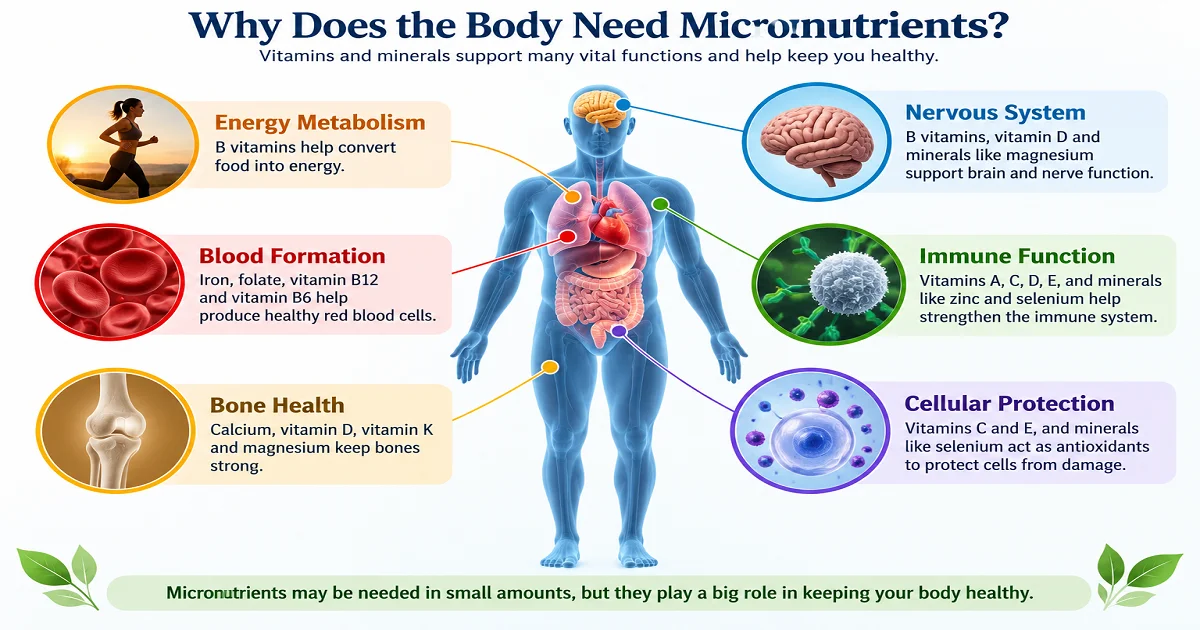
The body needs micronutrients because vitamins and minerals support many essential physiological functions. They help enzymes work, support tissues, and contribute to normal cellular activity.
Understanding essential nutrients and their functions also shows how vitamins and minerals fit into the wider group of nutrients the body needs.
Energy Metabolism
Several B vitamins and minerals help enzymes involved in energy metabolism. They support biochemical reactions that allow cells to use nutrients effectively.
These nutrients do not provide calories themselves. Instead, they help support processes that use energy from carbohydrates, proteins, and fats.
Growth and Development
Micronutrients support cell division, tissue formation, growth, and development. Folate, vitamin B12, vitamin D, calcium, and zinc are among the nutrients involved in these processes.
Adequate intake supports normal development throughout different stages of life.
Blood Formation and Oxygen Transport
Iron, folate, and vitamin B12 each contribute to normal blood related functions. Iron also plays a central role in transporting oxygen through the body.
These nutrients work through different processes, so each has its own nutritional importance.
Bones and Teeth
Calcium and phosphorus provide important structural components of bones and teeth. Vitamin D helps the body absorb calcium and supports normal bone health.
Vitamin K also contributes to bone related processes. Together, these nutrients support the maintenance of healthy skeletal tissues.
Nervous System Function
Several vitamins and minerals contribute to normal nervous system function. B vitamins support processes involving nerve cells and energy metabolism.
Minerals such as magnesium, potassium, and calcium also contribute to nerve signaling and muscle activity.
Immune Function
Multiple micronutrients support normal immune function. Vitamins A, C, D, and E, along with minerals such as zinc and selenium, contribute to different immune processes.
Their roles vary, but together they support the body’s normal immune response.
Cellular Protection
Some vitamins and minerals contribute to antioxidant functions that help protect cells from oxidative damage. Vitamins C and E, along with selenium, are associated with these protective roles.
These functions support normal cellular activity and help maintain healthy tissues.
What Happens If You Don’t Get Enough Micronutrients?
Micronutrient deficiency happens when the body does not get enough of certain vitamins or minerals. The effects depend on the nutrient involved and the degree of deficiency.
Understanding Micronutrient Deficiency
Several factors can lead to inadequate nutrient intake. A limited diet may provide too little of certain vitamins or minerals.
Nutrient needs can also increase during certain life stages. Furthermore, some health circumstances may affect nutrient absorption or how the body uses nutrients.
Therefore, deficiency is not always caused by poor food choices. Limited food variety, increased needs, or absorption problems can also affect nutrient status.
A deficiency may develop gradually and may not cause clear signs at first. Proper assessment is needed to identify a specific nutrient deficiency.
Examples of Deficiency Effects
The effects of a nutrient deficiency depend on the nutrient involved. For example, insufficient iron can impair normal red blood cell formation and contribute to iron deficiency anemia.
Vitamin A deficiency can affect normal vision and immune function. Iodine deficiency can affect thyroid hormone production and normal thyroid function.
Low vitamin D status can affect calcium absorption and bone health. Folate or vitamin B12 deficiency can affect normal blood formation and other cellular processes.
These examples show why deficiency effects vary. A symptom alone cannot confirm which nutrient may be lacking.
Can You Get Too Much of a Micronutrient?
The body needs micronutrients within appropriate amounts. Getting more than needed does not necessarily provide greater benefits.
When More Is Not Better
Excessive vitamin or mineral intake can cause harmful effects. The risk varies by nutrient, dose, and length of exposure.
Some nutrients can accumulate in the body when consumed in excessive amounts. Others may cause problems when intake greatly exceeds normal needs.
Therefore, nutrient balance matters. Essential does not mean unlimited.
Food and Supplements
Food provides many vitamins and minerals as part of a balanced diet. A varied diet can supply these nutrients alongside protein, carbohydrates, fats, and other dietary components.
Supplements provide concentrated amounts of specific nutrients. However, essential nutrients can still cause problems when consumed in excessive amounts.
Therefore, excessive supplementation should be avoided. The appropriate amount depends on the specific nutrient and individual nutritional needs.
How Can You Get Enough Micronutrients From Food?
Different foods provide different combinations of vitamins and minerals. Therefore, dietary variety helps broaden the range of micronutrients in a daily diet.
Focus on Dietary Variety
Vegetables and fruits provide many vitamins and minerals. Legumes, whole grains, nuts, and seeds also add useful micronutrients.
Dairy foods and fortified alternatives can provide nutrients such as calcium and vitamin D. Eggs, fish, meat, and other protein foods contribute additional vitamins and minerals.
No single food provides every micronutrient the body needs. Choosing foods from several categories can therefore improve dietary diversity.
A varied diet also supplies protein, carbohydrates, fats, fiber, and other dietary components. This makes food variety a practical way to support nutritional adequacy as part of a balanced diet.
How Much of Each Micronutrient Do You Need?
Micronutrient daily requirements cannot be reduced to one number. Each vitamin and mineral has its own recommended intake.
Daily Requirements Vary
Nutrient requirements vary with age, sex, and life stage. Pregnancy and lactation can also change the amount needed for certain vitamins and minerals.
Individual circumstances may affect needs as well. Therefore, the recommended intake for one person may not apply to everyone.
Recommended intake and upper intake limits are different concepts. Recommended intake helps meet normal nutritional needs, while an upper limit marks an intake level unlikely to cause harm for most people.
These values are useful guides, not targets to exceed. Looking at nutrient needs as a whole is more useful than focusing on one number.
Frequently Asked Questions About Micronutrients
Micronutrients include vitamins and minerals with different roles in normal body function. These answers address common questions about their types, functions, intake, and importance.
What are micronutrients?
Micronutrients are essential nutrients the body needs in small amounts. They mainly include vitamins and minerals.
What are examples of micronutrients?
Examples include vitamins A, B, C, D, E, and K, along with minerals such as calcium, iron, and zinc.
What are the two main groups of micronutrients?
The two main groups are vitamins and minerals. Vitamins are organic compounds, while minerals are inorganic elements.
What are the 13 essential vitamins?
The 13 essential vitamins are A, C, D, E, K, B1, B2, B3, B5, B6, B7, B9, and B12.
Are vitamins and minerals the same thing?
No. Vitamins are organic compounds, whereas minerals are inorganic elements. Both are essential micronutrients.
Do micronutrients provide calories?
No. Vitamins and minerals generally do not provide calories. Instead, they support processes involved in normal body function and energy use.
What happens if you lack micronutrients?
Inadequate intake can affect normal body functions. The effects depend on which vitamin or mineral is lacking and the degree of deficiency.
Can you get too many vitamins or minerals?
Yes. Excessive intake of some vitamins or minerals can cause harmful effects. Therefore, micronutrients need to be consumed in appropriate amounts.
Conclusion
Micronutrients are vitamins and minerals the body needs in small amounts for normal function. Although required in relatively small quantities, they contribute to energy metabolism, growth, blood formation, immunity, bone health, and other essential processes.
Each vitamin and mineral has its own role, so one nutrient cannot simply replace another. Both inadequate and excessive intake can create nutritional problems.
A varied diet provides different combinations of vitamins and minerals. Choosing a range of nutritious foods can therefore help support adequate micronutrient intake as part of a balanced diet.
Disclaimer:
This article is for informational purposes only. It discusses general food-related topics and does not provide medical advice. Nutritional needs vary between individuals, and food choices should be part of a varied and balanced diet. For personal health concerns, consult a qualified professional.