Nutrient absorption is the process that moves digested nutrients from the intestine into the body. Most absorption takes place in the small intestine, where specialized cells transfer nutrients across the intestinal lining.
Digestion and absorption are closely connected, but they are not the same process. Digestion breaks food into smaller molecules, while absorption moves these molecules into the blood or lymph.
Carbohydrates, proteins, fats, vitamins, minerals, water, and electrolytes can follow different absorption pathways. Understanding these pathways helps explain how nutrients become available for normal body functions.
What Is Nutrient Absorption?
After digestion, useful nutrients cross the intestinal lining and enter the body. The small intestine handles most of this process. Its specialized cells help move nutrients into the blood or lymph for transport.
Nutrient absorption involves the movement of digested nutrients into circulation, including processes that occur mainly in the small intestine.
Digestion vs. Nutrient Absorption
Digestion and absorption work together, but they have different roles. Digestion breaks food into smaller molecules that the body can use or absorb. Digestive enzymes help break down food into smaller molecules before these nutrients can be absorbed.
Absorption then moves these smaller molecules across the intestinal lining. From there, they can enter circulation and reach tissues throughout the body. Therefore, digestion prepares nutrients for absorption, while absorption helps deliver them where they are needed.
What Happens During Nutrient Absorption?
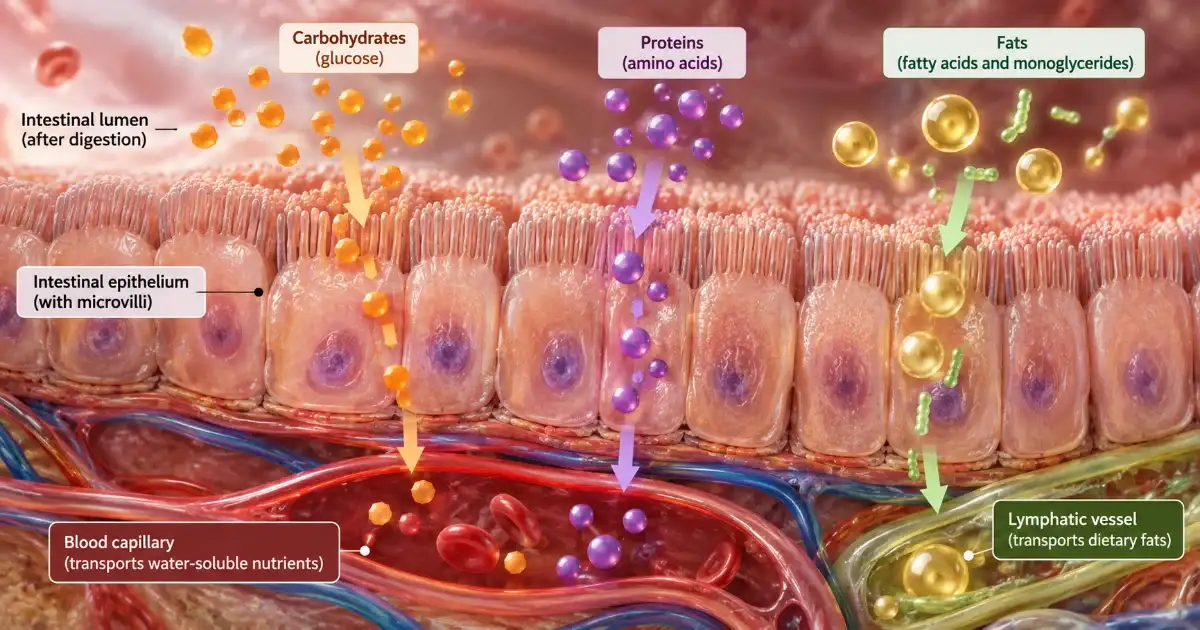
After digestion, nutrients reach the inner surface of the small intestine. Specialized epithelial cells take up these nutrients through different transport processes.
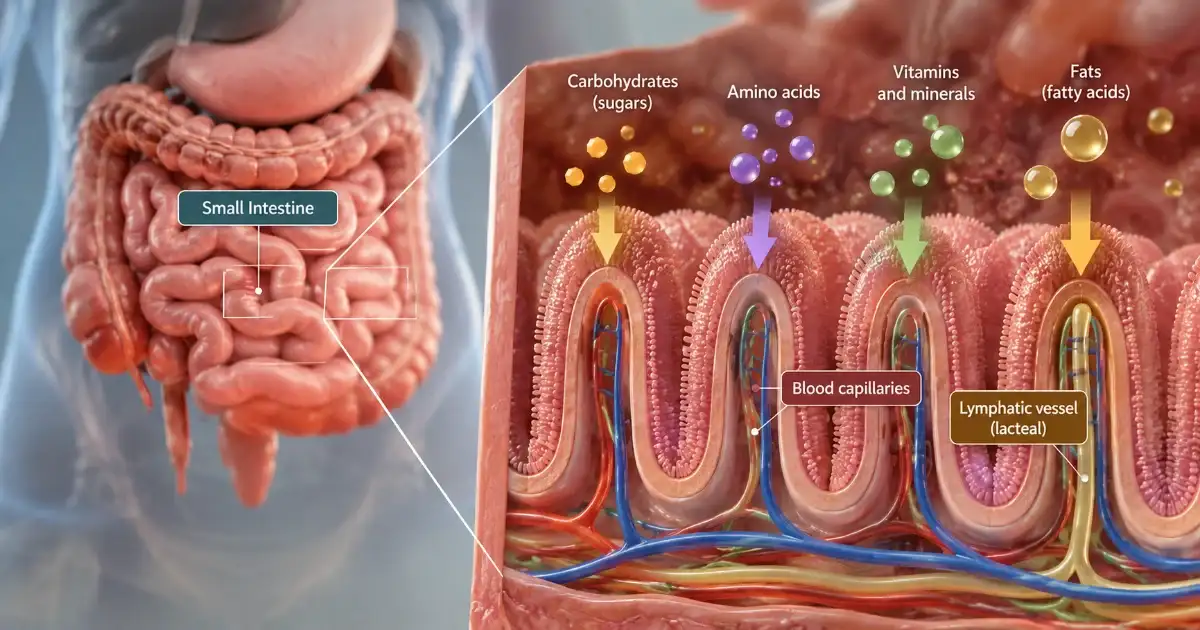
Some nutrients enter nearby blood capillaries, while many dietary fats enter lymphatic vessels first. These pathways transport absorbed nutrients away from the intestinal surface.
Why Does the Small Intestine Absorb Most Nutrients?
The small intestine is the main site of nutrient absorption in the digestive tract. Its long, folded structure provides a large surface for nutrient uptake, while specialized epithelial cells help transport nutrients across the intestinal wall.
The Three Sections of the Small Intestine
The small intestine has three sections: the duodenum, jejunum, and ileum. Each section contributes to nutrient absorption, although their roles differ.
The duodenum receives partly digested food and absorbs several minerals and other nutrients. The jejunum is a major site for absorbing carbohydrates, proteins, fats, and many vitamins. The ileum absorbs remaining nutrients and has an important role in vitamin B12 and bile acid absorption.
How the Small Intestine Is Designed for Nutrient Absorption
The small intestine is not simply a long tube. Its inner surface has specialized structures that increase the area available for nutrient absorption. These features bring digested nutrients close to cells involved in absorption
Intestinal Folds Increase Surface Area
The inner wall of the small intestine contains numerous folds. These folds increase the available surface area inside the intestine. More surface area allows more nutrients to come into contact with the intestinal lining at the same time.
Villi Help Move Nutrients Across the Intestinal Lining
The folds contain tiny finger-like projections called villi. Each villus contains epithelial cells, blood capillaries, and a small lymphatic vessel called a lacteal.
These structures support nutrient uptake after digestion. Water-soluble nutrients can enter nearby blood capillaries, while many dietary fats enter the lymphatic system. This arrangement helps transport absorbed nutrients away from the intestinal surface.
Microvilli Create an Even Larger Absorptive Surface
Each intestinal epithelial cell has microscopic projections called microvilli. Together, they form the brush border on the cell surface.
Microvilli greatly increase the area available for nutrient absorption. They also contain proteins involved in nutrient transport and final stages of digestion. Together, folds, villi, and microvilli create a large surface for nutrient absorption.
How Different Nutrients Are Absorbed
Nutrients do not all cross the intestinal lining in the same way. Their absorption depends on their chemical form and the transport pathways involved. Carbohydrates and proteins are reduced to smaller molecules before absorption. Fats follow a different route through intestinal cells and the lymphatic system. Vitamins, minerals, water, and electrolytes also use different transport pathways.
How Carbohydrates Are Absorbed
Carbohydrates must be reduced to simple sugars called monosaccharides before absorption. The main ones are glucose, galactose, and fructose.
These sugars cross intestinal cells through specific transport proteins. Glucose and galactose use sodium-dependent transport, while fructose uses a different transporter.
After crossing the intestinal lining, these sugars enter nearby blood capillaries. They travel through the portal circulation toward the liver. This process makes absorbed sugars available for energy and other normal body functions.
How Proteins Are Absorbed
Protein absorption occurs after dietary proteins are reduced to amino acids and small peptides. These smaller products can cross the intestinal lining and enter intestinal cells.
Specific transport proteins help amino acids move across these cells. Small peptides can also enter intestinal cells. Many are then broken down into amino acids inside the cells.
The amino acids move into nearby blood capillaries. They then travel through the bloodstream and become available to tissues. This process supplies amino acids needed for normal body functions.
Whey protein is also digested into smaller peptides and amino acids before these products are absorbed mainly in the small intestine
How Fats Are Absorbed
Fat absorption differs from carbohydrate and protein absorption. After digestion, many dietary fats are present as fatty acids and monoglycerides.
These products combine with bile components to form tiny structures called micelles. Micelles bring fat digestion products close to the surface of intestinal cells.
Fatty acids and monoglycerides then enter intestinal cells. Inside these cells, they are rebuilt into triglycerides and combined with proteins and other substances.
These materials form particles called chylomicrons. Chylomicrons enter lymphatic vessels called lacteals within the intestinal villi.
The lymphatic system carries chylomicrons away from the intestine. They later enter the bloodstream, allowing dietary fats to reach tissues throughout the body.
How Vitamins and Minerals Are Absorbed
Vitamins and minerals do not follow one single absorption pathway. Their chemical properties and the foods containing them can affect how they are absorbed.
Fat soluble vitamins include vitamins A, D, E, and K. They are absorbed along with dietary fats and can enter intestinal cells through fat related pathways.
Water soluble vitamins generally use specific transport proteins or other pathways. Many then move into the bloodstream. Vitamin B12 has a more specialized process involving intrinsic factor.
Minerals also use different absorption mechanisms. Calcium absorption involves regulated transport processes. Iron absorption depends partly on its chemical form and the body’s needs.
Food composition can also affect mineral absorption. For example, other dietary compounds can influence how much iron or calcium the intestine takes up.
Because vitamins and minerals use different absorption pathways, their absorption can vary between nutrients and food sources.
How Water and Electrolytes Are Absorbed
Water absorption occurs throughout the small intestine and follows the movement of dissolved substances. Sodium and chloride are important electrolytes involved in this process.
Intestinal cells use transport systems to move sodium and other electrolytes across the intestinal lining. Water then follows osmotic gradients created by these dissolved substances.
Other electrolytes, including potassium, also use specific absorption pathways. Together, these processes help maintain normal fluid and electrolyte balance in the body.
Where Do Absorbed Nutrients Go?
After crossing the intestinal lining, absorbed nutrients follow different transport routes. Most water-soluble nutrients enter nearby blood capillaries, while many dietary fats first enter the lymphatic system.
This transport allows absorbed nutrients to move away from the intestine. They can then reach tissues for use, storage, or further processing.

Nutrients That Enter the Bloodstream
Many absorbed nutrients move from intestinal cells into nearby blood capillaries. These include glucose, amino acids, many vitamins, and minerals.
The blood carries these nutrients through the portal circulation to the liver. The liver processes and distributes nutrients according to the body’s needs.
Some nutrients then enter systemic circulation. From there, blood carries them to tissues throughout the body. This nutrient transport helps make absorbed nutrients available for normal body functions.
Why Dietary Fats Take a Different Route
Many dietary fats follow a different route after entering intestinal cells. Long-chain fatty acids and monoglycerides are rebuilt into triglycerides and packaged into chylomicrons. These particles enter lymphatic vessels within the intestinal villi before eventually reaching the bloodstream.
This pathway allows absorbed fats to bypass the initial portal circulation and enter the bloodstream through the lymphatic system.
Once nutrients enter circulation, they can be transported to tissues where they are used, stored, or processed as part of how the body uses food.
How Long Does Food Stay in the Small Intestine?
Food usually passes through the small intestine over several hours, although transit varies with the meal, digestive activity, and individual differences. During this time, digestion continues while nutrients move across the intestinal lining.
Transit time and nutrient absorption are related, but they are not the same thing. Digestion refers to breaking food into smaller components. Transit refers to how food moves through the intestine.
Therefore, the time food spends in the small intestine does not represent the exact time needed for every nutrient to be absorbed. Different nutrients can also use different absorption pathways.
What Can Affect Nutrient Absorption?
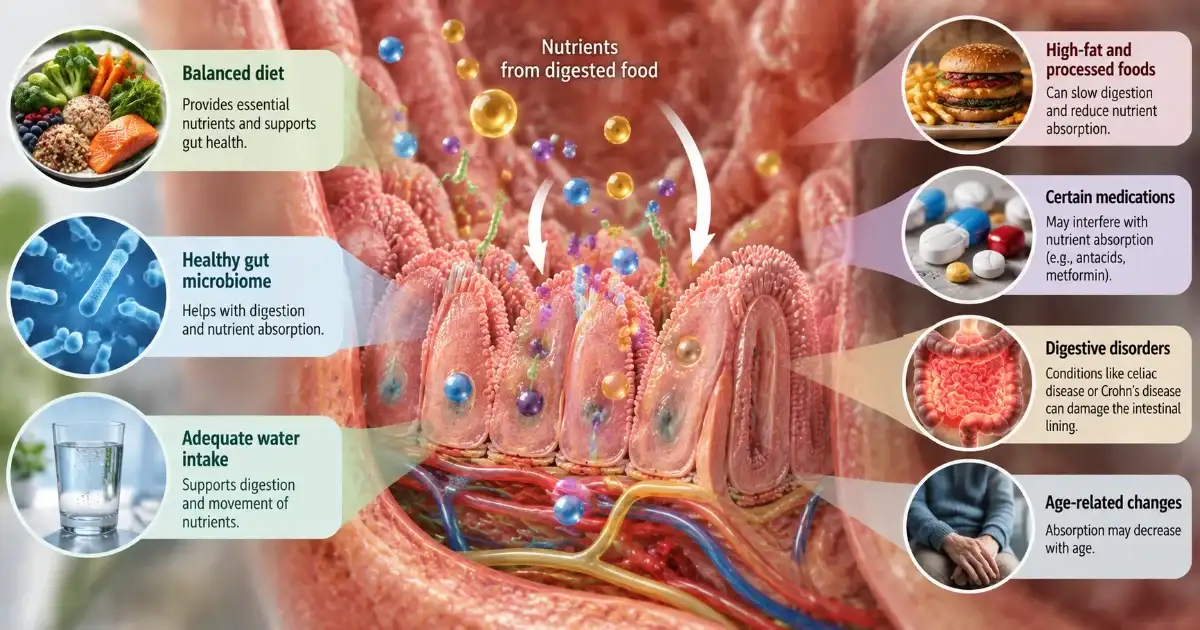
Nutrient absorption can vary from person to person. The digestive tract must break down food properly and provide a functioning intestinal surface for absorption. Problems that interfere with normal absorption can reduce the amount of nutrients the body takes in.
Food composition can also influence how much of a nutrient becomes available for absorption. Other factors include interactions between nutrients, individual differences, and certain health conditions.
Factors That Can Influence Absorption
Several factors can affect nutrient absorption. Digestive disorders, intestinal inflammation, certain surgeries, and some medicines can interfere with normal absorption. Some surgeries can change how nutrients move through or interact with the digestive tract, while certain medicines may affect digestion or nutrient availability.
Interactions between foods and nutrients can also matter. For example, some dietary compounds can affect mineral absorption.
Therefore, reduced nutrient absorption can have different causes. It is not always related to the type or amount of food consumed.
Can Diet Support Normal Nutrient Absorption?
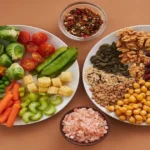
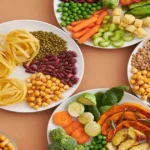
A varied diet provides different nutrients in forms that the body can absorb. Eating a range of foods also helps provide adequate vitamins, minerals, protein, carbohydrates, and fats.
Food preparation can affect nutrient availability as well. Some nutrients become easier to absorb after cooking, while others may be reduced by excessive heat or water.
Food composition can also affect nutrient availability. Some nutrients are better absorbed when consumed with certain foods or nutrients.
What Are Signs of Poor Nutrient Absorption?
You cannot reliably determine nutrient absorption from one symptom alone. Digestive symptoms can have many possible causes, and some absorption problems may have few obvious signs at first.
Persistent digestive symptoms, unexplained nutrient deficiencies, or unintended weight changes may indicate that further evaluation is needed. Signs linked to a specific nutrient deficiency can also provide useful clues.
Healthcare professionals may assess symptoms, dietary intake, medical history, and laboratory results. They may also use other tests when appropriate.
Therefore, ongoing or concerning symptoms should not be self-diagnosed as a nutrient absorption problem. Professional assessment can help identify whether reduced absorption or another factor is involved.
Frequently Asked Questions About Nutrient Absorption
Nutrient absorption can vary depending on the nutrient, food source, and digestive process. The questions below address some common points about how absorption works.
Where are most nutrients absorbed?
Most nutrient absorption takes place in the small intestine. Its folds, villi, and microvilli provide a large surface for nutrient uptake. Different nutrients then follow specific pathways into the blood or lymphatic system.
Which nutrients are absorbed into the lymphatic system?
Many dietary fats are absorbed into intestinal cells and packaged into chylomicrons. These particles enter lymphatic vessels called lacteals before eventually reaching the bloodstream.
Are all nutrients absorbed in the same way?
No. Nutrients use different absorption pathways. Carbohydrates and proteins are absorbed mainly as smaller molecules, while many dietary fats enter the lymphatic system first. Vitamins, minerals, water, and electrolytes also use different transport mechanisms.
How can diet support nutrient absorption?
A varied diet can support adequate nutrient intake and normal absorption. Food preparation and nutrient combinations can also affect availability. Persistent digestive problems may require professional assessment rather than a general dietary fix.
What happens if the body does not absorb nutrients properly?
Poor absorption can reduce the amount of nutrients available to the body. This may contribute to nutrient deficiencies over time. The effects depend on which nutrients are affected and how long absorption remains impaired.
Conclusion
Nutrient absorption connects digestion with the body’s use of food. After digestion, nutrients cross the intestinal lining through different transport pathways. Most enter the blood, while many dietary fats first pass through the lymphatic system.
The small intestine is the main site of this process because its specialized lining provides a large surface for nutrient uptake. Once absorbed, nutrients are transported to tissues for use, storage, or further processing.
Understanding these pathways also shows why digestion, intestinal health, and food composition can affect nutrient availability.
Disclaimer:
This article is for informational purposes only. It covers general food and nutrition topics and does not provide medical advice. Nutritional needs vary between individuals, so food choices should be part of a varied and balanced diet. For personal health concerns, consult a qualified healthcare professional.


