

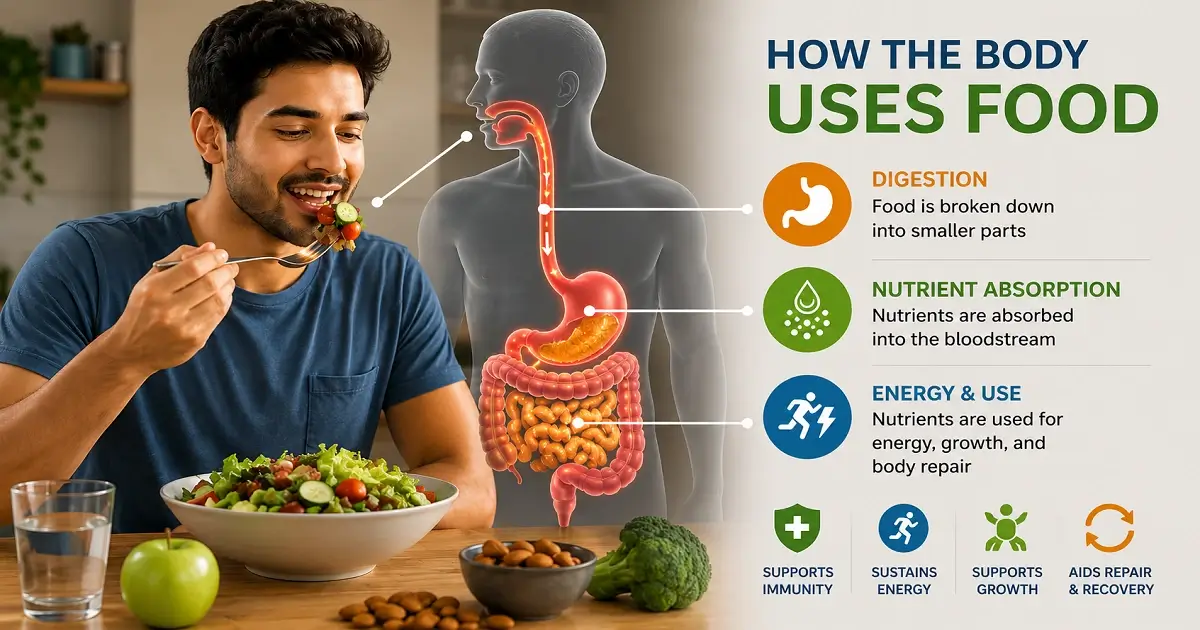
When you eat, your body begins a step-by-step process to use that food. This explains how the body uses food to support daily needs. First, food is broken down into smaller parts. Then, these parts are absorbed and carried through the body.
After that, the body uses them for energy, growth, and repair. In simple terms, this is what happens to food in the body after every meal.
Understanding this process helps explain why food is important for daily function. Each stage plays a role in keeping the body active and balanced.
Digestion breaks food down, absorption moves nutrients, and the body uses them where needed. Together, these steps support normal function and help maintain steady energy levels.
What Happens to Food After You Eat?
After you eat, your body begins a clear and organized process to use that food. This explains how the body uses food in daily life. First, food is broken down into smaller parts. Then, these parts move through the body and get absorbed. Finally, nutrients are delivered to cells where they support energy and other functions. This flow shows how food moves through the body in an organized way.
Understanding these stages of food use helps you connect eating with how your body works. Each step plays a role in maintaining energy, growth, and repair. Therefore, the food journey in the body is not random. It follows a structured path that supports normal function every day.
The Journey of Food in the Body
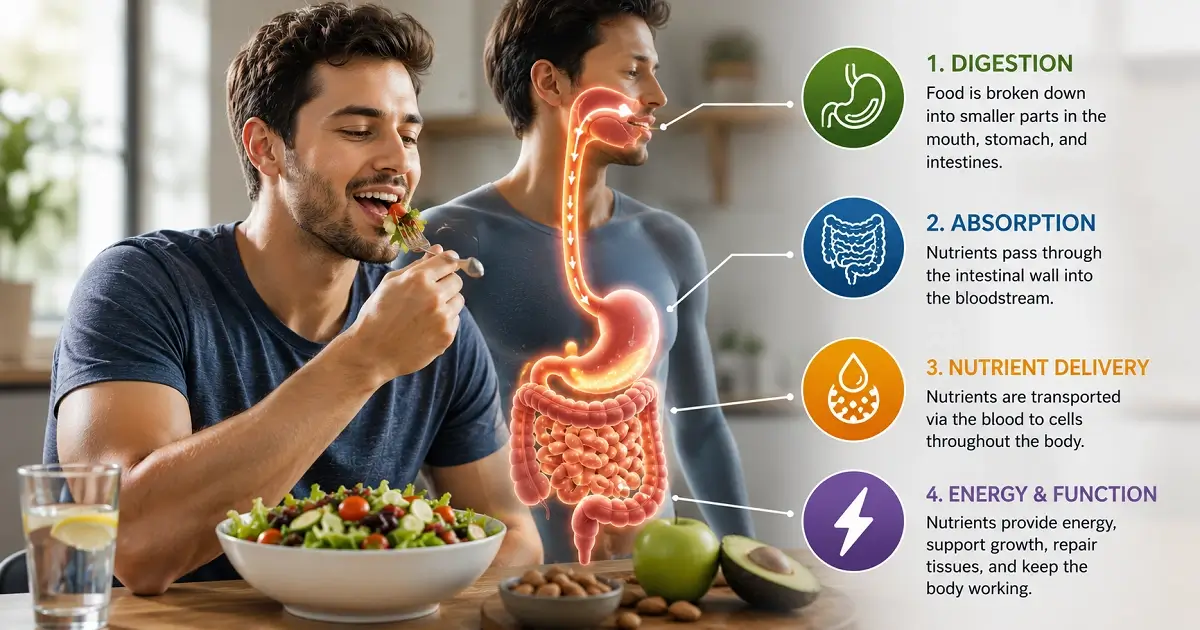
The journey begins in the mouth, where food is chewed into smaller pieces. This makes it easier to swallow and digest. After that, food travels to the stomach. Here, it mixes and breaks down into a semi-solid form.
Next, the food moves into the intestines. In this stage, nutrients begin to separate from the remaining parts. These nutrients then pass into the bloodstream. The blood carries them to different cells across the body.
Finally, cells use these nutrients for energy, growth, and repair. This step completes the food journey in the body. Each stage connects smoothly, showing how food is processed from start to finish.
Why This Process Matters for Daily Life
This process is important because it supports how your body functions every day. Food provides energy, which helps you stay active. It also supports daily maintenance and body function.
Besides energy, nutrients contribute to repair and maintenance. For example, after physical activity, your body uses nutrients to support recovery. This shows how food is associated with daily strength and balance.
Furthermore, this process helps maintain overall body function. Without proper food use, energy levels may drop. Therefore, understanding how food is used in the body helps you see its role in a balanced diet.
Digestion Explained Simply: Breaking Food Into Usable Parts
Digestion is the step where food is broken down into forms the body can use. It is a key part of how the body uses food. Without digestion, nutrients cannot be absorbed or used. This process happens in stages through the digestive system, involving both physical and chemical changes.
Each step in digestion helps make food smaller and simpler. This allows nutrients to move easily through the body. Therefore, understanding the digestion process in simple terms helps you see how food supports normal function.
What Is Digestion? (Definition)
Digestion is the process of breaking food into smaller parts so the body can use it. It begins as soon as you start eating. The goal is to turn food into nutrients that can be absorbed.
This process plays a role in providing energy and supporting growth. It also helps maintain body systems. Digestion is important for normal function because it prepares food for the next steps.
In simple terms, digestion changes food into forms the body can absorb. Without it, nutrients would not reach the cells. Therefore, digestion is an essential part of how food supports the body.
Mechanical and Chemical Digestion
Mechanical digestion involves breaking food into smaller pieces by chewing and mixing. This happens mainly in the mouth and stomach. It makes food easier to process further.
Chemical digestion, however, changes food into simpler substances. This step allows nutrients to separate from food. These changes help prepare nutrients for absorption.
Both types of digestion work together. Mechanical digestion reduces food size, while chemical digestion changes its form. Together, they support the stages of digestion and help maintain efficient food use.
Main Organs Involved in Digestion
The mouth starts the digestion process. Chewing breaks food into smaller pieces and mixes it with saliva. This prepares food for the next stage.
The stomach then continues digestion. It mixes food and breaks it down further into a soft form. This step helps prepare nutrients for absorption later.
Finally, the intestines complete most of the digestion. Here, nutrients are separated and prepared for absorption. These organs work together to support how digestion works in the body. The types of foods in a balanced meal also influence how this process works.”
How Nutrients Are Absorbed in the Body
After digestion, the body needs to absorb nutrients so they can be used. This step explains how nutrients enter the body and reach different areas. Without absorption, nutrients would not support energy or growth.
This stage connects digestion with how the body uses food. It helps move nutrients from food into the bloodstream. Therefore, absorption is important for normal function and daily balance.
What Is Nutrient Absorption?
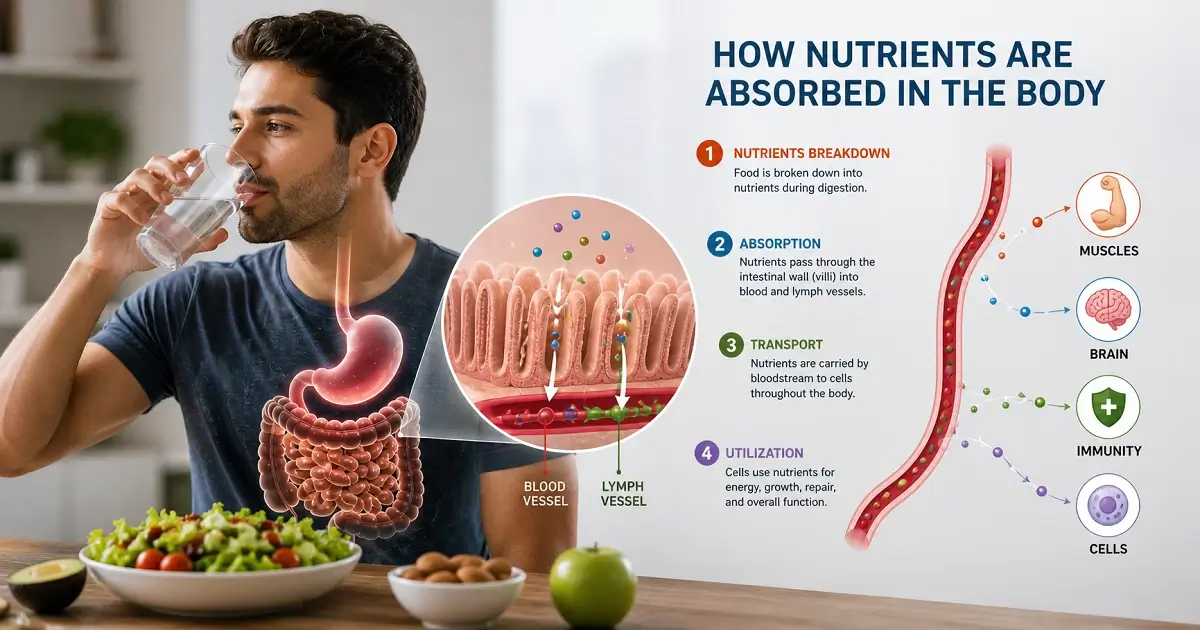
Nutrient absorption is the process where nutrients pass from digested food into the bloodstream. This allows the body to use them where needed. It is a key part of the nutrient absorption process.
This step helps maintain energy levels and supports body functions. Nutrients that enter the blood can travel to cells quickly. Therefore, absorption contributes to efficient use of food.
In simple terms, absorption is how nutrients move inside the body. It connects digestion to the final use of food.
Where and How Absorption Happens
Most absorption happens in the small intestine. Here, nutrients pass through the walls and enter the bloodstream. This area is designed to help nutrients move easily.
Once in the blood, nutrients travel to different parts of the body. Cells take what they need for energy and repair. This shows how nutrients enter the body and reach their destination.
This process helps maintain balance and supports daily activity. It is also associated with how the body stays active and healthy.
How the Body Gets Energy From Food
The body uses food to produce energy needed for daily activities. This explains how the body uses food beyond digestion. After nutrients are absorbed, they move into the bloodstream. From there, cells take what they need to produce energy. This process supports movement, concentration, and daily functions.
The connection between food and energy is direct. What you eat contributes to how active and alert you feel. Therefore, energy from nutrients plays a role in maintaining balance. This process also helps maintain normal function throughout the day.
Food as a Source of Energy
Food acts as the main fuel for the body. Once digested and absorbed, nutrients are used to release energy. This energy supports both physical and mental activities. Even simple tasks depend on this continuous supply.
For example, walking, studying, or even resting requires energy. The body uses nutrients from food to meet these needs. Therefore, food is closely associated with how the body stays active.
Energy from food is not used all at once. Instead, it is released gradually to support steady function. This helps maintain consistent energy levels throughout the day.
Role of Carbohydrates, Proteins, and Fats in Energy
Carbohydrates are the body’s main and quickest source of energy. They are broken down into simple forms that the body can use easily. This supports immediate energy needs during daily activities.
Proteins also contribute to energy, although their main role is different. They help maintain body tissues and support growth. However, when needed, they can provide energy as well. Protein-rich foods support growth and maintenance as part of a balanced diet.
Fats provide a more concentrated source of energy. They release energy slowly, which helps maintain longer-lasting energy levels. Fats and oils support stored energy and longer-lasting energy release.
Together, these nutrients play a role in maintaining energy balance in the body.
What Happens When Energy Is Not Used Immediately
Not all energy from food is used right away. When there is extra energy, the body stores it for later use. This helps maintain energy supply when food is not available.
Some energy is stored in a quick-access form for short-term needs. The rest is stored for longer use. This stored energy supports the body during periods of rest or activity.
This process contributes to energy balance and helps maintain normal function. It also shows how the body manages food intake over time.
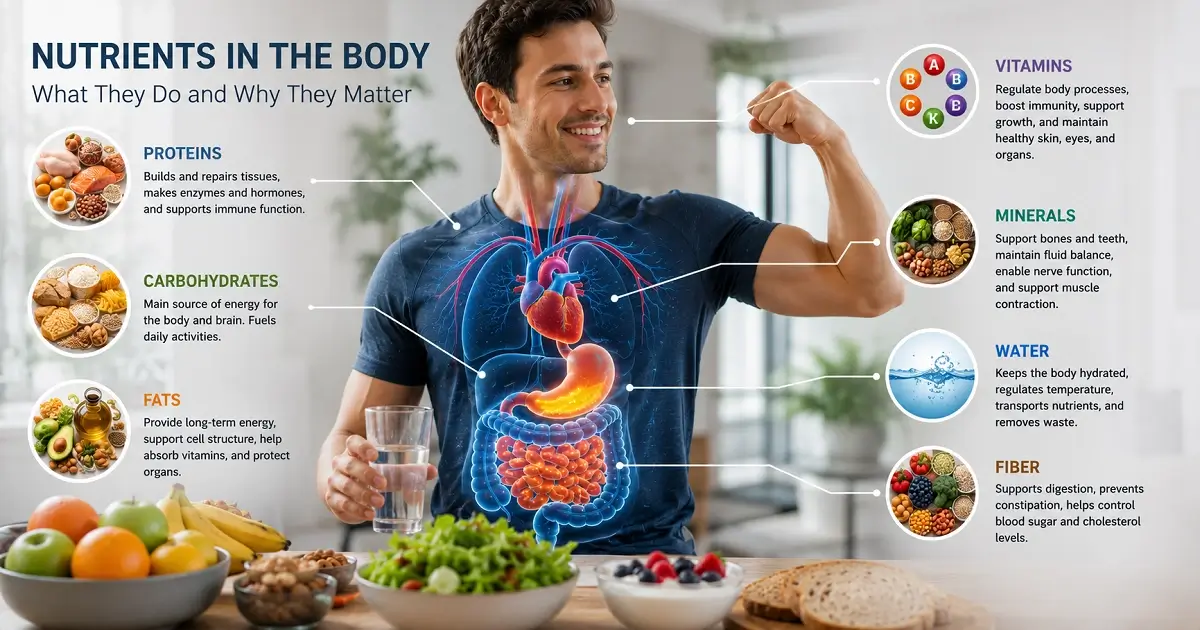
Nutrients in the Body: What They Do and Why They Matter
Nutrients play different roles in the body after they are absorbed. They support energy, growth, and maintenance. Understanding the roles of nutrients in the body helps explain why nutrients are important.
Each nutrient contributes to specific functions. Together, they help maintain balance and support daily activity as part of a healthy diet.
Macronutrients and Their Roles
Macronutrients include carbohydrates, proteins, and fats. Each plays a role in supporting the body’s needs. Carbohydrates provide energy for daily tasks. They are important for normal function and help maintain activity levels.
Proteins contribute to growth and repair. They support the building and maintenance of body tissues. This makes them important for development and recovery.
Fats help store energy and support long-term energy use. They also play a role in maintaining body systems. These nutrients work together to support different functions.
The roles of macronutrients show how the body uses food efficiently. Each one contributes in a different way. This balance helps maintain normal body function.
Micronutrients and Their Roles
Micronutrients include vitamins and minerals. They are needed in smaller amounts but are still important. These nutrients help maintain body systems and support normal function.
Vitamins play a role in many body processes. They support energy use and help maintain balance. Minerals also contribute to body structure and function.
These nutrients are associated with overall health and daily activity. They support processes that keep the body working smoothly. Essential nutrients support these important body functions as part of a balanced diet.
Water and Its Role in the Body
Water is an essential part of how the body uses food. It helps move nutrients through the bloodstream. This supports absorption and distribution in the body.
Water also helps maintain body balance. It supports digestion and helps maintain normal function. Without enough water, these processes may slow down.
Therefore, water plays a role in supporting all stages of food use. It is important for daily activity and overall balance.
How the Body Uses Nutrients for Growth, Repair, and Maintenance
After nutrients are absorbed, the body uses them in different ways. These uses include growth, repair, and maintaining body systems. This shows how nutrient use in the body supports everyday life.
Each function depends on a steady supply of nutrients. Therefore, food intake contributes to these ongoing processes. This helps maintain balance and supports normal function.
Growth and Development
Nutrients play a role in growth and development. They support the formation of new cells and tissues. This is important during early life stages and continues throughout life.
Proteins and other nutrients contribute to building body structures. This helps maintain proper growth over time. Therefore, nutrients are associated with healthy development.
Repair and Maintenance of Tissues
The body constantly repairs itself. Nutrients support this process by helping maintain tissues. For example, after daily activity, the body uses nutrients to restore balance.
This repair process helps maintain strength and structure. It also contributes to overall stability. Therefore, nutrients play a role in keeping the body functioning properly.
Supporting Daily Body Functions
Nutrients support many daily body functions. These include movement, thinking, and basic processes. Each function depends on a steady supply of nutrients.
Energy, repair, and maintenance all work together. This connection helps maintain normal function. Therefore, nutrients are important for everyday activity and balance.
How Digestion, Energy, and Nutrients Work Together
Digestion, energy use, and nutrients are closely connected. Together, they explain how the body uses food in daily life. Digestion breaks food into smaller parts. Then, nutrients are absorbed and carried through the body. After that, these nutrients support energy and other functions.
This food to energy process shows how body systems work together. Each step depends on the one before it. Therefore, digestion and nutrient use are linked in a continuous flow. This connection helps maintain normal function and supports daily activity.
Connecting Digestion to Energy and Nutrient Use
Digestion starts the process by breaking food into usable parts. Without this step, nutrients cannot be absorbed. Once nutrients enter the bloodstream, they move to different cells. These cells use nutrients to produce energy and support other needs.
This digestion and metabolism connection shows how food becomes useful in the body. Each stage contributes to the next. For example, proper digestion helps maintain efficient nutrient use. This, in turn, supports energy levels and daily performance.
The body relies on this smooth connection to function properly. Therefore, digestion, absorption, and energy use are all part of one system. Balanced eating contributes to this overall flow.
Why Balance Matters in This Process
Balance plays an important role in how the body uses food. When nutrients are available in the right amounts, the body functions more efficiently. Each nutrient contributes to energy, growth, and repair.
However, an imbalance may affect how these processes work. Too much or too little of certain nutrients can disrupt the flow. Therefore, maintaining balance helps maintain steady energy and proper function.
This balance is associated with consistent eating habits and food choices. It helps the body use nutrients effectively. As a result, balanced intake supports the connection between digestion and energy use.
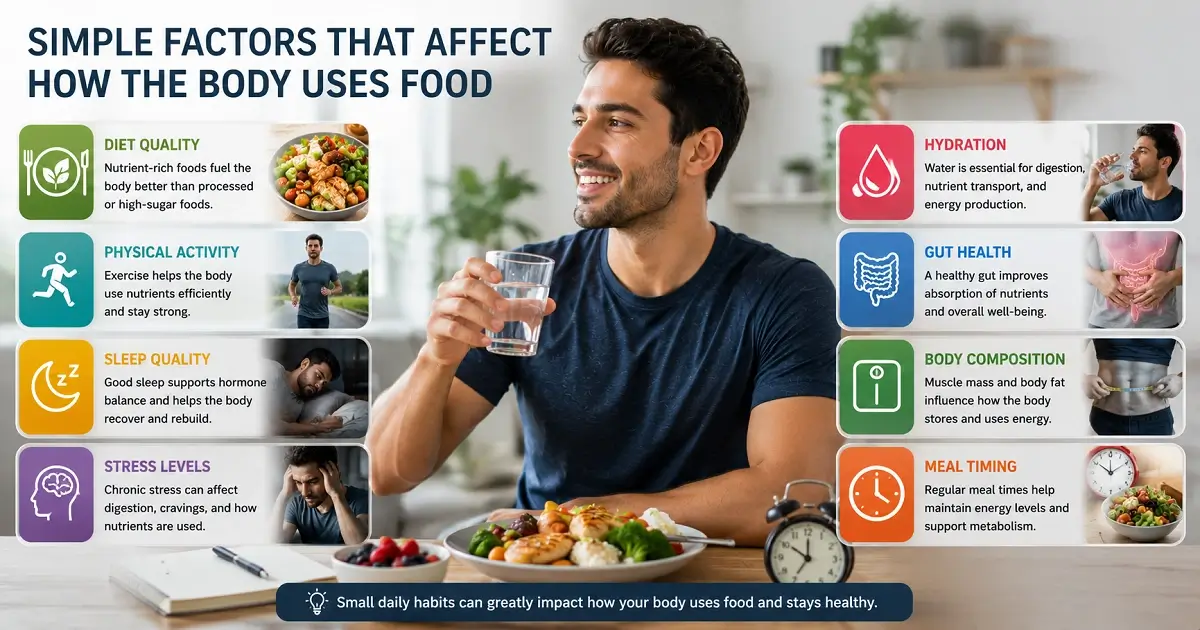
Simple Factors That Affect How the Body Uses Food
Several everyday factors influence how food is used in the body. These factors affect digestion, absorption, and energy use. Understanding these food utilization factors helps explain why results may differ between people.
The way food is prepared, eaten, and used plays a role in this process. Therefore, small daily choices can impact how efficiently the body uses nutrients. These factors contribute to maintaining balance and supporting normal function.
Type and Quality of Food
The type and quality of food you eat play a major role in nutrient use. Foods that are rich in nutrients support better absorption and energy use. They contribute to overall balance in the body.
On the other hand, low-quality foods may not provide enough nutrients. This can affect how the body processes and uses food. Therefore, food quality is associated with effective nutrient use.
Food quality influences how nutrients support the body. Choosing better-quality foods helps maintain this process.
Eating Habits and Meal Patterns
Eating habits also affect how the body uses food. Regular meal patterns help maintain steady energy levels. They support consistent digestion and nutrient use.
Irregular eating, however, may disrupt this balance. Skipping meals or overeating can affect how nutrients are used. Therefore, stable eating habits contribute to better food use.
Meal timing and portion size also play a role. These factors help maintain a smooth flow of digestion and energy use throughout the day.
Lifestyle Factors (Activity, Hydration)
Lifestyle choices influence how nutrients are used in the body. Physical activity increases energy needs. It helps the body use nutrients more efficiently.
Hydration also plays a key role. Water supports digestion and helps maintain nutrient movement in the body. Without enough water, these processes may slow down.
Together, activity and hydration contribute to how the body functions. They are associated with maintaining balance and supporting normal function.
Common Questions About How the Body Uses Food
Many people wonder how the body uses food after eating. Digestion, absorption, and nutrient use work together in clear steps. These common questions explain the process in simple terms.
What Is the Order of Digestion in the Body?
Digestion follows a clear path. It begins in the mouth, where food is chewed. Then it moves to the stomach, where it is broken down further. After that, food enters the small intestine, where nutrients are separated and absorbed into the bloodstream.
The remaining material moves to the large intestine, completing the process. Each step supports how the body uses food and helps maintain normal function.
How Long Does It Take for Food to Be Digested?
Digestion time varies depending on the type of food and individual factors. In general, it may take several hours for food to pass through the digestive system. Lighter foods move faster, while heavier meals take longer.
This process happens in stages, from the mouth to the intestines, and contributes to steady energy and normal body function.
Does All Food Get Used by the Body?
Not all food is used by the body. Nutrients are absorbed and used for energy, growth, and repair. However, some parts are not needed and pass through the body. This is a normal part of digestion and helps maintain balance. The body uses what it needs and removes the rest.
What Happens to Extra Nutrients?
Extra nutrients are stored for later use. This stored energy helps maintain balance when food intake is low. Some nutrients are stored for short-term use, while others are stored longer. This process supports daily activity and helps maintain normal function over time.
Why Is It Important to Eat Regularly?
Eating regularly helps maintain a steady supply of nutrients. This supports consistent energy and normal body function. Skipping meals may affect how the body uses food. Regular eating patterns contribute to balanced nutrient use and help maintain daily energy levels.
Conclusion
The way the body uses food follows a clear and connected process. Digestion breaks food into smaller parts, and absorption allows nutrients to enter the bloodstream. These nutrients then support energy, growth, and repair.
Each stage contributes to maintaining normal function and daily balance. From the first bite to nutrient use, every step plays a role in how the body works.
Understanding this process helps explain how food supports the body. It shows how digestion, energy, and nutrients work together as part of a balanced system.
Disclaimer:
This article is for informational purposes only. It discusses general food-related topics and does not provide medical advice. Nutritional needs vary between individuals, and food choices should be part of a varied and balanced diet. For personal health concerns, consult a qualified professional.